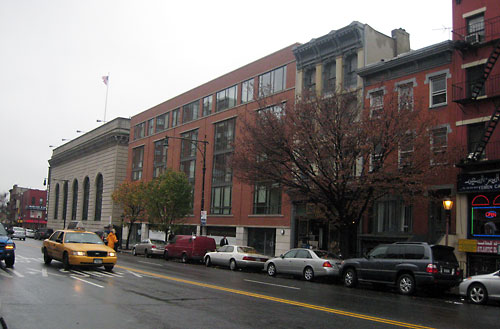
Reversing an earlier reversal, the Bloomberg administration has ruled that rooftop structures on a surprisingly controversial apartment building on Atlantic Avenue exceed the height restrictions of the Cobble Hill Historic District.
The Department of Buildings said last Monday that it might revoke — retroactively — construction permits issued earlier to Two Trees Management for condos already built adjacent to the new Trader Joe’s supermarket.
The city claims that cabanas on the roof violate the neighborhood’s 50-foot height cap.
The city’s timing is peculiar, because construction is complete and residents have moved in.
Neighborhood activists, who hit the roof in the spring when they watched workers build the roof-top spaces, relished the latest twist, and believe the cabanas must be razed.
“They were caught,” said Jeff Strabone, president of the Cobble Hill Association. “If they get more [than 50 feet], then the historic designation means nothing.”
Marketing materials from Two Trees confirmed the suspicions of their critics — and indeed were the smoking gun that led to the city’s decision. Images from the brochures, obtained by The Brooklyn Paper, show the layout of the top-floor apartments indicate that they each have access to a private “penthouse,” even though Two Trees had described the structures in its permit documents as “stairways.”
The latest decision is another twist to the city’s inconsistent judgment on this luxury project in Cobble Hill.
Complaints began over a year ago when Two Trees, run by father-and-son David and Jed Walentas, sought city permission to exceed the 50-foot cap. The City Council denied that request, but Two Trees later won approval for a modified building that would include “stairway bulkheads” from top-floor units to the roof.
The city re-investigated the project, allowed it to continue, then stopped it, then forced Two Trees to reduce the size of the structures, and now, may require the developer to renovate the building’s rooftop again.
The Walentases remained defiant: “Two Trees has a certificate of occupancy issued by the Department of Buildings and the building is nearly fully inhabited,” the company said in a statement. “This the building is built fully in conformance with all Department of Buildings and Department of City Planning regulations, stipulations and requests and filed drawings.”