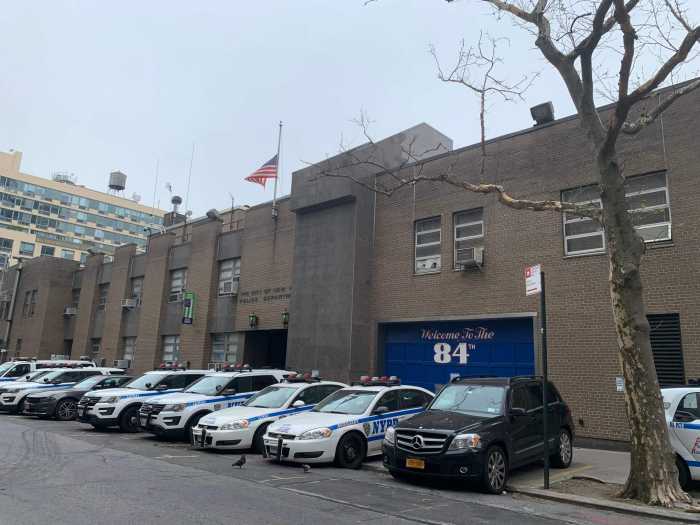
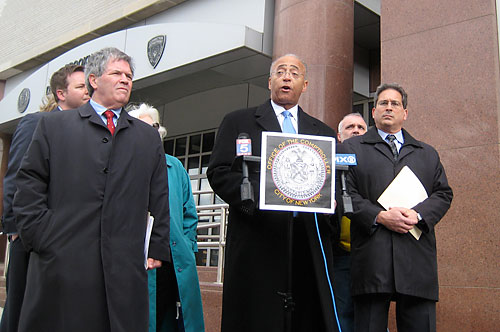
On his final day in office, then-Comptroller Bill Thompson bowed to the mayor’s wishes and quietly approved a contract that paves the way for the controversial expansion and reopening of the Brooklyn House of Detention in Boerum Hill.
Before then, Thompson had thrice refused to register the $32-million contract for the renovation of the prison at Atlantic Avenue and Smith Street, citing the increasing cost of the project.
Mayor Bloomberg returned fire by suing the comptroller’s office, alleging that Thompson shirked his civic duty by ignoring a mandate to give the $440-million plan the green light.
But now that Thompson has rubber-stamped the renovation contract, the mayor’s office has withdrawn its suit.
But don’t open up the double-locked cellblocks just yet. Before the city can make good on its plan to turn the long-shuttered House of Detention into a 769-bed prison, city officials say they will reach a settlement with community groups.
The Department of Correction has long said that a reopened House of D would offer much-needed relief to antiquated facilities on Rikers Island and cut down on the cost and security risk of transporting Brooklyn inmates to and from the rock.
Thompson could not be reached before The Brooklyn Paper’s lock-tight online deadline. And a spokesman for Comptroller John Liu said the new bean counter would not rekindle the Thompson-Bloomberg battle.