








A 200-bed homeless men’s shelter run by Andrew Cuomo’s sister could be coming to Greenpoint — and residents are alarmed.
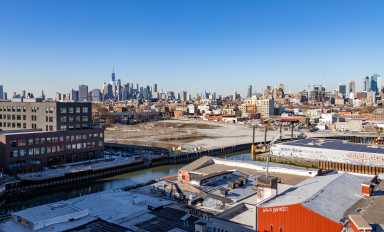
The New York-based nonprofit HELP USA, one of the country’s largest builders and operators of transitional and permanent low-income housing, is moving towards building one of the largest shelters in North Brooklyn in a four-story industrial building on McGuiness Boulevard at Clay Street.
A city official confirmed this week that HELP USA CEO Larry Bilensky had submitted a proposal and also briefed Community Board 1 District Manager Gerry Esposito of the plan.
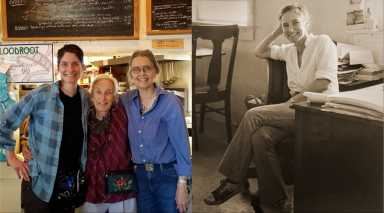
The 24-year-old nonprofit, led by Executive Board Chairwoman Maria Cuomo Cole, has managed several transitional housing facilities in the northeast, including the HELP Women’s Center in Brownsville, which has drawn heavy criticism from neighbors who accuse its guests of prostitution and drug abuse (see sidebar).
The men’s shelter, which would provide “comprehensive assessments, support services, and housing placement assistance” to homeless clients referred by the city, would be HELP USA’s first venture into Greenpoint.
The Greenpoint warehouse is located in a sparsely populated industrial stretch of north Greenpoint bordered by the Pulaski Bridge onramp, Newtown Creek, and the city’s sprawling sewage treatment plant.
The commercial building itself takes up half a city block, is zoned for light manufacturing use, but the building’s prior owner appeared to be taking the initial steps to make it more livable by removing partitions and plumbing fixtures earlier this month.
But the loft building is home to several artists and residents, who could be difficult to evict with the recent passage of the loft law giving tenants in illegally converted industrial buildings additional rights.
The presence of men’s shelters in North Brooklyn is not new.
Three shelters exist in Williamsburg including a facility just for teenagers.
Nearby business owners don’t want to see more shelters coming to Greenpoint, arguing that there are enough facilities nearby and that the new shelter will “bring down the neighborhood.”
“With such a big homeless facility, people will wander around,” said Jack Karczmarz, who owns a small repair shop on McGuinness Boulevard who is organizing a group of businesses against the proposal. “There’s no question we’ll have an increase in crime. This neighborhood just started to build up a few years ago.”
Laura Hofmann, who lives two blocks away, worries that the introduction of a men’s shelter to a desolate industrial neighborhood would be bad both for residents and the homeless, who would have difficulty accessing emergency services that are not nearby.
“I would prefer that it’s families, but the site is not really good for them either, since it is such a deserted area,” said Hofmann.
According to the Department of Homeless Services, there were an estimated 336 homeless individuals in Brooklyn in 2008, a decrease of 24 percent from the previous year, and a drop of 43 percent since 2005.
The HELP USA proposal would likely serve homeless individuals far beyond Greenpoint — but details of the shelter and its target demographic remain unclear. Representatives from HELP USA have been invited to appear at the next Community Board 1 meeting on Sept. 15 to speak about the plan, but have not confirmed attendance.
Bilensky did not return multiple calls for comment, referring all inquiries to the Department of Homeless Services, which is currently reviewing the plan and would not speak of it.
©2010 Community Newspaper Group
By submitting this comment, you agree to the following terms:
You agree that you, and not BrooklynPaper.com or its affiliates, are fully responsible for the content that you post. You agree not to post any abusive, obscene, vulgar, slanderous, hateful, threatening or sexually-oriented material or any material that may violate applicable law; doing so may lead to the removal of your post and to your being permanently banned from posting to the site. You grant to BrooklynPaper.com the royalty-free, irrevocable, perpetual and fully sublicensable license to use, reproduce, modify, adapt, publish, translate, create derivative works from, distribute, perform and display such content in whole or in part world-wide and to incorporate it in other works in any form, media or technology now known or later developed.