
While New Yorkers were looking forward to spring on March 9, 1976, an intense snow storm with wind gusts of 20 miles per hour dropped up to five inches on the city in the late afternoon and evening hours.
Undeterred by the inclement weather, Park Slope resident Thomas McAvoy, a 48-year-old married father of two grown children, left his family home on Garfield Place and headed to the Union Street subway stop to attend a drafting class in downtown Manhattan.
At the time, crime in New York City was rampant. According to NYC’s summary of vital statistics, there were 1,662 homicides in the city that year, with 459 murders in Brooklyn — and Park Slope was a far cry from the gentrified neighborhood with million-dollar brownstones it is now, particularly along Fourth and Fifth avenues.
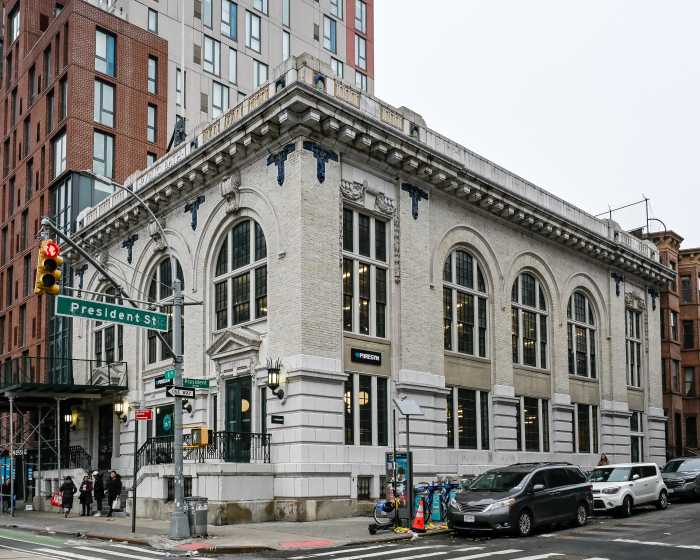
Vacant, rubble-filled lots and abandoned, gritty buildings were a common sight, including the former public bathhouse on the corner of President Street and Fourth Avenue — now home to PureGym Park Slope — at the time, a popular hangout for squatters and junkies.
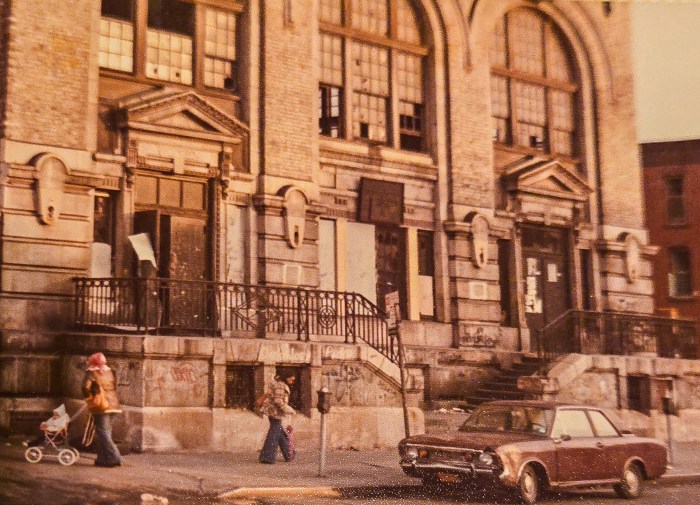
At around 5:20 p.m., as McAvoy was nearing the corner of President Street and Fourth Avenue, he was approached by a still-unknown assailant and killed with a close-range, single shot to his head outside the gritty bathhouse. Homicide detectives later told the family that a young person had found McAvoy’s body lying in the snow, and alerted a store owner, who called 911.
Detectives didn’t find any signs of a robbery, and the murder weapon was never recovered. Because of the heavy snowfall, it was difficult to collect forensic evidence, not even footprints, authorities told the family.
Fifty years after his murder, his daughter Jo Ann McAvoy-Delahunt, who kept her maiden name when she got married in honor of her dad and family ancestry, is still searching for answers as to who killed her father.
She’s the only surviving family member from that time. Her mother, Catherine, McAvoy’s wife, died in 2021 at the age of 91; her brother Steve died in 2016 at the age of 64 — his obituary read that his father’s death was “a heartbreak he endured his entire life” — and McAvoy’s half-sister, who had always hoped for a break in the case, has also died.
McAvoy-Delahunt told Brooklyn Paper in a phone interview that it was heartbreaking that there was no justice for her dad and that her mom and brother passed away without having closure.
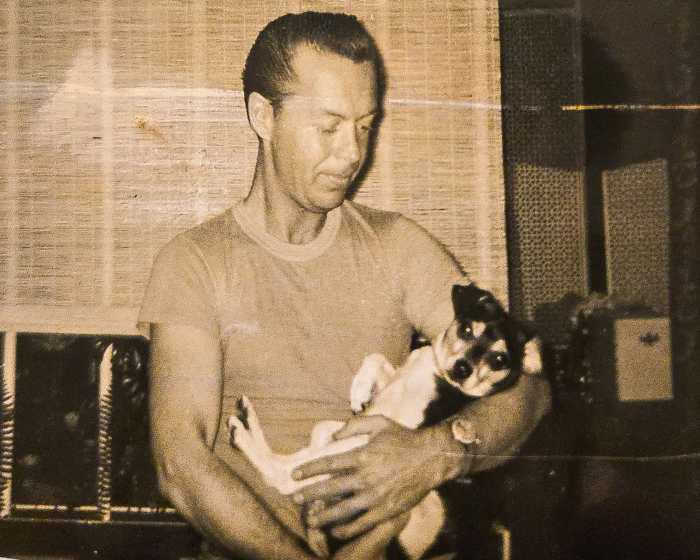
“I know it was a snowy, blistery day,” she said. “But you would think neighbors talk to each other, and somebody might have said something to someone.”
McAvoy-Delahunt, who was working in Manhattan at the time, remembered that she called her father at around 4:30 p.m. on March 9, letting him know that her boss was letting her out early due to the weather, and asked him to skip his class and stay home. He told her not to worry, and that he was going to be fine.
“That was the last time I spoke to him,” she said. “I went home, and three hours later, the cops came knocking on my door. It was so horrible.”
Back in those days, the repose was three days, McAvoy-Delahunt explained. Her birthday falls on March 12, and when she, her mother, and brother Steve — who had rushed to Brooklyn from Florida, where he lived — came home from the wake, a birthday card from her dad arrived in the mail.
“That was really hard. [The card] was postmarked around that time [of his death], so it had to be [mailed] during the storm,” she said. “He passed the mailbox on his way to the subway station, so I’m always thinking he put it in, thinking of me. So I have in my heart that I spoke to him for the last time, and that he was thinking of me for the last time.”
McAvoy-Delahunt described her dad, who served two tours in the U.S. Navy and worked as a mail sorter at the Van Brunt Post Office on Ninth Street in Park Slope at the time, as the “sweetest, sweetest” man — an “actual gentleman” — who would take her and her friends to Prospect Park Lake and teach them how to fish. His favorite breakfast spot was the Purity Diner on Seventh Avenue because “they had the best food,” she recalled her father saying.
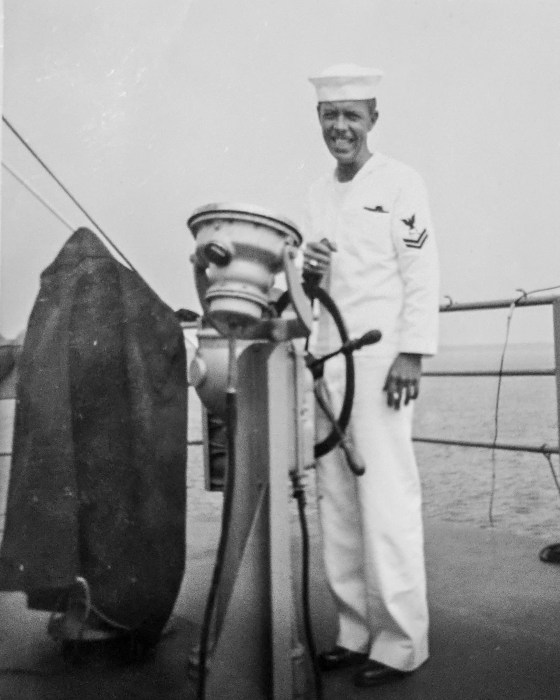
“He loved being with people, a very soft-spoken and kind person,” McAvoy-Delahunt said, noting that he had received several work commendations for inventions that improved the workflow. “He was such a good person. He loved animals the way I do. He let me take in any cat I wanted, any dog I wanted.”
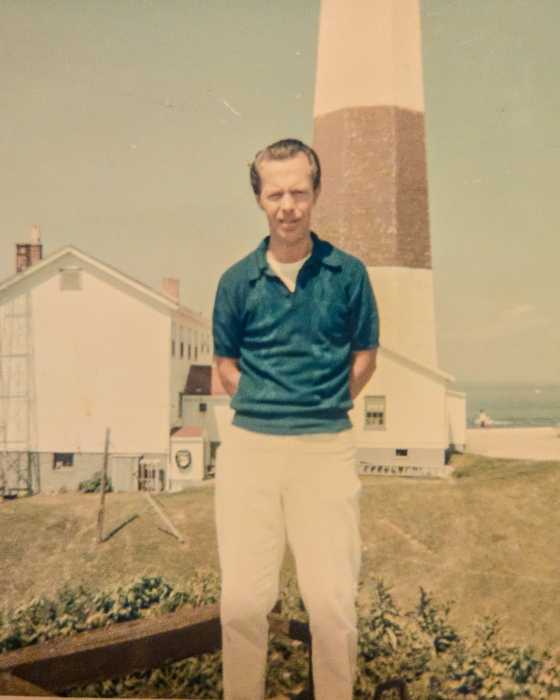
McAvoy, whose family roots trace back to the Revolutionary War, was buried at St. Raymond Cemetery in Queens, but was later reinterred in the family’s grave in Oakland Cemetery in Sag Harbor, his birthplace.
“Years were going by, and my father loved Sag Harbor so much; that’s where he was born, and there’s a family plot there. So I got in touch with the funeral [home] in Sag Harbor, and they reinterred him,” McAvoy-Delahunt shared.
She recalled that detectives interviewed her family a couple of times. They asked her mother, Catherine, if she or her husband had ever had an affair; questioned why McAvoy left the house during a snowstorm in the first place, and even went as far as implying that he might have died by suicide, though, allegedly, no gun was found at the crime scene.
The homicide detective handling her dad’s case was Ralph Gorman, who died in 2009, and McAvoy-Delahunt followed up with NYPD detectives for many years, hoping they had new leads on her dad’s case. The family even posted fliers in the neighborhood offering a reward, hoping that witnesses would come forward.
“I would call them constantly, and nobody knew anything about it,” she recalled. “They said, because of the terrible conditions of the night, there was no DNA. They couldn’t get DNA. After a while, I just stopped pushing it.”
A half-century later, the only reminder of McAvoy’s murder is a laminated photo tied to a signpost on President Street outside the former bathhouse. It bears his date of birth and date of death, adorned with artificial flowers, and reads “Forever In Our Hearts.”

McAvoy-Delahunt — who now resides in Virginia after living in Staten Island, where she and her husband raised three children — won’t be able to visit the memorial on her father’s death anniversary.
She said she wants her father to be remembered not just as a victim, but as someone who dedicated his life to his family and friends, and who was adored by everyone, especially his in-laws, who were devastated by his murder. McAvoy-Delahunt was certain that he would have been a great grandfather to her two sons and daughter, mourning that her kids never got to know their grandfather.
“He was so wonderful and kind. And whoever did this, they didn’t even realize what they were doing; how they destroyed a family,” she said. “I don’t think we will ever get closure. But I just want people to know that he was a real person, and he did good in his short 48 years.”
When Brooklyn Paper reached out to the NYPD to find out how cold cases are handled, a spokesperson confirmed that there have been no new developments in McAvoy’s case.
“Homicides do not have a statute of limitations. All unsolved homicides remain open,” the spokesperson said. “Cold Case Squad reexamines cases, usually homicides, which have gone “cold” when detectives seem to have exhausted investigative leads. There is no delineated time frame for cold cases. Members of this squad may be charged with investigating homicides that occurred decades ago.”