Bernie Madoff’s Ponzi scheme touched people all over the world — from celebrities to schools to saints to Smartmom.
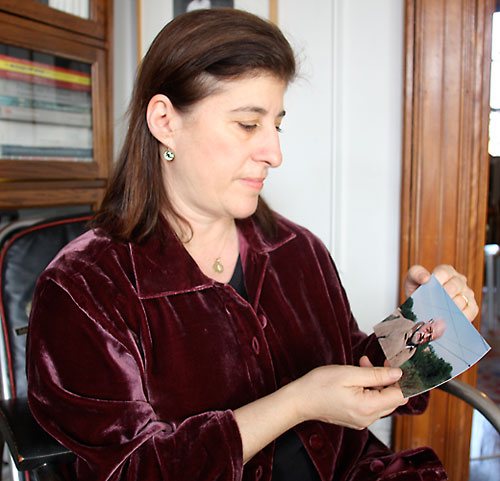
Yes, our columnist Louise Crawford’s dad was one of the more than 13,000 names on the just-released list of victims of the December collapse of Madoff’s house of cards.
Sports-team owners, media moguls and major financial institutions were some of the first Madoff investors to have their vast losses exposed after the scheme collapsed. But last week, the names and addresses of more than 13,500 Madoff casualties were published, and the list revealed that dozens of Brooklynites — many of them accustomed to a comfortable, but not opulent lifestyle — had been wounded if not wiped out by the magnificent deception.
Crawford’s dad died in September. Until then, his finances had been a mystery, but the family understood that his estate would be split among Crawford, her sister and her stepmother — leaving Crawford an expected windfall of several hundred thousand dollars.
Not anymore.
“It affected my fantasy of the future,” she said. “That money was never mine, but for three months in the back of my mind, I felt for the first time that there was a cushion.
“We live pretty close to the edge for a couple of Park Slopers,” the writer and mother of two added.
The experience has been a crash course in personal financial planning for Crawford who is urging friends to overcome their intimidation or boredom of money management.
“You have to be conversant. You can’t be afraid to look at your bank account. You can’t take a leap of faith and hope it’s going to work out,” she said.
After years of posting impressive returns, Madoff’s $50-billion investment firm shimmered away like a cartoon mirage, possibly the largest Ponzi scheme in history. Under the scam, money was never actually invested in the stock market, Instead, new funds from the ever-growing client list were used to pay earlier investors — a hustle that failed when too many skittish account holders tried to withdraw their money amid the larger Wall Street meltdown.
“We’re a small fry in the whole thing,” said one married woman, an artist, in her forties, who spoke on the condition that The Brooklyn Paper withhold her name as well as her husband’s. “We lost $300,000, but it was everything. The money gave us stability.”
The seductive power of the Madoff moneymaking machine discouraged clients from wondering how he could so consistently generate earnings, in bull markets and in bear ones.
“We never questioned the returns,” said the artist, who estimated that she and her husband pulled in $30,000 a year from Madoff, whose firm “allowed” the couple to invest because wealthier relatives already had accounts.
“When things are going well, you never ask why.”
Now they’ve abandoned their dream to sell their home in the Brownstone Belt and move upstate — which is just as well, because they would have invested their profits with Madoff.
The collapse not only claimed conventional investors.
The Redemptorists, a Catholic priestly order with a presence at the striking Our Lady of Perpetual Help basilica and school on 59th Street, is grappling with an unspecified loss that may force it to reduce or eliminate some programs, including Catholic school scholarships.
“It is with sadness in their hearts that the Redemptorists must acknowledge that some of the good works and ministries of the Province may now be reduced, suspended or cancelled due to the loss of the funds invested with Bernie Madoff Investment Securities,” said a statement from the order’s spokeswoman Marion Lunt.
Similarly, Brooklyn College’s foundation, for instance, told The Paper that it lost $336,000, money that had endowed one scholarship at the Flatbush campus.
And the damage even extends to the diamond — the baseball one, that is. One of the most-prominent victims was the Wilpon family, which owns the New York Mets and, more important, the Brooklyn Cyclones. The family has said that the minor league team will not affected by the vanished investments.