Brooklyn might be home to some of New York City’s most famous parks, but it also has some of its starkest “recreation deserts,” according to a recent report by the Center for an Urban Future (CUF).
Much like a food desert, in which a community lacks reasonable access to fresh and nutritious grocery options, residents of ‘recreation deserts’ live in areas with minimal recreation opportunities.
Out of the five community districts identified as recreation deserts in CUF’s report, two are in Brooklyn.
Brooklyn’s Community Board 12 — which covers Midwood, Borough Park, Kensington and Ocean Parkway — has only 41 facilities, compared to a citywide average of 150.
Community Board 9, covering Crown Heights, Prospect Lefferts Gardens and Wingate, has 48. In comparison, Community Board 3, which encompasses Bed-Stuy, has 190.
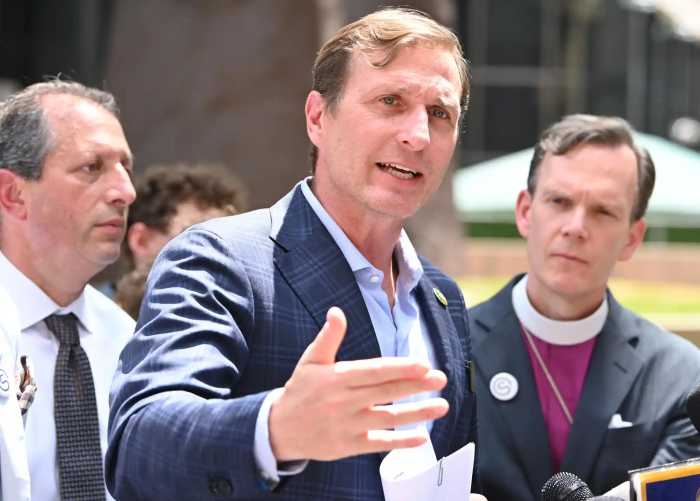
The facilities these communities lack include soccer and cricket pitches, volleyball and pickleball courts, and pools. In order to find them, residents often have to leave their neighborhoods. This can block low-income households from activities that are key to mental and physical health, said Eli Dvorkin, CUF’s Editorial & Policy Director and co-author of the recreation report.
“Brooklyn has always been a place where movement is part of daily life. But today, Brooklynites, like all New Yorkers, are moving less, feeling more isolated and dealing with elevated rates of chronic diseases,” Dvorkin said. “And at a moment when recreation should be central to the borough’s strategy to address these challenges, we’ve been investing less in it.”
Funding for recreation in the city has fallen “dramatically” in the last 50 years, going from 31% of the NYC Parks Department’s budget to just 5.3% today, Dvorkin said.
Mayor Zohran Mamdani’s preliminary budget allocates $654 million, or 0.5% of the city’s budget, to parks. This is just half of the 1% he promised on the campaign trail, and cuts $33.7 million from the current parks budget. Mayor Eric Adams also signed onto the 1% promise while campaigning, before making several major cuts to the department.
The mayor remains committed to the 1% for parks pledge, and plans to leverage his proposed tax on NYC’s wealthiest residents to achieve it, Deputy Press Secretary Jeremy Edwards told Brooklyn Paper.
Dvorkin said NYC Parks must also commit at least 20% of its budget to recreation, which would move NYC closer to cities like Chicago and Philadelphia, who respectively spend 25% and 37% of their parks budget on recreation.
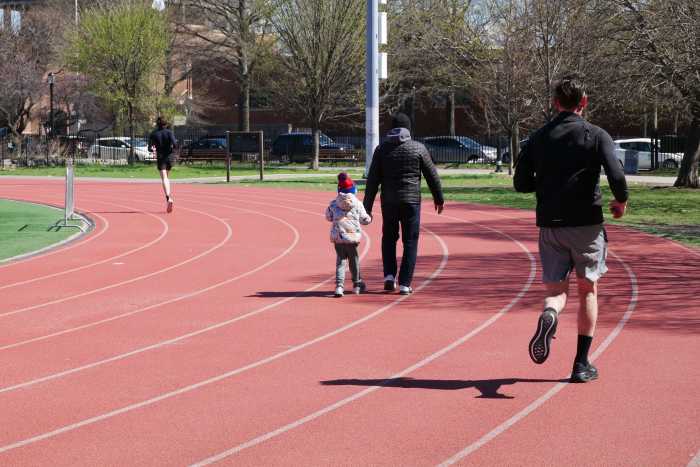
New parks commissioner Tricia Shimamura has expressed a commitment to boosting the city’s public recreation programs and upgrading facilities. “NYC Parks is committed to delivering high-quality recreation amenities for all New Yorkers, especially in areas that have typically been underserved,” a parks spokesperson told Brooklyn Paper.
Participation in recreation programs has declined significantly in recent years, with visits to the city’s 36 recreation centers down almost 40% since 2019. This does not reflect a lack of demand, but rather an underfunded system that can’t keep up with it, Dvorkin said. Less investment means less staffing and upkeep, which means less programming and open facilities. Meanwhile, waitlists for children’s recreation programming keep growing.
“The overall result is a system that’s not keeping up with Brooklyn’s needs and in many cases is limiting participation at a time when Brooklynites need it most,” Dvorkin said.
Over the past 50 years, recreation staff has fallen from 2,000 to 660, Dvorkin said. Swimmers have felt this decline acutely, as a persistent lifeguard shortage has shut down pools citywide each summer since the pandemic.
Maintenance issues have also contributed to a dramatic drop in citywide pool use since 2019.
The pool at the Metropolitan Recreation Center in Williamsburg has been closed for over a year as the city repairs a faulty dehumidification system, which members say has left them without an affordable local swimming venue. Yearly memberships at Brooklyn’s nine rec centers top out at $150 a year, while gyms with pools can cost upwards of $300 a month.
When Metropolitan’s pool shuttered, it left only one other indoor public pool in Brooklyn — almost an hour transit ride away in Crown Heights. This is a public health concern for a borough with several beaches but few indoor pools and no mandated water safety instruction, advocates say.
“When you don’t have access to these facilities, it’s a recipe for tragedy,” said Michael Randazzo, who provides free and low-cost swim lessons at private pools in Flatbush.
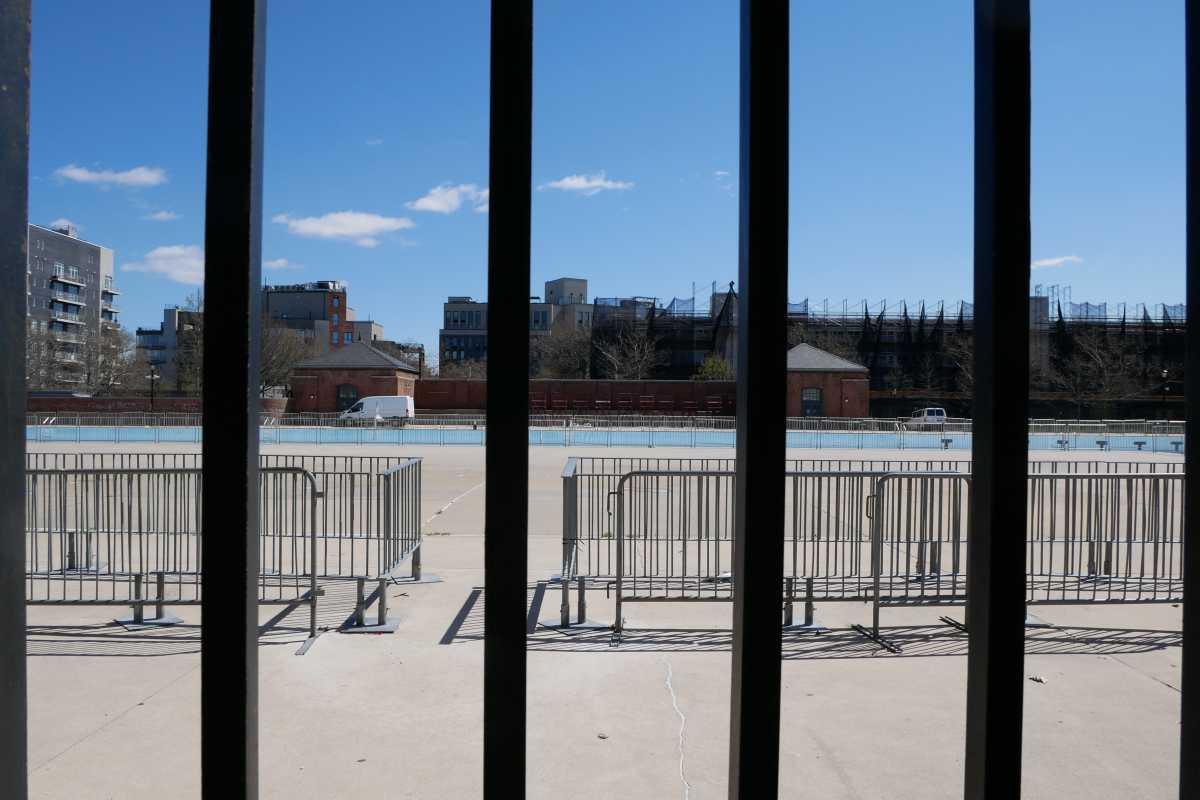
The Sunset Park Recreation Center has been closed for construction since 2023, and a broken pipe shut down the Red Hook Pool most of last summer. Although it opened for the final few weeks of the outdoor swim season, Randazzo observed a large portion of it closed off due to a lack of lifeguards when he visited.
However, progress is being made across Brooklyn.
NYC Parks has committed $3.5 billion to building and upgrading recreation centers, pools and assets like fields, courts and skateparks, a spokesperson told Brooklyn Paper.
The pool and gymnasium at the Brownsville Recreation Center are under renovation, and the $141 million Shirley Chisholm Recreation Center became the borough’s largest rec center — and the first in central Brooklyn — when it opened in February. It also brought a long-awaited indoor pool to Flatbush, with the ability to host competitive swim, dive and water polo teams.
“When you put a pool of that quality in a community that hasn’t had a public pool since the ‘60’s, it’s transformational,” Randazzo said.
These rec centers are a “powerful example of what’s possible,” Dvorkin said, but adds that the scale of need for facility repair — which CUF estimates to be at least $400 million — dwarfs the parks department’s current resources.
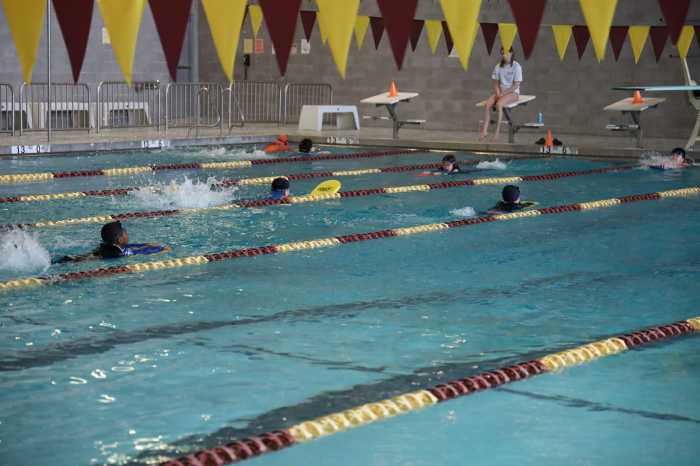
Dvorkin credits NYC Parks’ summer day camp program, which offers season-long activities to kids for $500, as a model for accessible recreation. CUF is calling on the program, which is offered by lottery, to increase its capacity from 500 to 5,000 students.
Nonprofit leaders like Randazzo and Nzingha Prescod, founder of the nonprofit fencing academy PISTE, say defeating recreation deserts means going beyond summer camps to offering year-round, competitive programming.
“Camps offer great exposure, but we’re totally missing the mark on providing a continuous high-impact sport community,” said Prescod, a Flatlands native, two-time Olympian in fencing and 2015 world bronze medalist.
Prescod’s East New York-based institute provides “high-dosage” training, something she said she lacked growing up, along with academic support to over 700 children each year.
“The rigor of doing sport continuously and competitively over time changes who you are, your capacity, your endurance, your ability to fail and try again,” she said. “You need to develop these skills to fulfill your potential and to maximize your personal impact and how far you can go in your life.”
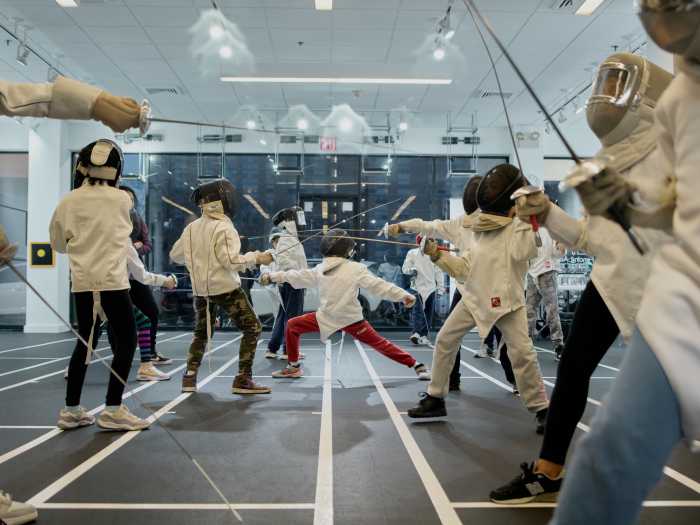
Prescod envisions neighborhoods like East New York becoming incubators for elite talent, which she says will require much more investment from local government.
Dvorkin is excited about the possibilities for funding and growing recreation. A few ideas from the report include integrating recreation facilities along the forthcoming Interborough Express line, offering free recreation classes to library card carriers, and having doctors prescribe recreation as preventative medicine.
“In so many ways, recreation can be a major part of the solution to so much that ails us as a society,” Dvorkin said.