
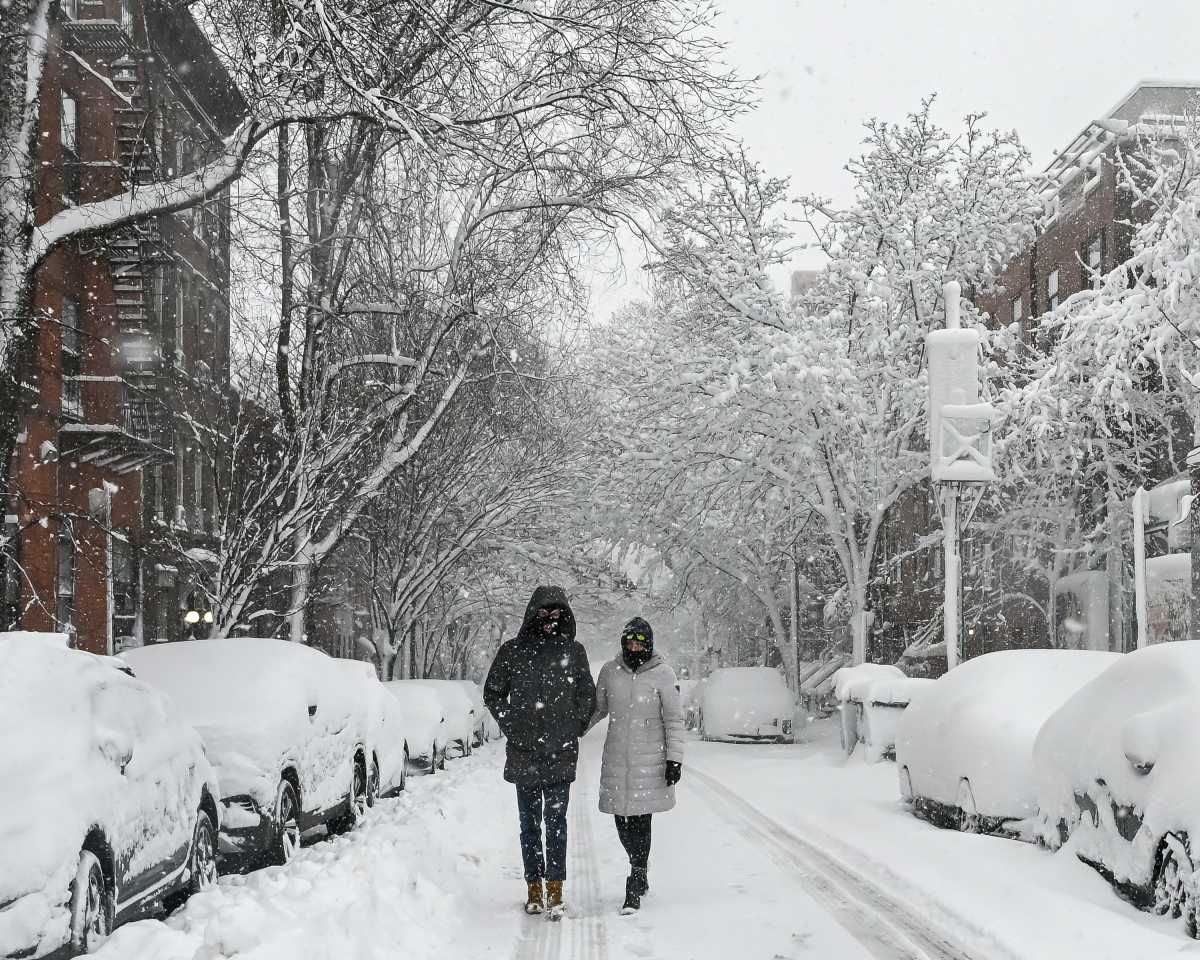
As New York City’s largest blizzard in a decade moved toward the coast on Feb. 22, Brooklynites flocked to grocery stores to stock up on food and ice melt before dangerous cold and wind swept into the borough.
On Monday, with snow blowing and a travel ban in effect, Bed-Stuy resident Thadeus Umpster headed out to restock the community fridge at 133 Van Buren St. with fresh food.
Community fridges fill food pantry gaps
“[Sunday and Monday] we had kind of a run where there were people coming constantly throughout the day,” Umpster said. “There was lots of restocking, filling up the fridge, and then people would come and it would be empty five minutes later.”
Volunteers dipped into a stockpile of extra food they have stashed nearby in case of emergency to keep the fridge full through the storm.
Umpster is a volunteer organizer with mutual aid group In Our Hearts, which helped introduce community fridges to New York City in 2020. The fridges offer free food 24/7 to anyone in need, with no questions asked, and help fill gaps left by traditional food pantries and assistance programs.
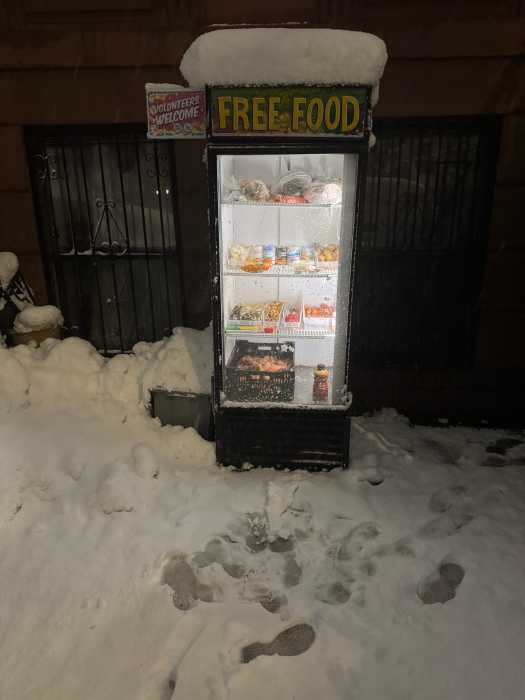
“I personally went shopping [on Sunday] and was in a grocery store and saw a lot of people grabbing stuff,” Umpster said. “But for people who are living on stricter budgets, that’s harder. They’re doing the same thing at the community fridge and taking what they can get there.”
Food insecurity in New York City has been on the rise since 2020. Food prices in the city have risen by 33% in the last ten years, leaving millions of people unable to afford enough food for their households. According to the NY Health Foundation, food insufficiency — where households didn’t have enough food to eat over a shorter period of time – was higher in 2024 than it was at the start of the COVID pandemic.
As food prices have risen, so have visits to food pantries and soup kitchens, which provide a lifeline for Brooklynites in need. But they have limitations.
Most food pantries in Brooklyn offer distributions a few times a week, and weren’t open on the weekend before the storm hit. The severe storm forced soup kitchens like St. John’s Bread and Life in Bed-Stuy and CHiPS in Park Slope to close Monday, taking away another source of free food.

The Van Buren Street fridge — set on a quiet side street about 15 minutes from the subway — is usually more sedate. But on Sunday, before the storm, people were lined up on the sidewalk waiting for their turn to get some food.
“To see it here, it’s like, people are freaking out, understandably, stressing because the storm’s coming and they might be in their house for a few days,” he said. “It felt good that we were prepared. We were handing out bacon to everyone, and bread, big jugs of coffee concentrate.”
Volunteers, meanwhile, were spread across the borough, braving the snow to pick up donations from bakeries, restaurants and produce distributors who donate their wares to In Our Hearts and its fridges. Keegan Stephan, who runs a nearby fridge at 1 Pulaski St., posted a video to Instagram on Monday afternoon after he shoveled the fridge out and refilled it with staples.
“It is cleared out and safe for you to grab some food, come by, take what you need, give what you can, and get involved to support your community,” Stephan said in the video.
‘Snow Patrol’ helps seniors clear snowy sidewalks
As In Our Hearts volunteers worked to feed their neighbors, mutual aid organizer-turned-City Council member Crystal Hudson was rallying volunteers for an oft-overlooked responsibility: shoveling.
In New York City, property owners are responsible for clearing the snow from the sidewalk and fire hydrants in front of their buildings so pedestrians can get through safely. Violating the rule carries fines of up to $350.
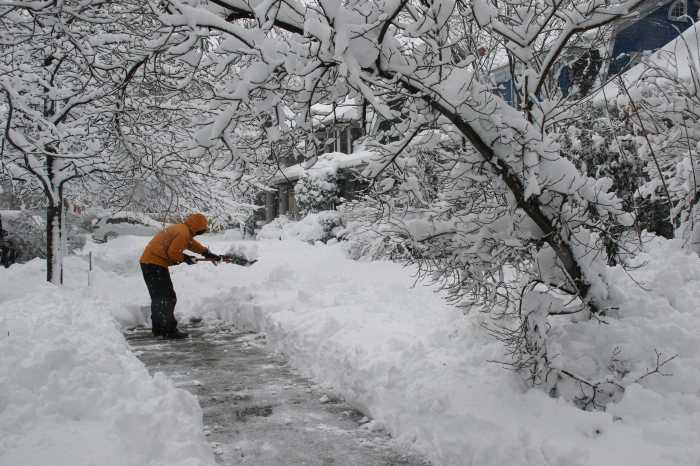
During the city’s last big snowstorm in January, constituents called Hudson’s office looking for help clearing their sidewalks. She and her staff quickly assembled the District 35 Snow Patrol, matching residents in need with volunteers willing to shovel.
They reactivated the program on Monday, and to date, have had around 100 people sign up, with roughly equal numbers of shovelees and shovelers.
“We heard so many really heartwarming, positive stories about folks who, after shoveling, were invited inside for coffee or soup or tea or lunch, and really had an opportunity to meet their neighbor,” she said. “Those people have still been in touch.”
Most people in need of help are older homeowners who can’t clear the snow on their own, Hudson said, and might need help shoveling their front steps as well as the sidewalk so they can get in and out freely and safely.
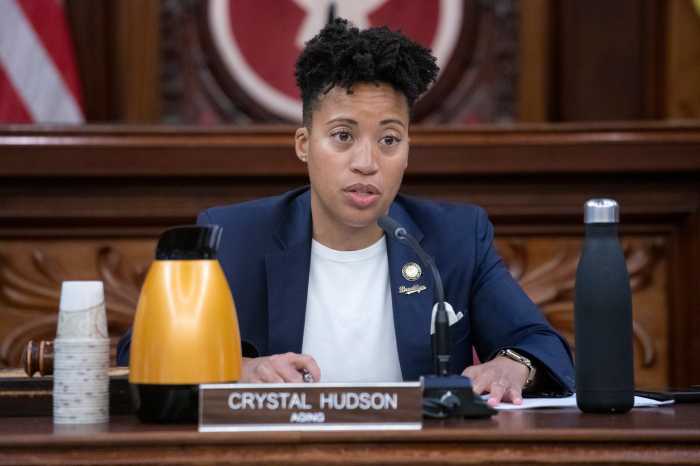
Many of the younger people who have offered to help live in apartment buildings and don’t own shovels or salt, Hudson said, but are willing to help however they can.
“We’ve had to coordinate providing shovels and salt … and that’s been sort of an eye-opening dynamic, because it’s not like people are just walking around with their own shovels offering assistance,” she said. “But they are offering their time and help.”
Hudson wasn’t surprised by people’s willingness to help, even in less-than-ideal weather. In 2020, before she was elected, she founded Greater Prospect Heights Mutual Aid to help deliver groceries, prescriptions and other necessities to neighbors who couldn’t leave their homes.
“I think people are inherently good, and New Yorkers get a bad rap for not being friendly and being stoic,” she said. “But underneath the hustle and the bravado and all of that, we’re good people. And I think folks want to help out however they can.”