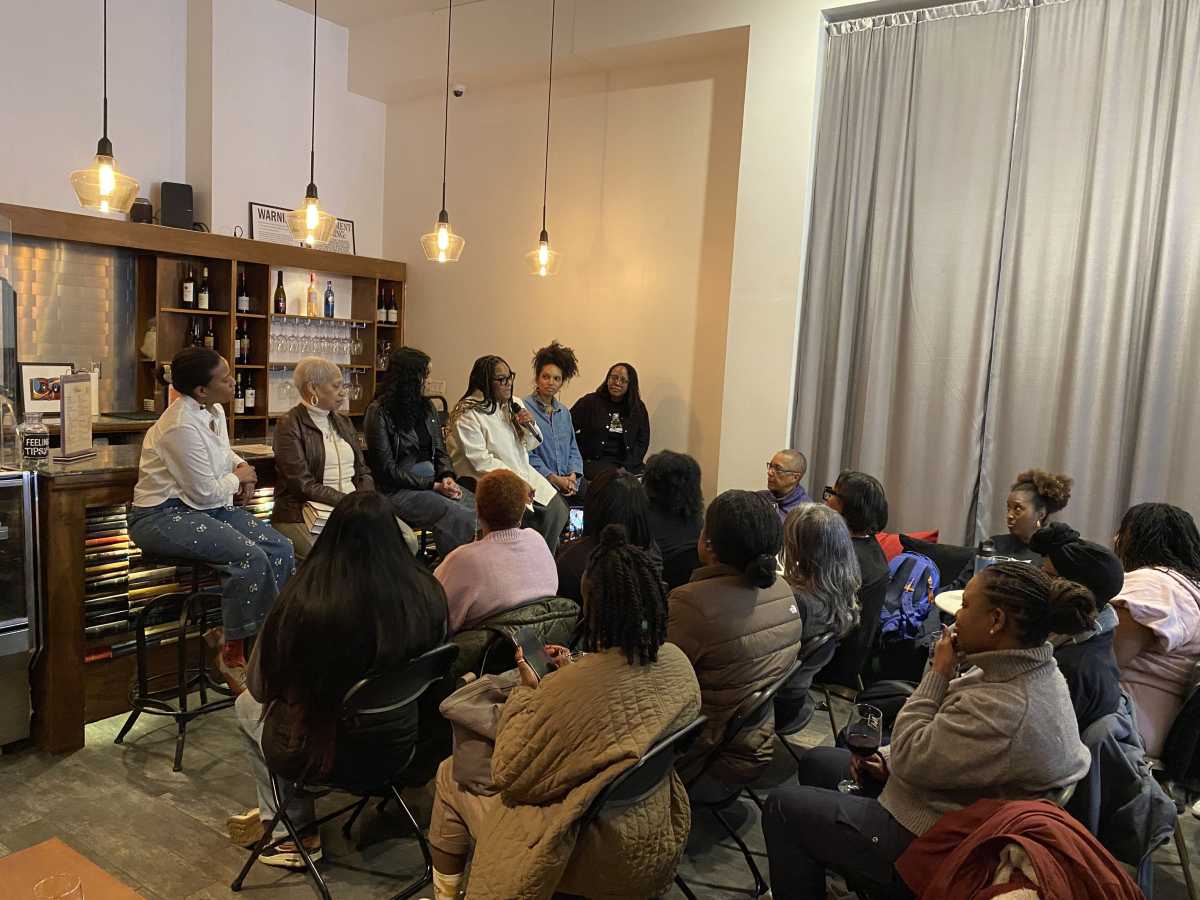

Domino Park has a steamy upgrade as Culture of Bathe-ing brings a European staple to New York — saunas — creating a space for people to detox without a phone in sight.
Originating in the Nordic countries around 10,000 years ago, according to the BBC, saunas were believed to be essential to a person’s emotional and physical well-being. They also played a spiritual role, connecting people to the four elements.
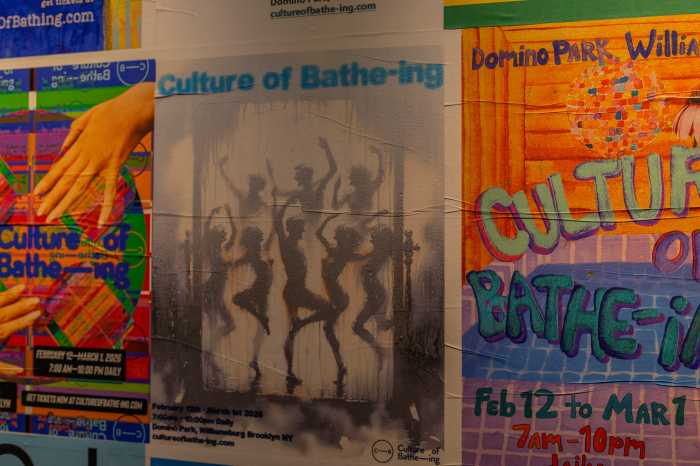
Therme Group, a company dedicated to sustainable wellness, has brought its European grassroots mission to the United States through Therme U.S., which is sponsoring Culture of Bathe-ing’s one-month pop-up through March 1. The goal is to entice New Yorkers with the benefits of sauna culture while building a new one of its own — complete with raves, a kids’ week and daily performances.
“Bathing is all about real life,” Robert Hammond, co-founder of Friends of the Highline and Therme U.S. president, said. “What we’re interested in is the physical sauna, where you talk to people, where that’s part of the experience.”
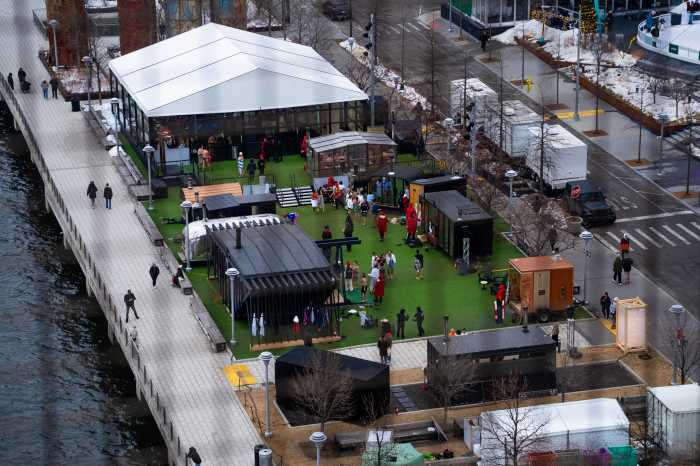
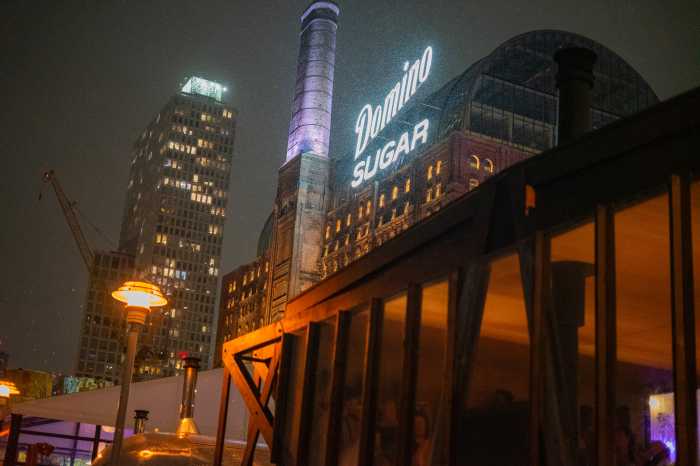
Hammond said Culture of Bathe-ing began as a Substack about a year ago, before the team realized that bathing culture isn’t digital — it has to happen in real life.
With 15 architecturally distinct saunas, Hammond said he wanted to create a range of experiences. The largest sauna, which holds about 70 people, was built from the ground up to accommodate larger crowds and performances.
Twice a day, wellness dancers and sisters Joli Irvine and Alexi Irvine perform inside the heated sauna, presenting a “fire and ice” routine they created themselves.
“We love it,” Alexi said. “We’re doing a lot of like rituals, off goose, which is more like healing, breath work, and stretching and also in the sauna we do the show.”
During the 15-minute performance, the Irvine sisters, dressed in fire-and-ice–themed costumes, heat up the room with a storytelling piece about the bond between the two elements. As the dance unfolds, the sisters separate, creating a world ruled only by fire. The temperature rises as they ladle more water onto the sauna rocks, intensifying the heat.
Once fire and ice reunite, the dance ends, and the sisters — along with the audience — rush outside into the cold air.

To train for this heated performance, Joli said it took “a lot of practice and a lot of dedication. Just doing it over and over again and feeling how that feels in the body.”
Hammond wanted to bring a new culture to the sauna that traditionally isn’t seen in the bathhouse. That’s why he partnered with Pioneer Works to bring a dance into the mix.
“So how do we bring culture that normally doesn’t happen in a bathhouse into the sauna?” he said. “That’s why we partnered with Pioneer Works to also bring different performances that you would normally see in a theater.”
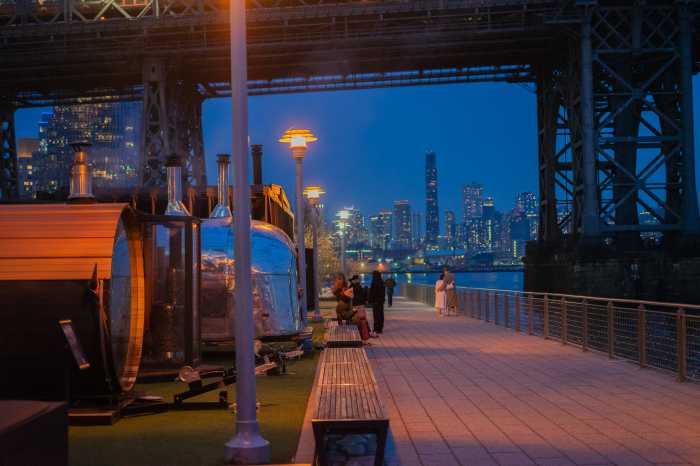
While Hammond believes sauna culture is already growing in New York City, he plans to take the show on the road and continue staging Culture of Bathe-ing pop-ups across the country.
“We’d also like to go to other cities and sort of take this on the road,” Hammond said. “Bring it to cities that really don’t have a sauna culture.”