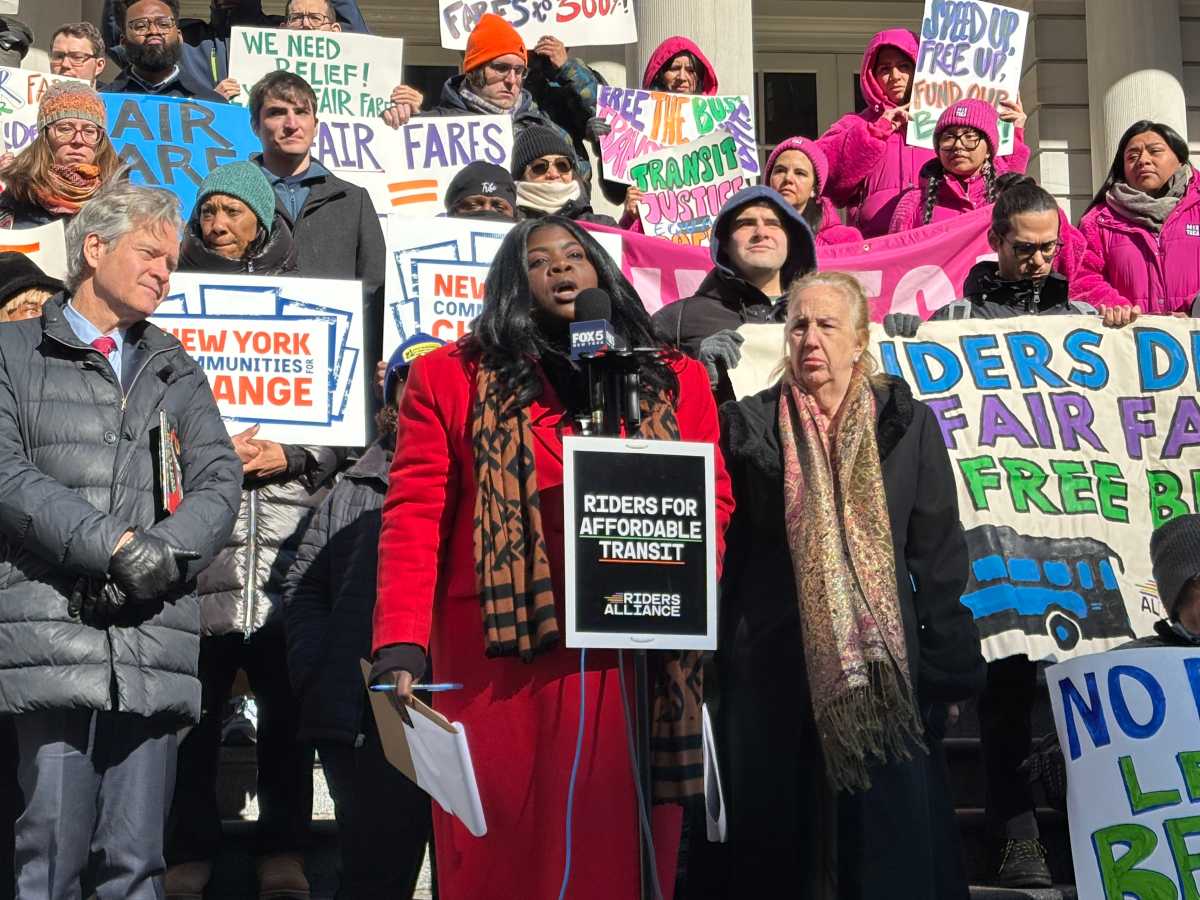

One day after the New York City Council backed a plan to expand the Fair Fares NYC program, transit advocates took their message directly to riders across the five boroughs.
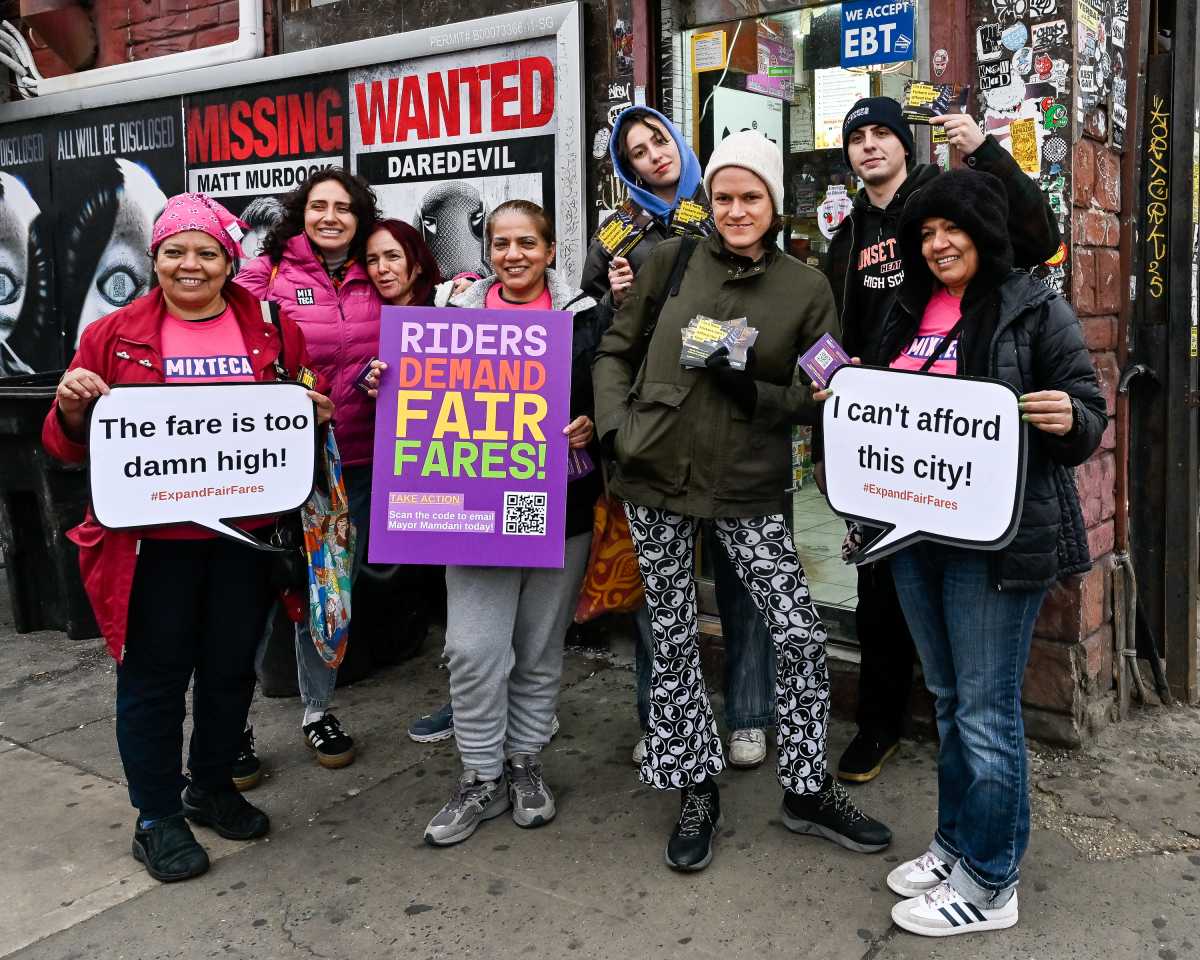
The proposal would make buses, subways and Access-A-Ride free for New Yorkers living at or below 150% of the federal poverty level — or $23,940 annually for a single person and $49,500 for a family of four. In support, Riders Alliance members, coalition partners and elected officials fanned out to subway stations and bus stops for a “Fair Fares Evening of Action.”
Currently, more than 360,000 of roughly 1 million eligible New Yorkers are enrolled in Fair Fares, which provides a 50% discount on subway and bus fares.
However, transportation advocates are calling for broader transit affordability reforms, including half-price fares for working-class New Yorkers earning up to 300% of the federal poverty level — $47,880 annually for a single household and $99,000 for a family of four — and automatic enrollment for recipients of public benefits such as SNAP.
According to Riders Alliance, an expanded Fair Fares program would cost $300 million, covering free transportation for 1 million New Yorkers below the 150% poverty line and half-price fares for 1.1 million riders below the 300% threshold.
At the 36th Street D/N/R subway station in Sunset Park during rush hour Thursday, members of Riders Alliance and Mixteca — a community-based organization serving the Mexican and Latin American immigrant community — handed out palm cards in Spanish and English to straphangers, informing them about the proposed expansion and additional reforms aimed at making public transportation more affordable for more than 2 million New Yorkers. The cards included a QR code linking to an email form addressed to Mayor Zohran Mamdani, city council members and borough presidents, urging support for the reforms.
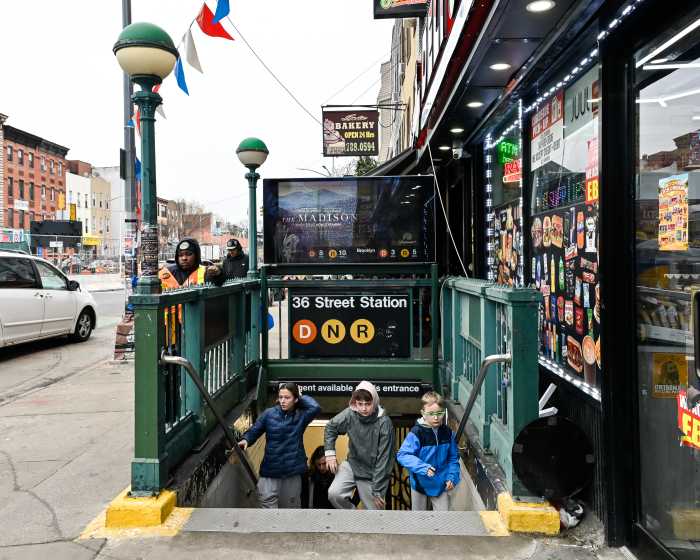
Mayana Nell Torres, an organizer with Riders Alliance, told Brooklyn Paper the organization was thrilled the council had proposed funding free transit for low-income New Yorkers. However, she said far too many residents who need relief from rising costs still do not qualify for the program.
“That’s why we’re out here asking riders to email Mayor Mamdani, Council, Speaker Menin, and their council member to expand the Fair Fares program and double the income limit so more people can qualify for half-price transit,” Nell Torres said.
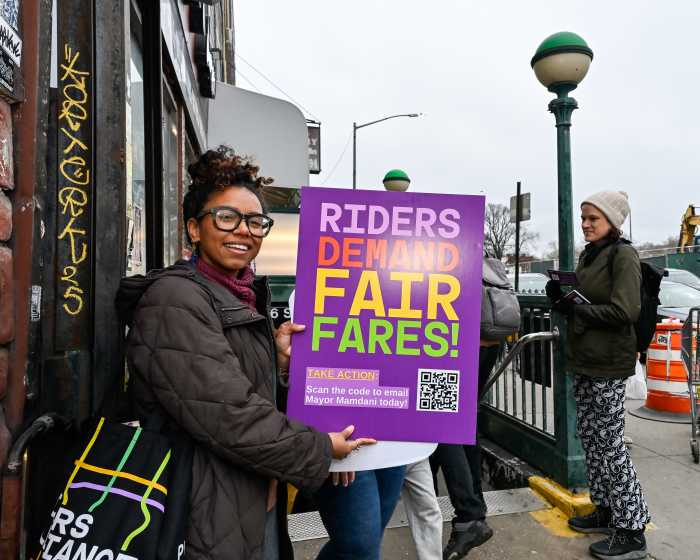
Carolina Moreno, a community advocate with Mixteca, told Brooklyn Paper that public transportation should not be a luxury but an affordable right for working New Yorkers.
“We realized that the prices in New York City are going higher, the rent is going higher, and the transportation is also going higher. So it used to be affordable,” Moreno said. “It used to be easier for the community to make it here, but with all the changes also in the administration, it’s harder for immigrants, first arrivals, and people in general to afford public transportation.”
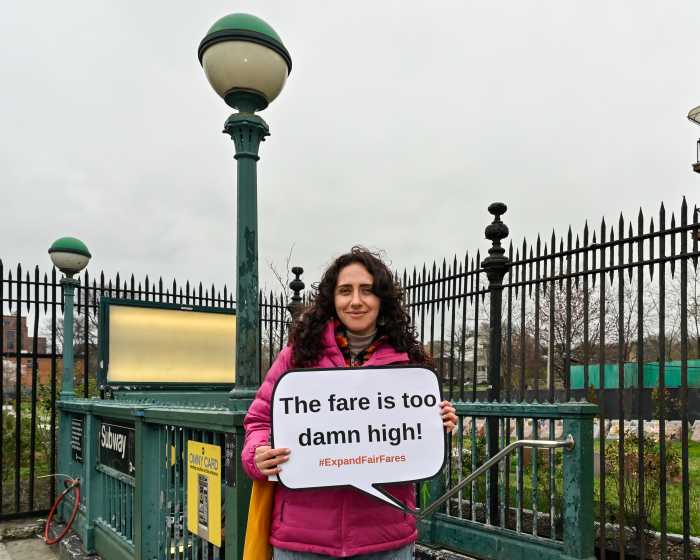
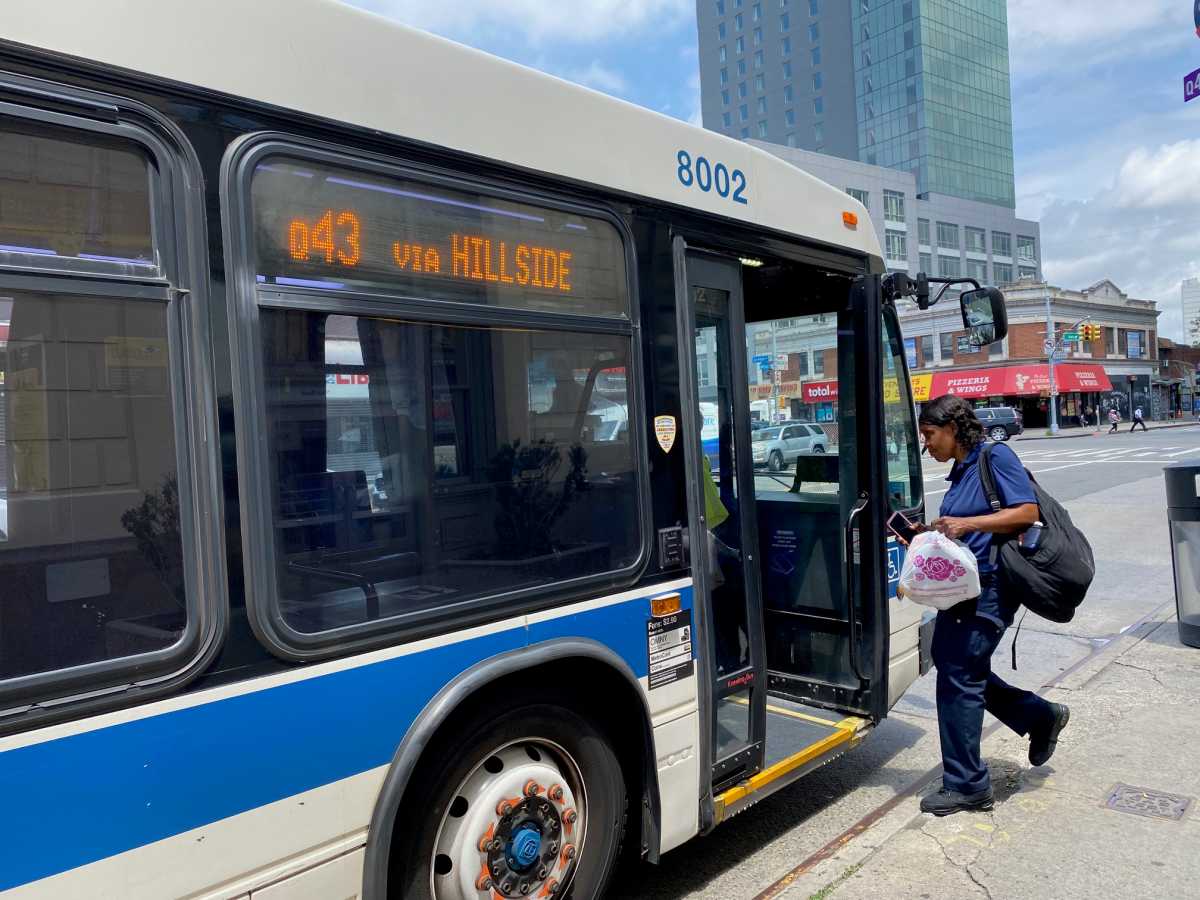
One straphanger from Staten Island shared her frustration with the MTA’s phaseout of unlimited-ride MetroCards and the OMNY system, which she said did not recognize her free transfers.
“It’s supposed to be free. That doesn’t happen for me,” the single mother, who recently beat cancer, said. “I’m spending $100 to get to work every week. Between the rent and this damn MTA, I’m losing money all the time. Between the fare hikes and rent, you can’t live; it’s just extremely hard.”
Nicholas Alban, a Riders Alliance volunteer and social studies teacher at a Sunset Park high school, said the city’s expansion of student MetroCards to year-round use with up to four free rides a day allowed his students to participate in summer internships, jobs and extracurricular activities without added financial strain.
“I saw that changing a lot of my students’ lives. So I know that the expansion of Fair Fares would have that same effect on the general population, 2 million New Yorkers, the families of a lot of my students,” Alban said. “It’s easy to think that the $6 it would get you to and from that internship, that summer camp, that summer youth employment job, but you know, that adds up over time.”
Advocates say expanding Fair Fares would also address fare evasion and reduce punitive measures such as summonses, fines and arrests. According to Riders Alliance, 92% of riders arrested for fare evasion are people of color, and low-income neighborhoods — especially in Brooklyn and the Bronx — are heavily targeted for enforcement.
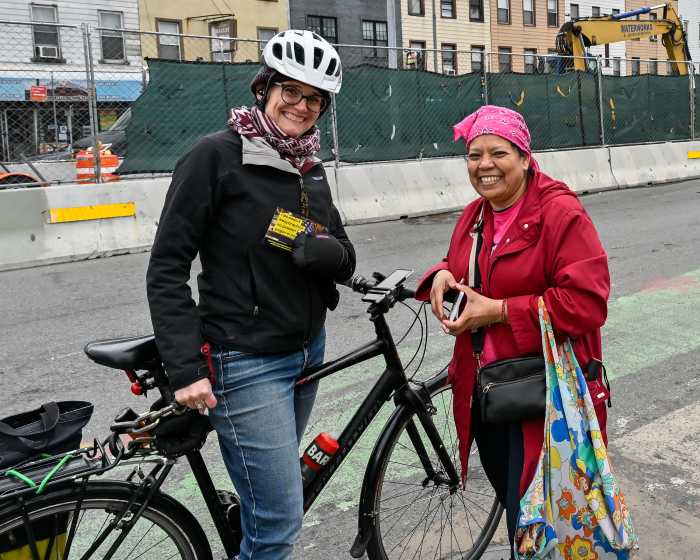
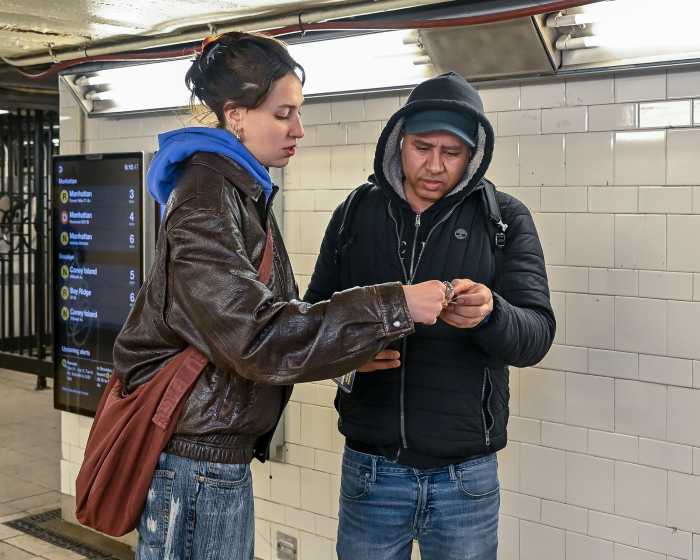
Riders Alliance member Ayva Holden said many riders appeared receptive to the proposed expansion.
“I think it’s really important that the transit system that so many New Yorkers rely on is actually affordable to them, and people aren’t forced to fare evade or do things that they maybe don’t want to do because they can’t afford the fare in the first place,” Holden said.
Riders Alliance Policy and Communications Director Danny Pearlstein said automatic free bus, subway and paratransit fares for more than 1 million very low-income New Yorkers would provide transformative access to basic needs and opportunities.
“For the working-class riders who keep this city running, relief can’t stop there. Half-price fares for adults earning up to 300% of the federal poverty level are essential to making transit affordable and mitigating an otherwise harsh benefits cliff,” Pearlstein said.
He added that Riders Alliance “deeply” valued City Council Speaker Julie Menin’s and the council’s leadership in recognizing riders’ needs in their budget response and said the group looked forward to working with city officials to deliver on the full promise of Fair Fares this June.