Build a school, get aboard the Fourth Avenue gravy train.
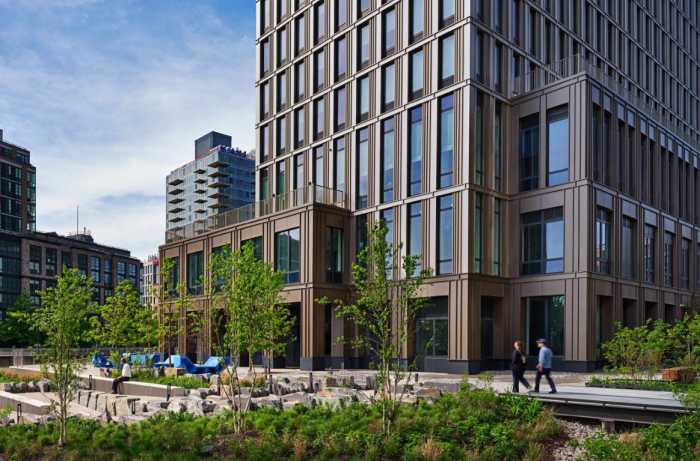
The Department of Education is looking for an outside developer to build a new public school on the Park Slope side of the rapidly gentrifying boulevard in exchange for the right to develop 12 stories of new housing.
It doesn’t take a calculus lesson to add up the advantages of the deal. The city gets a bigger school at no cost, the developer gets the residential portion of the project — and kids get a first-hand lesson on gentrification, development and politics.
After all, critics complain that such deals create state-of-the-art schools in tony neighborhoods, leaving the less-fortunate to fight over the city’s limited pool of school construction money.
But city officials dispelled that fear.
“If you have an area where [this kind of deal is] economically viable, I see no reason not to invite the private sector in,” said Jamie Smarr, executive director of the Educational Construction Fund, a public agency established to develop and finance these dual-occupancy schools.
Smarr added that city money is actually freed up by such private-public school projects because they are financed with tax-exempt bonds.
The PS 133 parcel — which is between Butler and Baltic streets — would be the 17th such partnership that the ECF has made with private developers — but the first in Brooklyn.
“Brooklyn has high property values [so] we can try it here,” said Smarr, who claimed the 14 completed schools — all in Manhattan, and most of which were completed in the 1970s — turned out to be good deals.
The most-recent project, completed in 1998, was a new building for PS/IS 89 in Lower Manhattan. The school is home to 700 students, and the adjoining residential building added 151 apartments to the neighborhood.
“[This kind of deal] augments what the city is able to do,” Smarr said.
The developer controls the type of housing — luxury, low-income, mixed-income — that is built, while the ECF concerns itself only with the school, Smarr said.
The current building housing PS 133 was built in 1900 and it would take millions to bring it up to 21st-century standards.
“It has a host of deferred-maintenance issues,” was the way Smarr chose to put it. The new building would not only be state-of-the-art, but also hold 530 students, nearly double the current capacity.
As soon as it is completed, the old facility will be demolished.
Bids from developers were due this week, and Smarr estimates that the new PS 133 will be ready in about three years.