
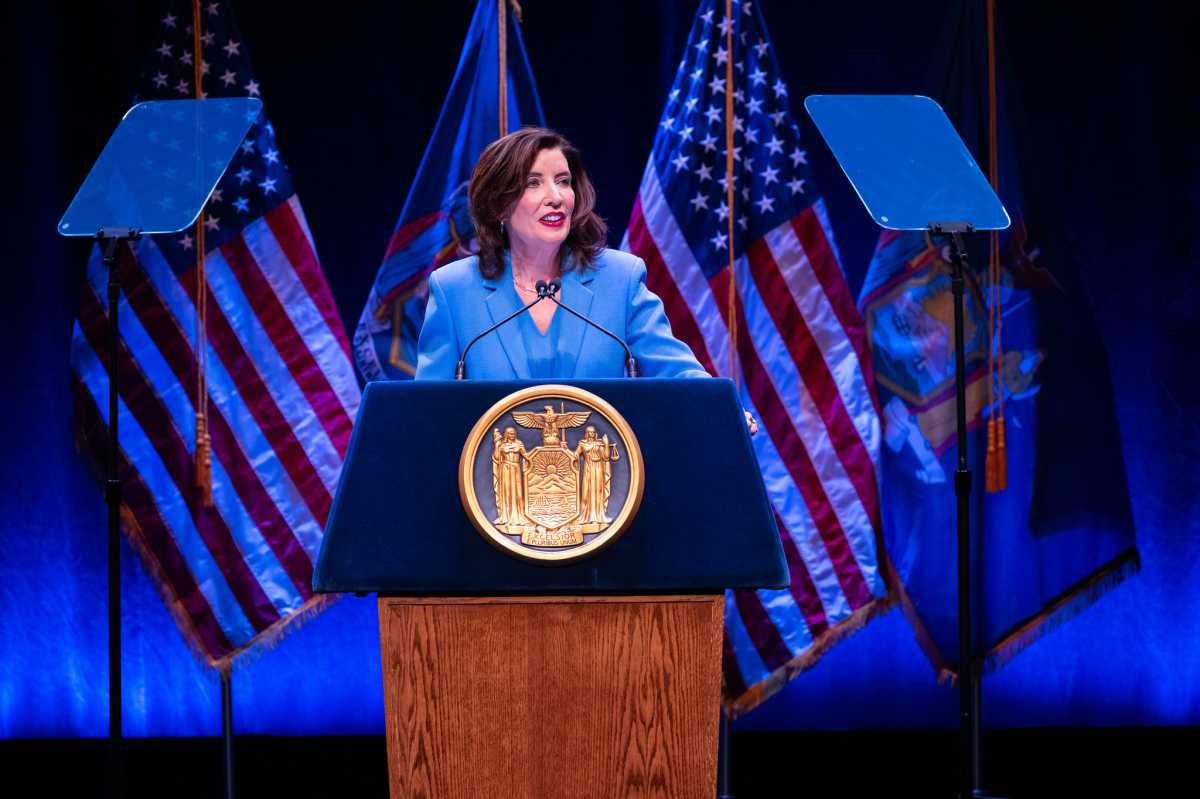
Gaming and social media platforms could soon be required to comply with stricter child protection laws in New York state, aimed at preventing companies from profiting off the exploitation of children, Gov. Kathy Hochul announced Jan. 13 during her 2026 State of the State address.
Hochul said major components of the Stop Online Predators Act, or SOPA, will be included in her proposed 2026 state budget as part of a broader effort to strengthen online safety for children.
The legislative package would impose expanded age-verification requirements and default privacy protections for minors. Under the proposal, non-connections would be unable to message children, view their profiles or tag them in content, and location settings would be turned off by default. Children younger than 13 would need parental approval for new connections. The legislation would also disable certain artificial intelligence chatbot features for minors, require parental approval for financial transactions tied to a child’s account and allow parents of children under 13 to view their child’s list of approved friends.
Social media and online gaming platforms that violate the law could face civil penalties of up to $5,000 per violation, enforced by the New York state attorney general’s office.
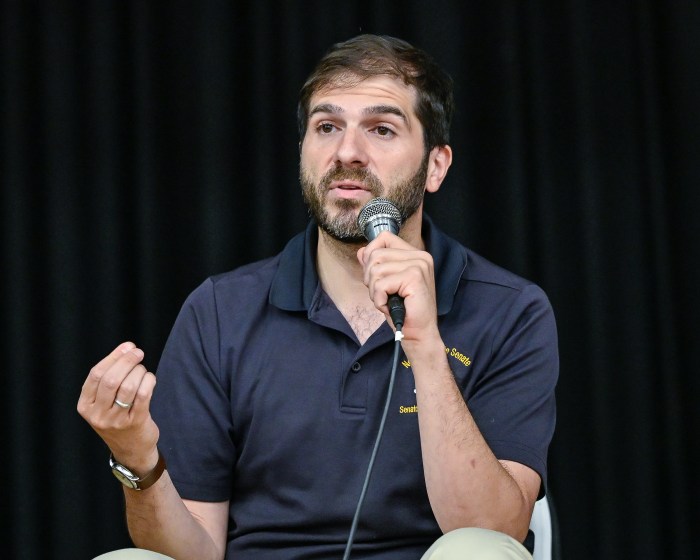
SOPA was drafted by its cosponsors, state Sen. Andrew Gounardes (D-Brooklyn) and Assembly Member Nily Rozic (D-Queens), in response to what they describe as a growing epidemic of child sexual exploitation and abuse online.
The Child Crime Prevention & Safety Center estimates that roughly 500,000 online predators are active each day, with children ages 12 to 15 particularly vulnerable to grooming and exploitation.
Predators often target minors through social media and gaming platforms such as Instagram and Roblox, a free game-building platform that averages more than 79 million daily users. More than 40% of Roblox users are younger than 13. Critics say social media and gaming companies have failed to implement meaningful safeguards to prevent abuse on their platforms.
Roblox reported more than 13,000 incidents of child exploitation to the National Center for Missing and Exploited Children in 2023. Bloomberg reported that since 2018, U.S. law enforcement has arrested at least 24 people accused of abducting or abusing victims they met or groomed through Roblox. Some of the suspects were already registered sex offenders.
In August 2023, New Jersey resident Arnold Castillo was sentenced to 15 years in federal prison for grooming a minor in Indiana and using Uber to lure her across state lines to his home, where he sexually abused her multiple times. According to court documents, from January to May 2022 Castillo used a false identity, “Jacob Shedletsky,” to communicate with and groom a 15-year-old girl through social media and gaming platforms including Instagram, Roblox and Discord.
Gounardes praised Hochul for backing the legislation.
“For years, social media and gaming companies have failed to stop the rampant sexual and financial abuse of children on their platforms, because they profit from it,” Gounardes said in a statement. “Today’s announcement from Governor Hochul is a major win for families who shouldn’t have to worry that Big Tech is taking advantage of their children without their knowledge. I applaud the Governor for supporting these critical protections and look forward to working with her and the Legislature to finally put our children’s safety ahead of corporate profits.”