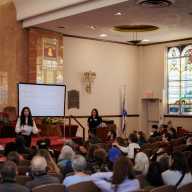
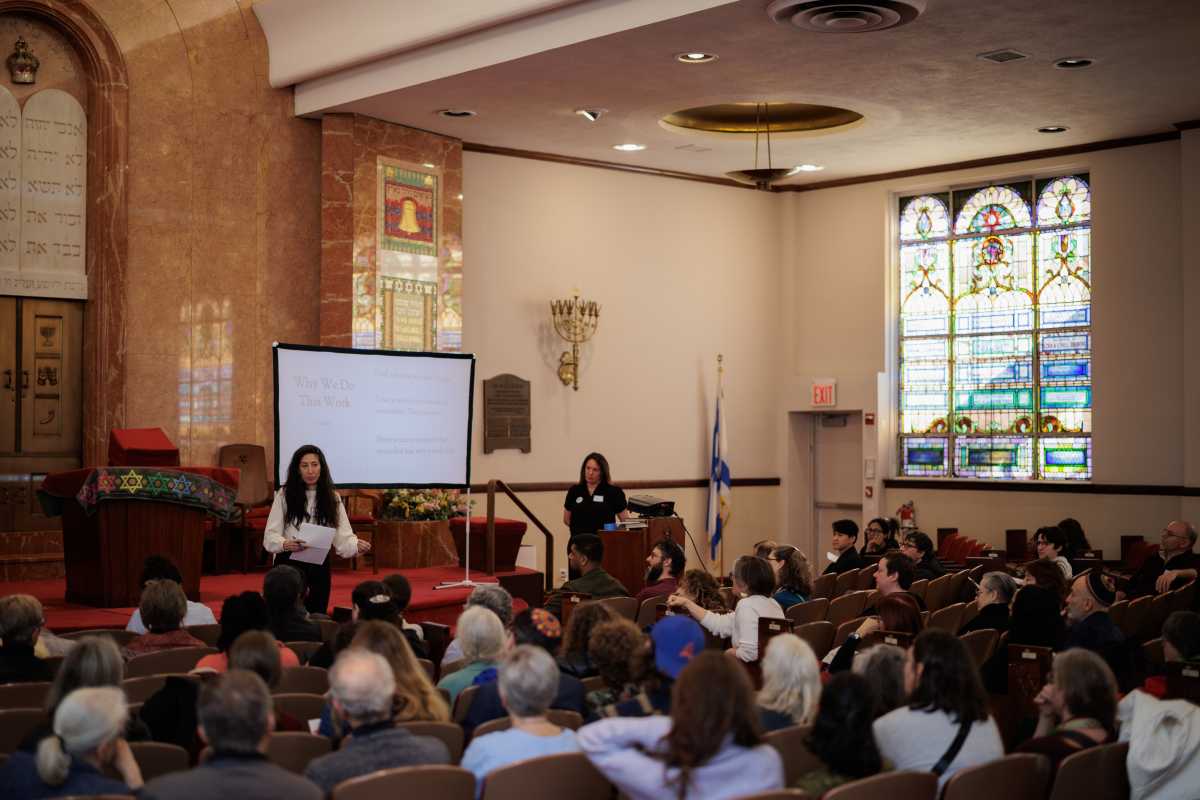
Dozens of faith leaders and community members gathered at the Flatbush Jewish Center in Kensington on March 22 for the District 39 Interfaith Immigration Summit, mobilizing against the Trump administration’s continued Immigration and Customs Enforcement (ICE) raids in immigrant neighborhoods and mass deportations that continue to disrupt communities across New York City.
The half-day summit was hosted by Council Member Shahana Hanif, who represents the 39th District, and the Interfaith Center of New York (ICNY). It aimed to build solidarity, share resources and organize a coordinated interfaith response to roving ICE raids, enforcement at immigration courts and shifting federal policies through Know Your Rights trainings, rapid-response planning, hand-in-hand domestic employers training, and community-building sessions.
Hanif, whose district includes parts of Kensington, Borough Park, Windsor Terrace, Park Slope, Gowanus, Carroll Gardens, Cobble Hill, Boerum Hill and the Columbia Waterfront, said she hoped the summit would not only provide a platform for community members to learn about each other’s faiths and traditions but also lay the groundwork for long-lasting friendships and collaboration.
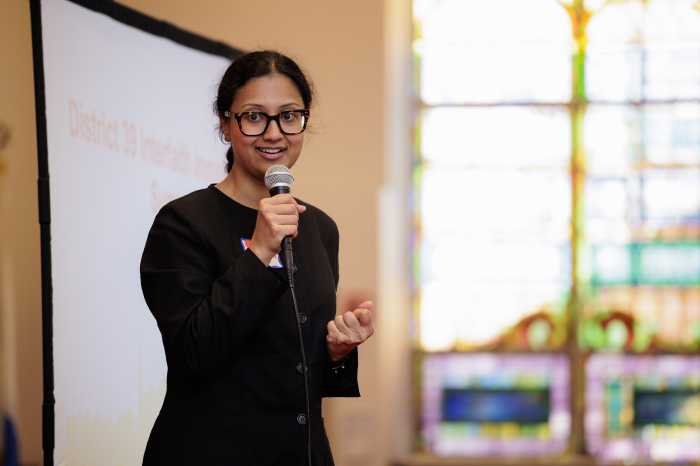
“As a Muslim council member in a district that has a huge Muslim enclave and a huge diverse Jewish community, I came into this work doing interfaith work. So having this summit doesn’t feel like we’re doing something new, it’s a continuation of what we’ve already been building,” Hanif told Brooklyn Paper, noting that with the rise in anti-Semitism, Islamophobia and other forms of bias, it was essential that community leaders engage in conversation at meetings like the summit.
“I don’t think leaders are talking to one another, and if we don’t model a conversation that shows our community, New Yorkers, that despite us having different perspectives, that we will continue to fight together because there’s a fascist regime,” Hanif said. “I feel like it’s my responsibility to be holding space like this. If we don’t try to talk or if we don’t try to gather, then we’re not going to win, and I think all of our gods would be upset.”
Rev. Dr. Chloe Breyer, executive director of the Interfaith Center of New York, said the state of civil society was “pretty strong,” but that it sometimes took a crisis to recognize its strength.
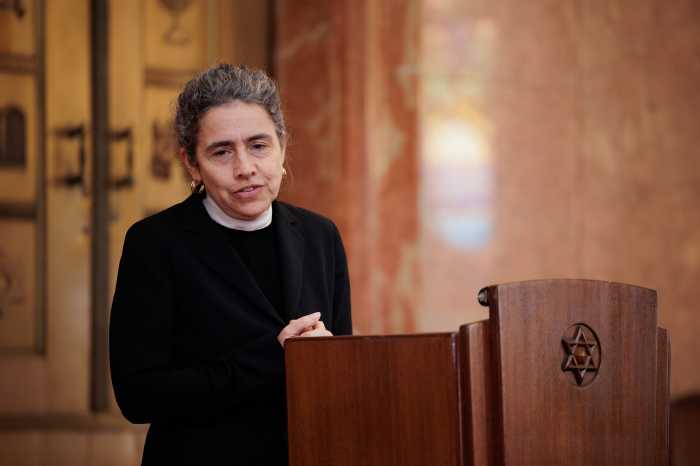
“At ICNY, it has been our job to make sure our faith communities are in the mix anytime there is a challenge to our democracy, whether it is resourcing and providing hospitality to new New Yorkers, or accompanying those same neighbors to their trips to Federal Plaza,” Breyer said. “All these are our practices of democracy, and we know our faith communities are integral to exercising that muscle. Knowing and caring for our neighbors, as we know, is what it all boils down to.”
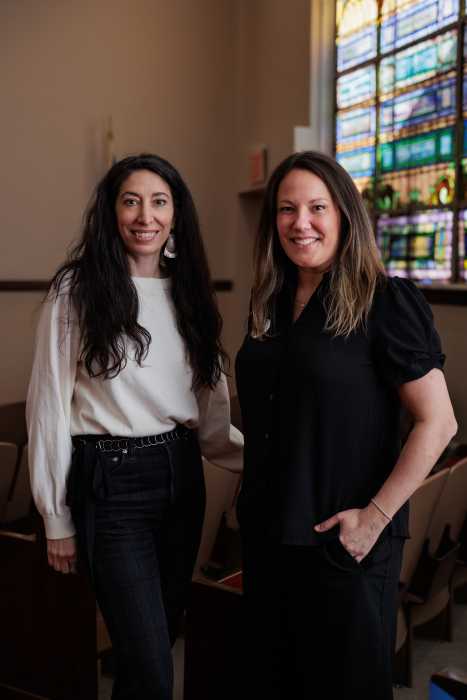
Gina Cirrito and Erica DePiero, co-founders of Mañana Otro Día, a community-based organization assisting families seeking asylum, opened the event with networking and community-building exercises to help participants learn more about one another before the training sessions.
Cirrito emphasized the importance of learning more about fellow community members who care about the same issues in order to build trust.
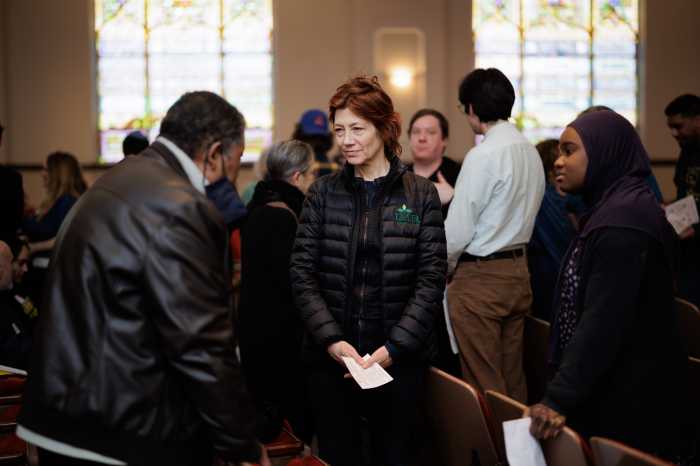
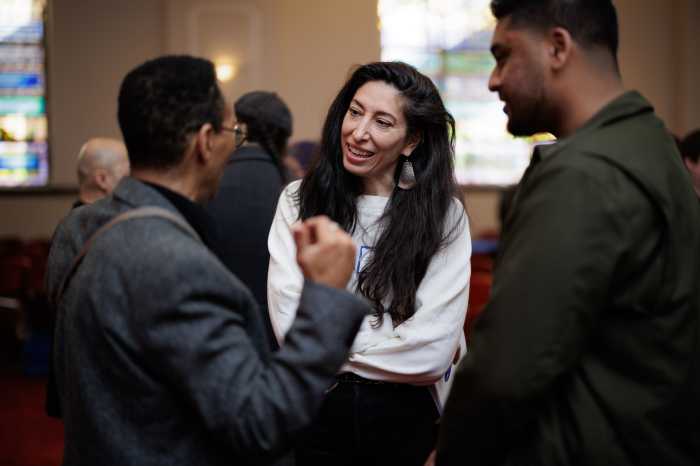
“It’s a really hard thing to know your neighbor … we’re told to be scared of each other, we’re told to question each other, and I think it’s a beautiful thing when you’re given the tools and you’re given the okay to talk to people,” Cirrito told Brooklyn Paper. “It’s just beautiful what can come out when you come together and actually talk about what you have or what you need.”
Rabbi Sam Kates-Goldman of Kolot Chayeinu, a Jewish congregation in Brooklyn, said his father was a refugee. Channeling the words of Leviticus, Kates-Goldman said that in addition to being called to treat immigrants with respect, there was a deeper warning.
“If the vulnerable amongst you are being targeted, you are all being targeted. If the vulnerable amongst you are being kidnapped, you are being kidnapped. It is a sense of who we are as a community that is under attack,” Kates-Goldman said. “What grounds my faith in this work for immigration is the remembering that there is no separation there, there is not a separate law that grounds how our government must treat its immigrants and how our government must treat its citizens. There is only a warning that how our government treats those who are vulnerable will eventually be how our government treats us all.”