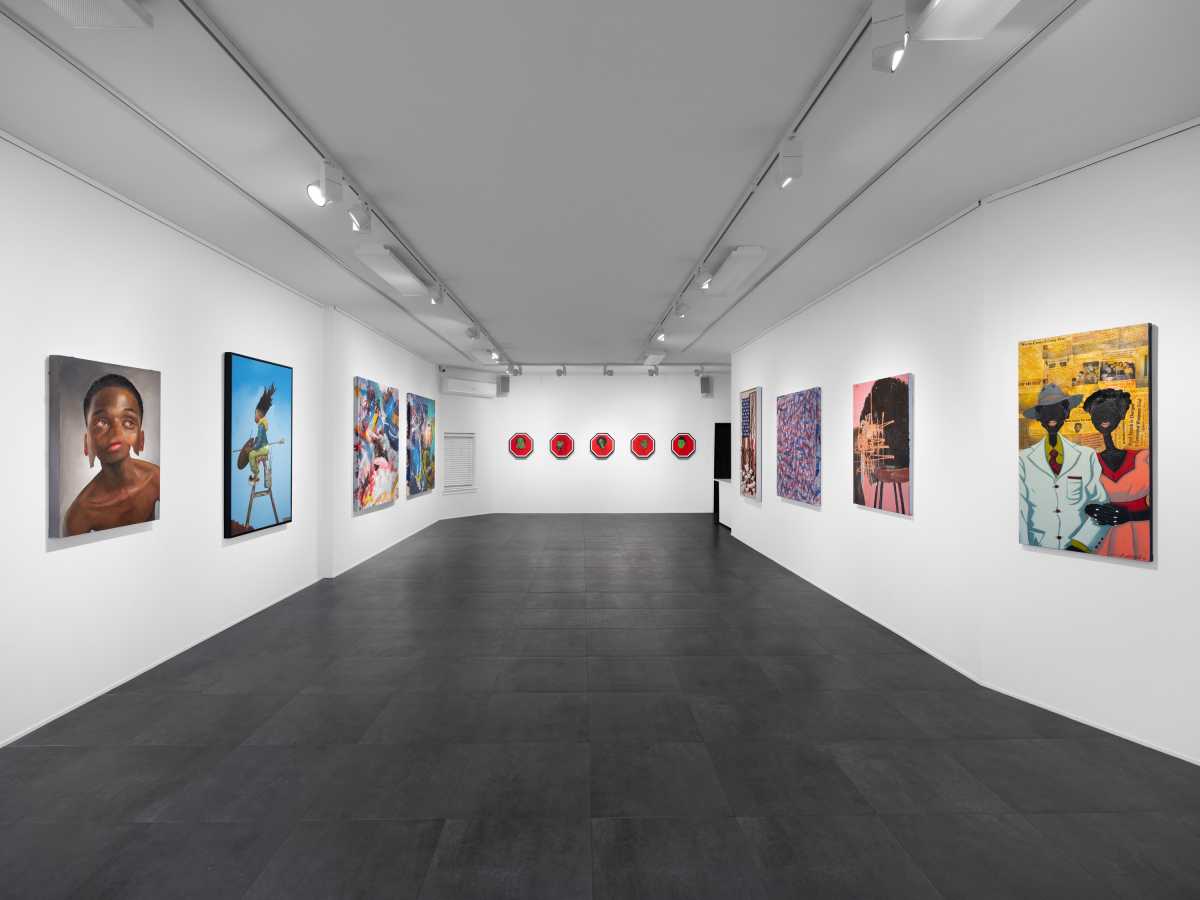
Nearly 60 years ago, Black bodies were under attack and under surveillance lawfully by police. Today, that scrutiny persists, with Black people still persecuted for wearing hoodies, for how they walk and for the color of their skin. “Looking for Terry” challenges those narratives, revealing that the Black experience is far greater — and far more beautiful — than the narrow images of suspicion and criminality that have long shaped how Black bodies are perceived.
The exhibit aims to reclaim what the Black gaze looks like outside of the confines of institutional surveillance, policing and discrimination, while also scrutinizing the painful historical experiences of Black Americans. The show draws inspiration from the infamous Supreme Court ruling Terry v. Ohio (1968), which established the police’s right to stop and frisk commonly referred to as the “Terry stop” individuals suspected of carrying weapons without full probable cause, a practice that has disproportionately affected Black communities for decades.
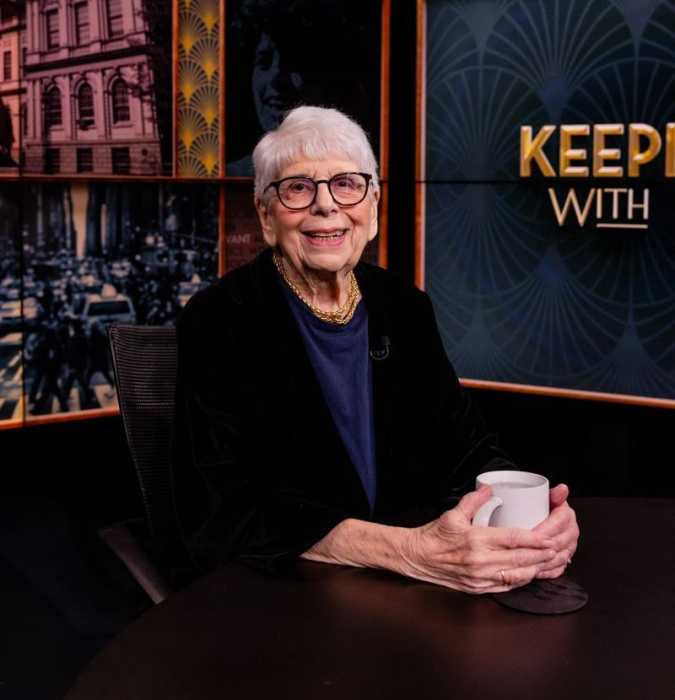
“There are so many negative stereotypes between the police and the [Black] community and the same patterns keep happening in our neighborhoods over and over again,” Terry Alexander, Richard Beavers Gallery associate, said. “That’s why it was important for us to show this story and for the community to see a group of different artists presenting their work in this space.”
According to the NYCLU data, Black New Yorkers only make up about 23% of the city’s population but accounted for 52% of all stop-and-frisks and Latinx New Yorkers made up 31%, and white New Yorkers only 10%. From 2023 to 2024, there was a 50%increase in total cases of stop and frisk, increasing from 16,971 to 25,386 cases.
Although issues like stop-and-frisk are historical markers of racial discrimination and contemporary examples of racial oppression, they do not fully capture the depth and complexity of the Black experience. The “Looking for Terry” exhibition challenges those narrow narratives, reminding viewers that Black life extends far beyond the images of surveillance, suspicion and criminalization that have long shaped public perception. Through their work, the artists featured in “Looking for Terry” hope to continue the conversation by engaging audiences in deeper reflection about identity, history and the many dimensions of Black life.
Meet some of the Artists
Patrick Henry
Patrick Henry, 46, professionally known as Rich Fresh, is a Memphis native who is an unconventional artist. He was originally known locally for his eccentric fashion style and later gained widespread recognition for his work as a top fashion designer. Around age 13, Fresh began gravitating toward fashion, drawn to its transformative power. He used fashion as a tool for artistic expression and it became a marker of status. He built his name dressing some of the biggest names in entertainment, competing, as he puts it, with “Tom Fords and Guccis” on sheer audacity alone and even started his own luxury brand. After moving to Los Angeles, Fresh discovered his love and calling for painting.
Six months before “Looking For Terry” opened, he picked up his paintbrush for the first time — making this show his very first gallery exhibition, ever. His entry into art was almost accidental: he posted a painting to his Instagram story without much expectation and within hours, gallery owner Richard Beavers reached out. Being a part of the exhibit has been affirming for Fresh’s art career
“I wasn’t expecting to be picked up by a gallery or anything like that,” Fresh said. “I was [making art], just to do it. But [this moment] was so validating. As an artist, you don’t have very many moments where you feel the opposite of the underdog.”
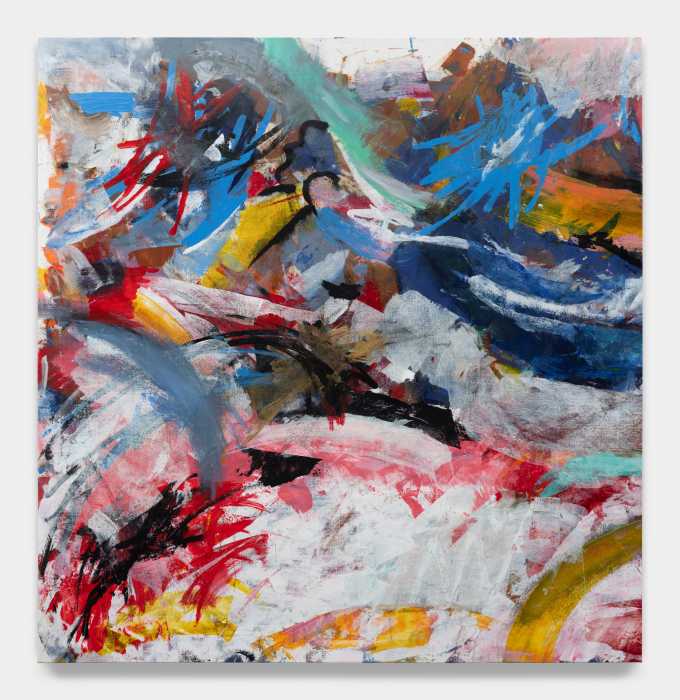
Fresh was humbled to be in the presence of other great artists in the exhibition but beyond the immediate gratification, he recognized the importance of the moment. Through his piece, he was making a statement about Black life, one that pulled from his own pain dealing with racial discrimination.
“I felt a lot of emotions,” he said. “It’s unfair to live in a place where someone can interrupt your peace at any moment. I’ve experienced that myself — just standing around, minding my own business and the police pulled up saying I matched a description. Sometimes it feels like you’re judged simply for being Black.”
Fresh went through a lot of different emotions during his artistic process. He hopes audiences can see these emotions represented through his painting and learn from the pain and frustration of Black people.
“It’s like there’s just something about being Black that’s unfuckwithable, because we’ve been challenged for so long,” Fresh said. “You develop a personality that’s like, ‘Bro, get out my face.’ By the time I finished the piece, the anger and frustration were gone and there was a sense of joy and calm. [Black people], we’re going to be all right. We’ve made it through worse.”
Fresh hopes his work — and the exhibit as a whole —will prompt audiences to start conversations about what’s right and wrong in America, challenge the way they think and show up in the world and reconsider preconceived notions or assumptions.
Desmond Beach
Desmond Beach grew up in Baltimore, Maryland, where he attended the Maryland Institute College of Art, earning both a BFA and an MFA. He then attended the University of Plymouth in England, where he earned his Phd. Beach specializes in the use of textiles, paying homage to African ancestry and communicating emotions, as well as Black familial traditions and customs.
For Beach, fabric and textile represent memory, protection and a form of resistance that stretches back centuries. Beach works in what he calls his “Beloved Tapestry” series, large-scale textile pieces that he deliberately roots in the tradition of Black women who quilted not simply as a craft but as an act of survival. This notion has shown up in the way he has engaged with racial discrimination in America.
“I remembered seeing the image of Michael Brown lying in the street, uncovered for six hours,” Beach said. “ I thought [to myself] I would have grabbed one of my grandmother’s quilts and covered his body. The quilt could be a thing of protection and safety.”
His piece in “Looking for Terry” carries that same dual purpose, showing the anger and surveillance placed on Black bodies, while softening it with the intimacy of fabric. This intimacy is something he witnessed being taken from him firsthand.
Beach remembers when his family moved to the suburbs, he was followed by police through his own neighborhood while driving. “I couldn’t even drive in my neighborhood without being followed,” he said, “[Police were] assuming I didn’t belong.” That awareness never left him. “Every time I get in my car now, I think about that.”
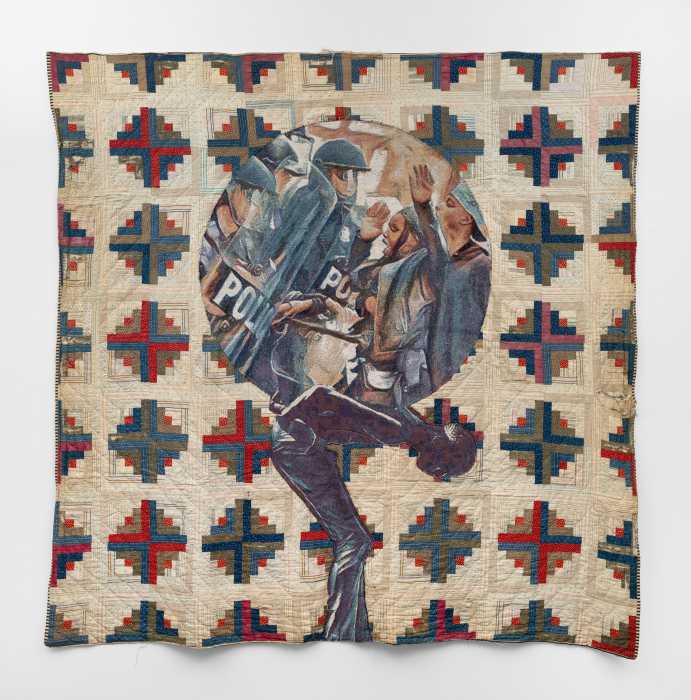
Beach hopes that the exhibit can foster some real change in our social and political climate that helps bridge humanity together on one united front.
“This idea of education is liberation,” he said. “Talking about things can free us from oppression. By calling out unjust behaviors and policies and inviting people into the conversation, we foster understanding and enlightenment. That’s why I want to be part of this project.”
Beach doesn’t want this exhibit to only be a historical account of the past but a continuous conversation that promotes the healing of Black bodies and minds all over the world and continues to bring awareness so that another Terry doesn’t have to exist.
“I don’t want to keep us in a state of just remembering,” Beach said. “It’s remembering and healing, so that generations behind us don’t have to deal with the same things.”
Leroy Campbell
Leroy Campbell, 70, was born and raised in Charleston, South Carolina and has been making art for 40 years. Campbell moved to Brooklyn in 1984, where he was blown away by the borough’s artistic culture and community-minded energy, which helped turn his natural drawing talent into a full artistic career.
Campbell had never received any formal training or education; he is completely self-taught and rose from street shows and art fairs to gallery representation, eventually signing a publishing and licensing deal that placed reproductions of his work in galleries, frame shops, and TV sets across the country.
Now in the latter half of his career, he brings the full weight of that journey to his single piece in “Looking for Terry,” a work he describes as a soft historical timeline of layering newspaper articles tracing the lineage of racial surveillance from slave patrol laws to slavery and Jim Crow to stop-and-frisk. For Campbell, telling the historical context of stop-and-frisk and racial discrimination through his art is important, as America is embedded with racism and the Black experience is more universal than many realize.
“The fact that we have a race consciousness in this country makes the black body an easy target generationally. While you may never have experienced it, you know somebody who has.”
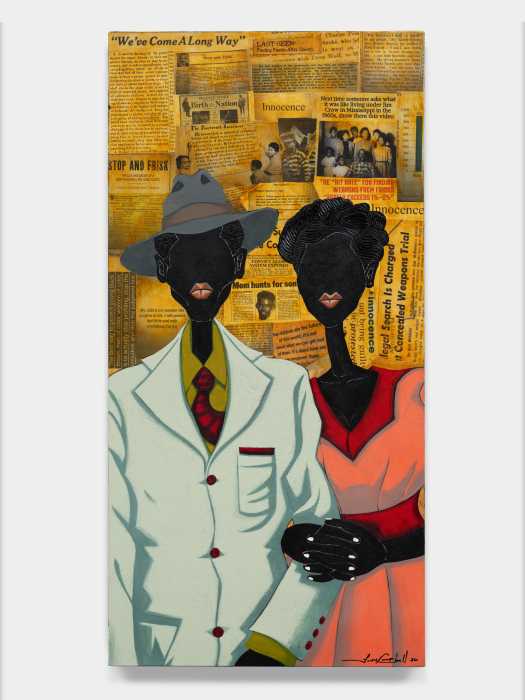
While working on this project, Campbell felt a deep responsibility to protect “Terry” by ensuring that his story was told.
“Terry, before the stop and frisk, was vivacious, humorous; he was a people person. He made grandmama laugh. He hugged his sister. But after that practice, it shattered him so much that it stifled that spark. It made his roaring, burning spirit flicker to a pilot light. So now you don’t recognize Terry anymore. You stole Terry from us — so now we’re looking for him again.”
Campbell wants audiences to see that Terry isn’t only a specific person but rather the symbol of Black, and Brown children everywhere who have been affected by racial discrimination through stop and frisk. “It’s not only the physical, Terry — you robbed us of the spiritual Terry, the version of him that existed before the trauma. That is the real crux of the message behind this exhibition.”
Campbell hopes that law enforcement engages with the exhibit so conversations around outdated police practices can begin to change.
“I want the community and the law enforcement community to work together in protecting the innocent.” He said. “[Let’s] fight crime together. There has got to be a better way — because too many innocent people are traumatized by this practice.”
Beyond the Black community, Campbell wants audiences to reflect on their own humanity and the well-being of every child they care about.
“My goal was for them to connect with the spirit of caring and just think about their own children. Just treat people right.”
“Looking for Terry” is on view through March 21 at the Richard Beavers Gallery in Bed-Stuy. More information about the exhibition and visiting hours is available at richardbeaversgallery.com.