
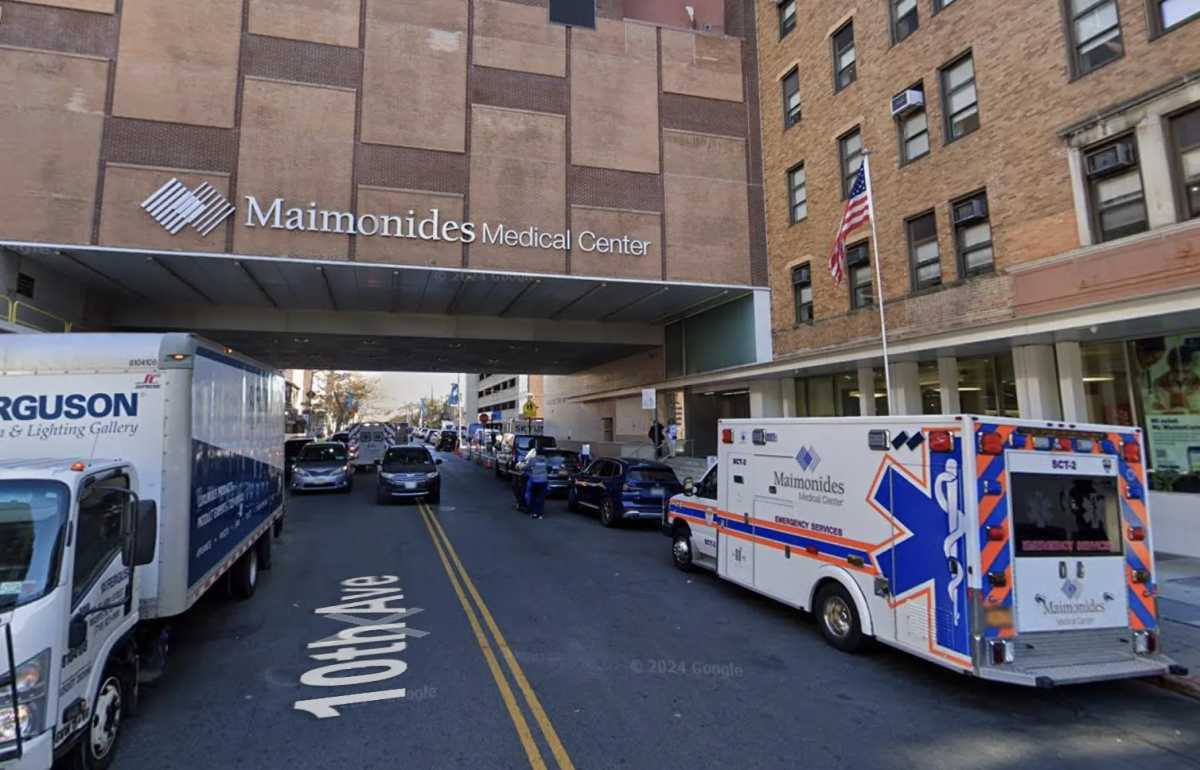
A regulatory snag may endanger the planned April 1 closing of the merger between Maimonides Medical Center and NYC Health+Hospitals.
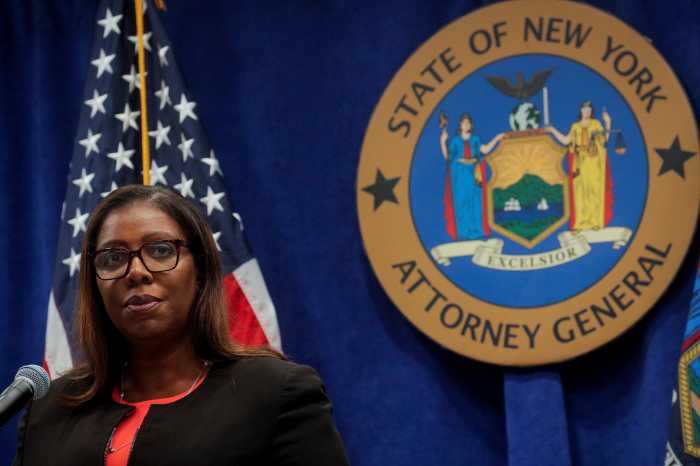
The state Attorney General’s office has opted not to issue administrative approval of the sale, and said it must instead be reviewed by the Brooklyn Supreme Court. A deal can’t be finalized before the court’s decision is made, which may take months.
Then-mayor Eric Adams announced the merger late last year, and officials said bringing the financially-struggling Maimonides into the city’s public health network would be a saving grace for the hospital.
Since Maimonides is a nonprofit, the sale needs approval from the AG’s Charities Bureau as well as the state’s Department of Health.
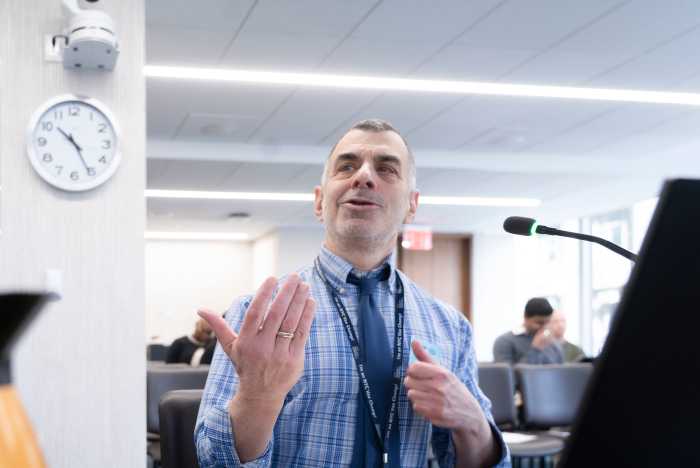
At a City Council hearing earlier this month, NYCH+H CEO Dr. Mitchell Katz said that while Maimonides had not yet finished all its paperwork – and despite a lawsuit filed by several members of Maimonides’ Board of Trustees in an effort to stop the merger — the deal was expected to be finalized by April 1, as had been planned for months.
But, roughly two weeks before that deadline, the AG’s office decided that the merger should be reviewed by the courts, not the Charities Bureau.
“In this matter, since there is a pending lawsuit about the transaction and significant community engagement, we concluded and advised that court review would be most appropriate,” said a spokesperson for the AG’s office.
Maimonides will have to submit a petition to Brooklyn Supreme Court, the spox said. From there, a judge will schedule and hold a hearing, then “make a determination as to whether the consideration and terms of the transaction are fair and reasonable, and that the purposes of the corporation will be promoted by the transaction.”
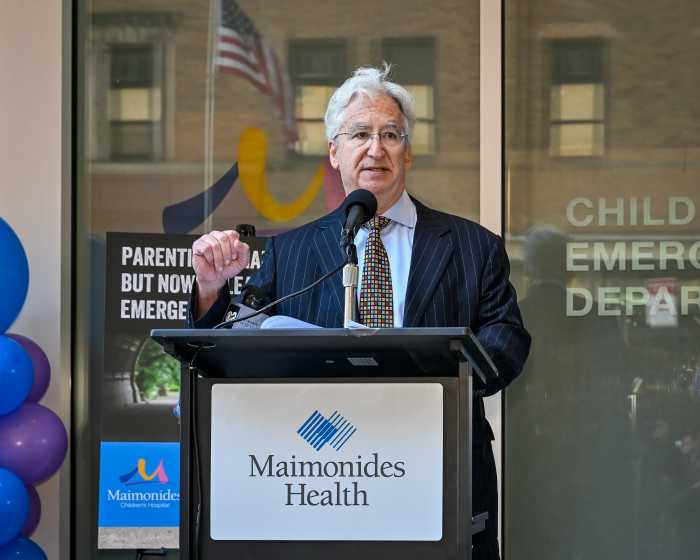
It was not immediately clear just how long that would take, or what Maimonides and NYCH+H will do in the interim. Maimonides’ current CEO Ken Gibbs had been slated to step down as the merger took effect so NYCH+H leader Svetlana Lipyanskaya could take over the role.
In a statement, NYCH+H spokesperson Christopher Miller said the agency is committed to finalizing the merger “as quickly as possible in service of our patients, staff, and communities.”
“We continue to work with Maimonides towards that goal with intensity. If necessary regulatory and legal reviews extends our end date, that in no way decreases our belief in this partnership or pauses our ongoing work,” he said. “We will drive on, fueled by respect for Maimonides’ culture and heritage, as well as our shared mission of serving New York City without exception.”
Sam Miller, vice president of marketing and communications at Maimonides, echoed NYCH+H’s commitment to meeting regulatory requirements “as quickly as possible.”
“We are confident that the closing will proceed, giving us the financial support we need to maintain and expand access to our great care across Brooklyn,” Miller said.
Opponents of the merger celebrated the decision, agreeing that court oversight is needed.
“The Attorney General’s office has now confirmed what we have been saying for months: this transaction cannot simply be rubber-stamped and must instead be reviewed by the courts,” said lawyer Martin Bienstock, who is representing plaintiffs in two separate cases against the merger. “The transfer of a multi-billion-dollar hospital to the City of New York demands full judicial scrutiny.”
Officials say merger will provide financial lifeline
Maimonides, a private safety-net hospital, treated nearly 100,000 people in 2024, according to its latest Community Services Plan, with 34,000 inpatient visits. Roughly 80% of the hospital’s patients are insured by Medicaid or Medicare.
The hospital has been struggling with cash flow for years, and in the first three quarters of 2025 lost $15 million while bringing in just $1.5 million in revenue. Katz, at the City Council hearing, said Maimonides had been seeking a partner to merge with for “years” before approaching H+H.
Joining the public hospital system would give Maimonides access to higher Medicaid reimbursement rates that would generate $9 million in revenue each month, Katz said. The merger is set to be supported by a $2.2 billion grant from the state, including funding for capital improvements.
“By joining our system, Maimonides will be able to offer New Yorkers expanded access to high-quality care, seamless digital access to health records through MyChart, and ongoing financial stability,” Katz said at the hearing.
But the merger has been met with skepticism from many in the community. Maimonides treats a large population of Orthodox Jewish patients, and some worry the merger would threaten the culturally-specific care it provides. Hatzalah groups in Borough Park, Crown Heights, Flatbush and Mill Basin have spoken out against the sale, and Katz said opinions at public feedback sessions had been mixed.
The first lawsuit, filed by seven members of the Board of Trustees last fall and amended earlier this year, claims the merger was “rushed” and would reduce the quality of patient care and endanger the culturally-specific care it provides to the local Orthodox Jewish population. That suit also claimed that Maimonides’ effort to get approval from the AG, rather than the Brooklyn Supreme Court, was “unlawful.”
On March 9, a cohort of Brooklynites separately sued Maimonides, NYCH+H and the commissioner of the state’s health department in an effort to stop the merger.
That second lawsuit claimed Maimonides and the DOH were attempting to skirt state law related to the sale of nonprofit hospitals, and asked that the court stop the merger from being finalized until it issued a decision on the suit. Both lawsuits are still pending in court.
This is a breaking news story and will be updated.
3/23/26, 6:09 p.m.: This story has been updated with comment from NYC Health+Hospitals and Maimonides Health.