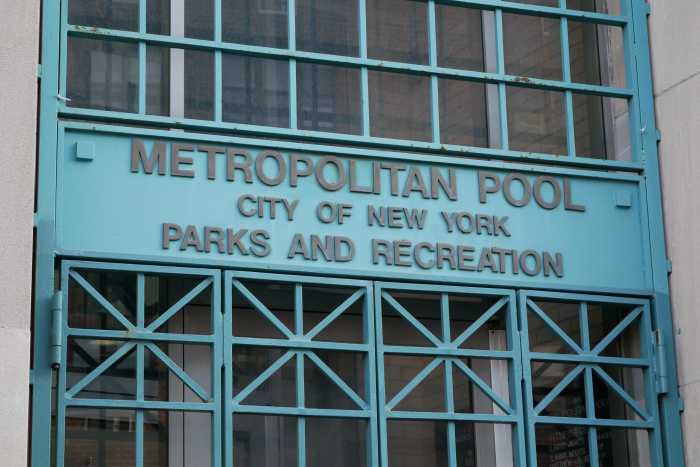
In December 2024, Rifka Friedman renewed her membership at the Metropolitan Recreation Center in Williamsburg, as she has for 65 years. A day later, she learned the pool was closing.
“There was no notice — nothing,” she said.
Friedman, a local resident since 1951, learned to swim in the pool at age 12 and used it regularly ever since. As she’s aged, the pool has grown increasingly important to her health.
“I take care of myself, but if I don’t have a pool I can’t do that,” she told Brooklyn Paper.
Over a year since the sudden closure — which the New York City Departments of Parks and Recreation blamed on a failing dehumidification and air circulation system — community members say they’re still in the dark about the 104-year-old pool’s future.
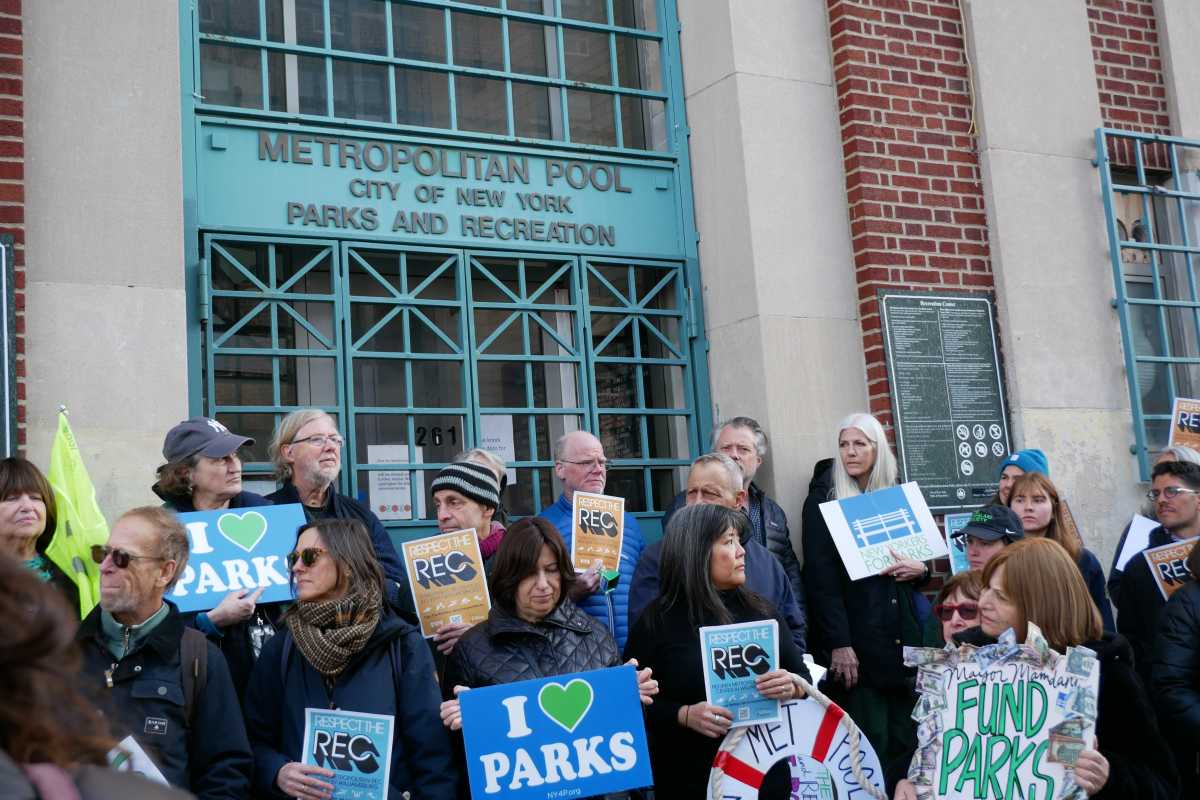
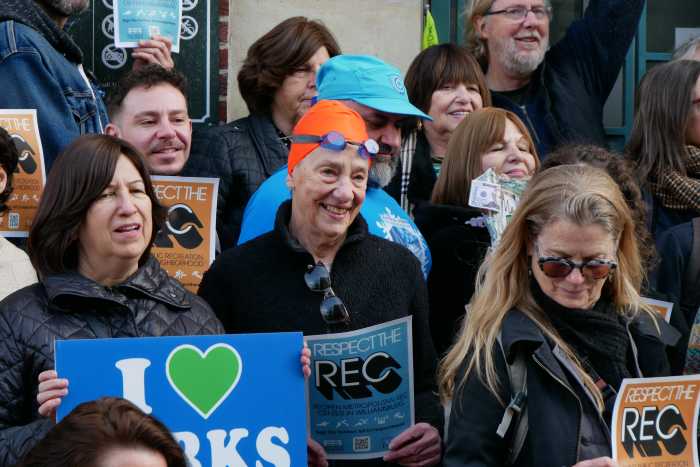
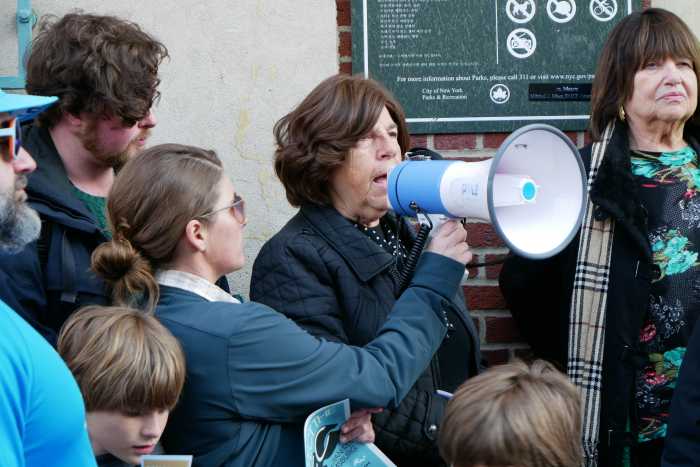
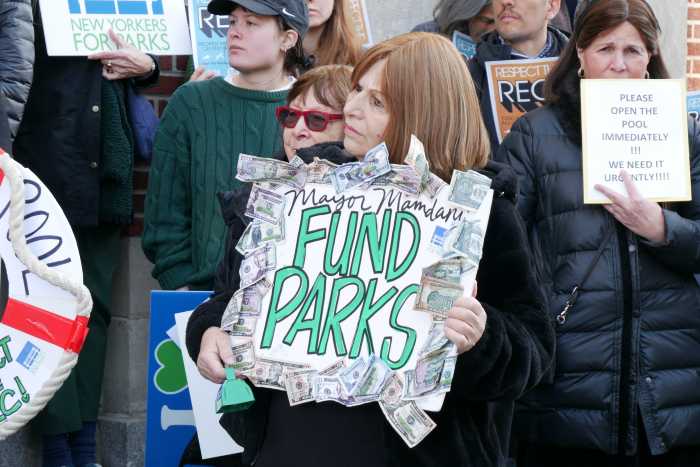
Swimmers, advocates and elected officials gathered at the rec center’s shuttered entrance on March 25, calling on the city to prioritize the pool’s renovation.
“Mayor Mamdani and Governor Hochul, please expedite the repair of the pool so we can have it back. The women in the community are suffering,” said Bella Sabel, who, like Friedman, is part of a group of Orthodox Jewish women who frequent women-only swim hours.
The pool provides a crucial space for community-building, recovery from injury, and exercise for older swimmers so they can “stay independent as long as possible,” Sabel said.
While nearby gyms offer pool access, the cost is steep — a membership at Equinox’s Bedford Avenue location starts at $350 a month. A day pass to the Williamsburg Bathhouse runs $40-80. The rec center, meanwhile, costs most adults $150 a year, and just $25 for seniors, veterans, and those with disabilities. Youth under 25 can join for free.
Friedman now takes a bus three times a week to a lower Manhattan pool with reserved swim time for women, paying significantly more on membership and transportation than in the past.
“It’s a burden for me, but I have to swim,” she said.
Council Member Lincoln Restler, whose district includes Williamsburg, had stern words for the parks department.
“While they spent close to 10 months trying to make temporary solutions work, they didn’t do jacksh-t to move forward with the long-term capital project,” Restler said. “So now here we are, a year and a half later, and we’re still years away from the pool reopening. That is unacceptable. The parks department has failed us.”
Brooklyn Borough President Antonio Reynoso also slammed the parks department.
“This is not a money issue; this is about parks being inefficient,” he said.
NYC Parks has hired a contractor for the pool’s renovation, but is still procuring materials, according to the department’s project tracker. No timeline is set for construction, but projects usually take 12-18 months, the tracker states. The city is still accepting contracting bids for a separate project to reconstruct the pool’s filter. Brooklyn Paper has reached out to NYC Parks for comment.
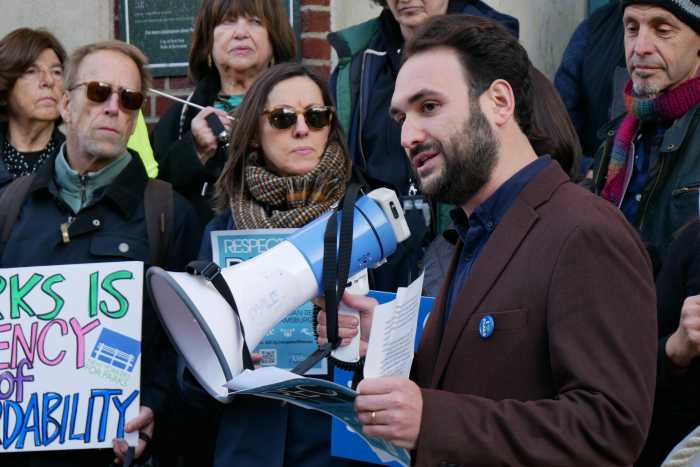
The rec center’s closure is a “visceral” example of the city’s underinvestment in recreation, said John Surico, Senior Fellow for Climate & Opportunity at the Center for an Urban Future (CUF), at the rally.
Recreation spending once accounted for one-third of NYC Parks’ budget, but now sits at 5.3% — the lowest amount per capita spent on recreation out of any U.S. city, he said.
Williamsburg is one of the recreation deserts identified in CUF’s recent report on recreation access in the city, with each of its public recreation facilities serving 4,300 residents — triple the citywide average. These deserts are expanding as facilities face staffing shortages, disrepair and closures.
When the Metropolitan pool closed, it left just one other public indoor pool for Brooklyn’s 2.6 million residents, meaning almost no affordable year-round swimming opportunities, Surico added. The recent opening of the Shirley Chisholm Recreation Center in Flatbush, which includes a competition-sized pool, has brought relief to a major recreation desert.
The lack of pool access in Brooklyn neighborhoods is a public health issue, said Kate Krause, founder of the Brooklyn-based water safety non-profit Rising Tide Effect. Pools don’t just offer a space for leisurely swimming, but also essential water safety education in a city where “too many kids don’t know how to swim,” Krause said.
“The closure of the Metropolitan Pool is not just an inconvenience; it’s a loss of life-saving resources,” she said. “Drowning is preventable, but prevention requires access.”
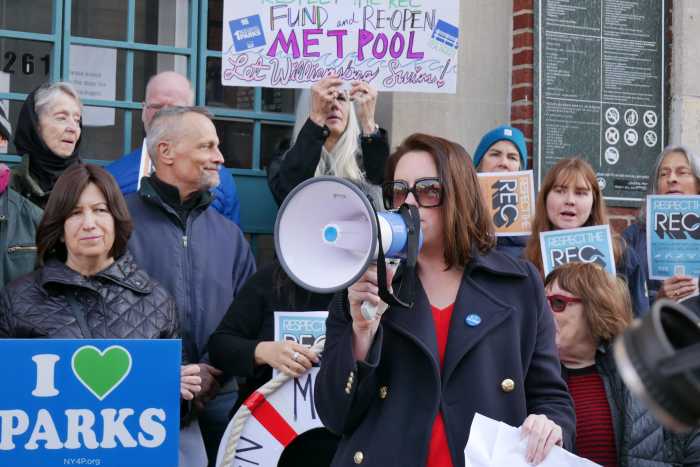
Surico called on the city to boost investment in and fully staff recreation centers across the city.
“NYC Parks continues to do what it can with limited resources, but the gap between needs and capacity keeps widening,” he said.
Petitions to re-open the pool have been launched by the Women’s Swim Coalition and Williamsburg Swimmers. New Yorkers For Parks, who joined the rally, have created a petition calling on the city to increase recreation funding citywide.