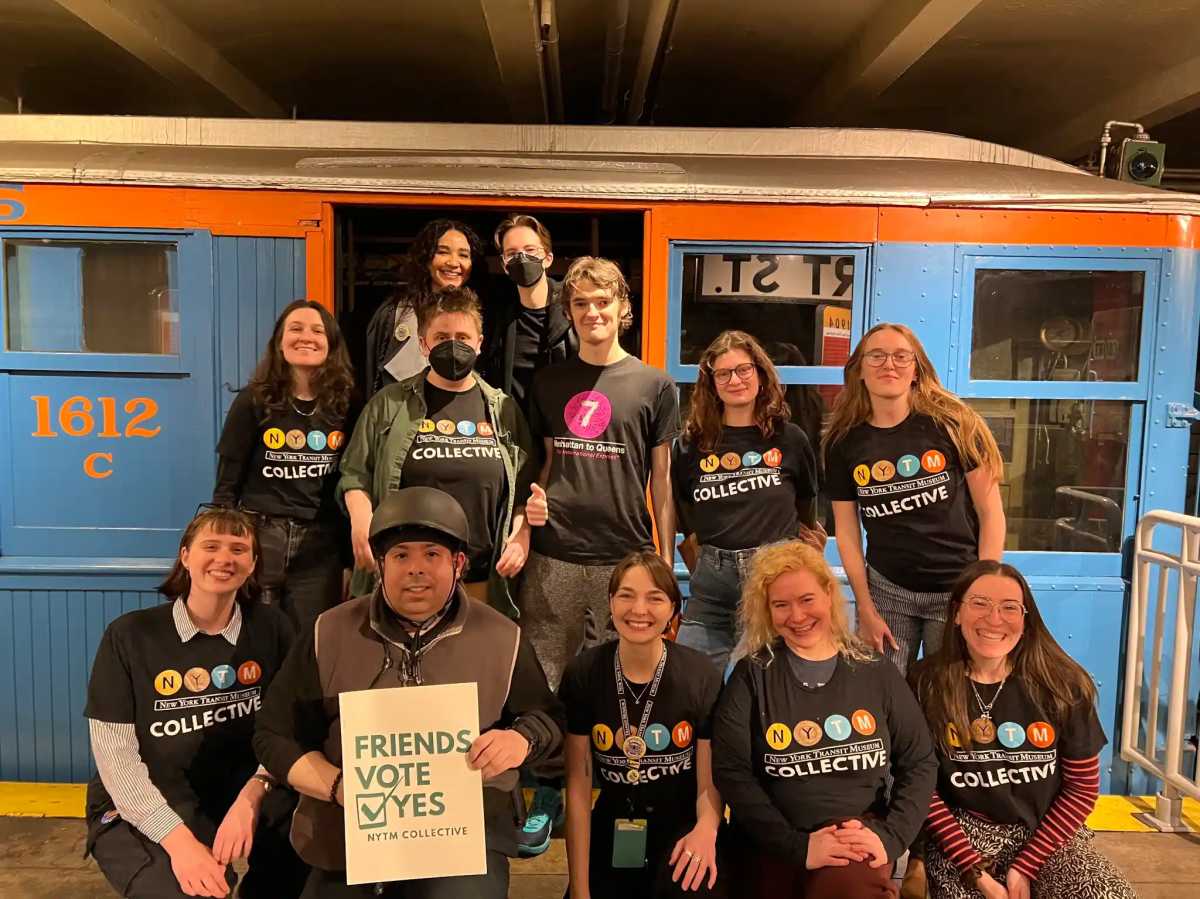
Workers at the New York Transit Museum in Downtown Brooklyn voted unanimously to unionize last week, seeking higher wages and better job security from management.
The newly formed bargaining unit — dubbed the Transit Museum Collective — consists of 30 full and part-time museum employees who work in its education, collections, and visitor experience departments. They won union recognition through a National Labor Relations Board (NLRB) election last Friday and were organized as part of District Council 37 AFSCME — the city’s largest municipal employees union.
The vote came nearly two months after the union launched its public campaign on Feb. 4 after management, with Friends of the New York Transit Museum — the nonprofit that runs the institution — initially declined to voluntarily recognize the unit.
“We had 100% of the votes were a yes, so it was pretty exciting, not super surprising, but yeah, we’re all very happy about it,” said Ava Dennis, a part-time museum educator who was involved in the union effort.
“The general vibe is very positive at the museum right now, and we’re looking forward to going into bargaining,” she added.
The NYC Transit Museum did not immediately return a request for comment.
The museum’s retail workers, who work directly for the MTA, rather than the museum nonprofit, recently unionized on their own with the Transport Workers Union Local 100.
DC37 Executive Director Henry Garrido said in a statement that “It’s clear these workers are passionate about carrying out the museum’s mission, and they have done an incredible job fighting for their right to unionize.”
But the union and Garrido both stressed that its work is only just beginning as it gears up for contract negotiations with museum management.
“While we celebrate this victory, we also have our eyes firmly set on bargaining our first contract, which will codify the rights and protections we have fought so hard for and know we deserve,” the collective said in a Friday Instagram post.

The museum has showcased the history of the city’s over-a-century-old public transit system since its founding in 1976.
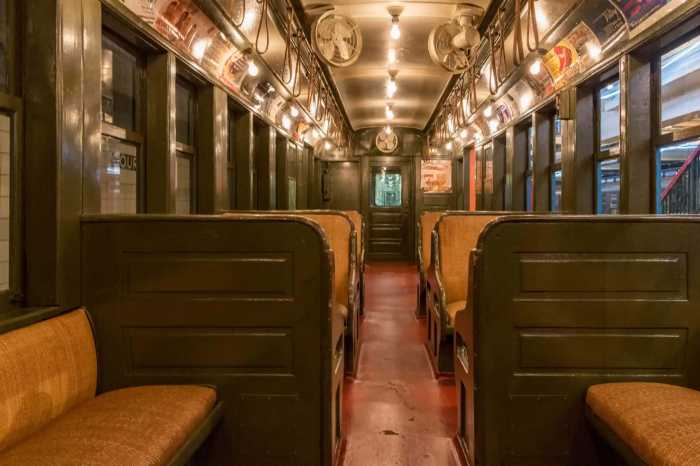
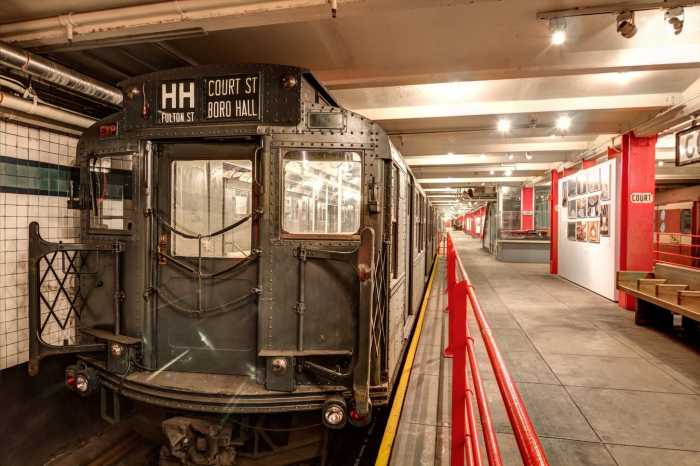
In its central location, inside the decommissioned IND Court St subway station in Downtown Brooklyn, the museum boasts a collection of vintage rail cars that visitors can explore. It also features exhibits illustrating how the city’s trains and buses have expanded and changed over the last hundred years.
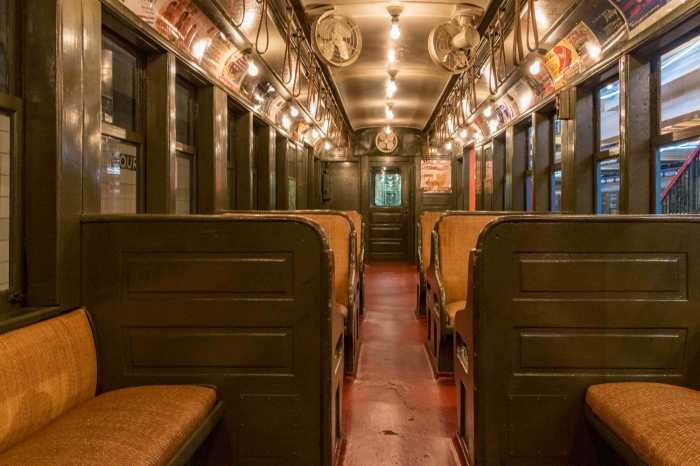
Moreover, the museum oversees the MTA’s vintage subway fleet, manages its archives, organizes nostalgia rides on its older trains, and conducts tours of restricted areas, such as the decommissioned City Hall subway station.
Dennis said workers have a few core demands they plan to raise during contract negotiations, including fairer compensation, greater workplace transparency, and democratic decision-making, and job security.
“We feel like, a lot of the time, decisions are made by people above us, and we don’t get a say at all. Then the ripple effect of those decisions generally falls on part-time workers or workers just on a lower rung of the hierarchy,” Dennis said.
Additionally, she said having a union could also help stem turnover within the museum workforce.
Dennis said the collective has yet to get a response from museum management following the vote, though they had sent a representative to the proceedings. However, she said they never engaged in an open anti-union campaign.
“It was a little disappointing for us, but it was fine,” Dennis said. “They obviously had to send someone for the count, but it was very much a formality. We haven’t really heard from them yet.”
This story first appeared on Brooklyn Paper’s sister site amNewYork.