

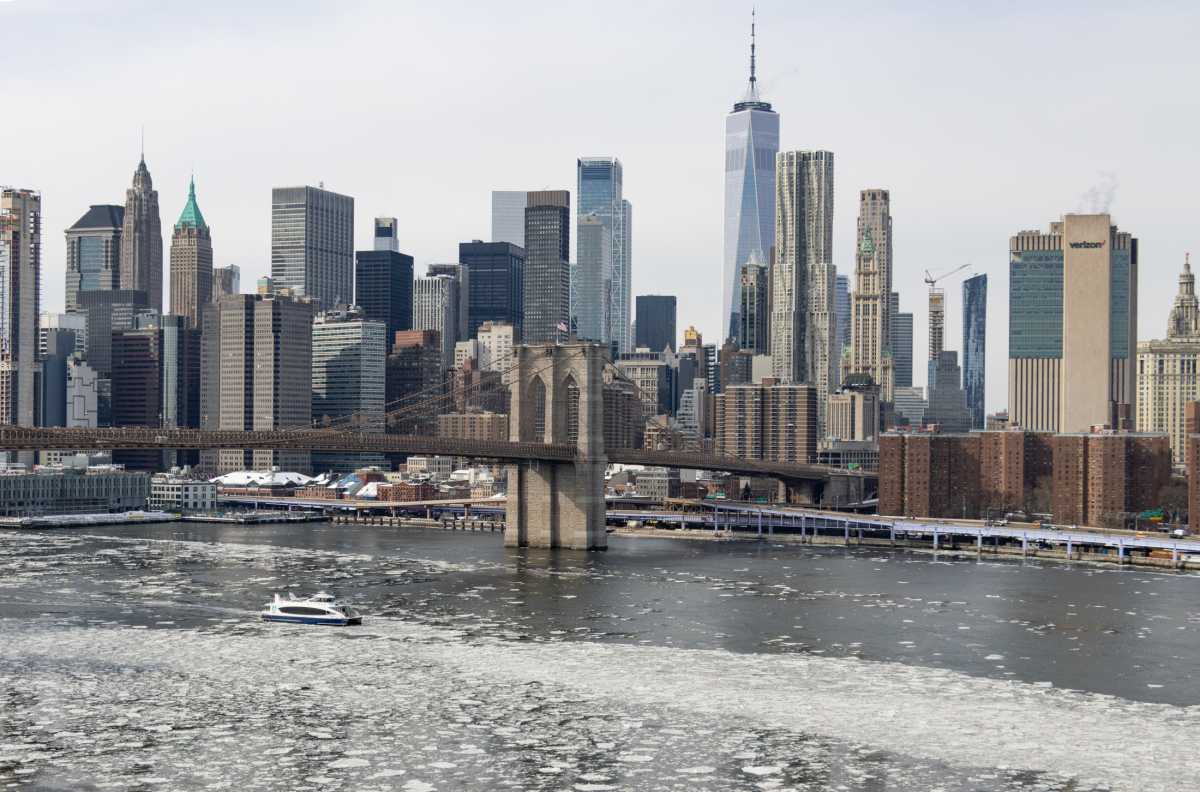
Train and bus service are recovering from the weekend’s snowstorm, but Arctic weather is causing issues for New York City’s more fluid form of transit: the ferry.
All NYC Ferry service was suspended starting 2 p.m. on Tuesday, Jan. 27 due to thick ice in the East River and the Hudson River, the agency announced just before 1:30 p.m. By the time the announcement was made, final trips on all routes had already set sail.
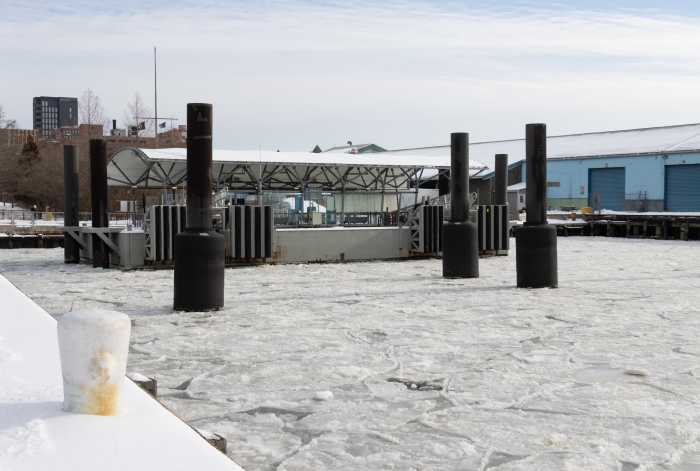
On Tuesday morning, ice at four ferry landings — including the Brooklyn Navy Yard and Atlantic Avenue/Pier 6-Brooklyn Bridge Park — was thick enough to prevent boats from docking, forcing ferries to skip those stops. A number of ferry trips on the East River routes were also canceled on Tuesday morning.
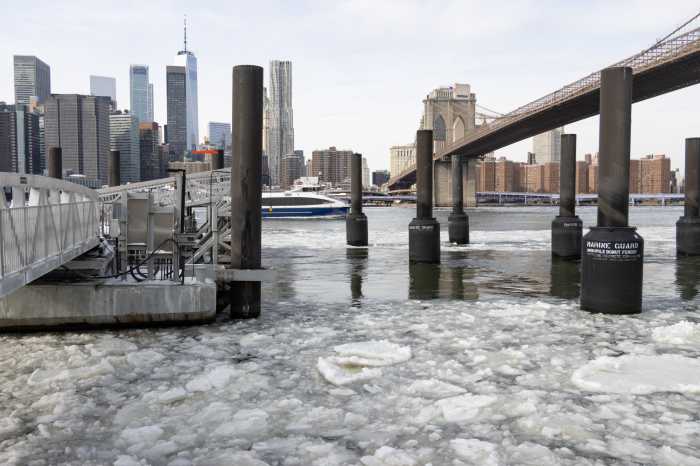
Conditions continued to deteriorate throughout the day, with “significant, continuing ice build-up in the East and Hudson Rivers and across New York Harbor,” an NYC Ferry spokesperson told Brooklyn Paper.
“Operating in heavy ice conditions requires slow speeds and little to no notice regarding landing service suspension,” NYC Ferry wrote on X. “NYC Ferry crew will continue to monitor evolving waterway conditions and prepare the fleet to ensure service can resume once conditions improve.”
But, the spokesperson warned, the ferry suspension may last for several days, depending on weather conditions.
“We will provide ongoing updates regarding resumption of service as soon as it is safely possible to do so,” the spokesperson added.
Temperatures plummeted on Saturday night and are expected to remain unseasonably low through the weekend, according to the National Weather Service. Highs on Tuesday were expected to reach just 22 degrees Fahrenheit, with wind chill values hovering in the single digits and expected to drop even further after sunset.
The rest of the week will look much the same, with a slight reprieve — a high near 31 degrees — predicted for next Monday.
Water temperatures at The Battery on the southern tip of Manhattan measured around 34 degrees Fahrenheit on Tuesday, according to the National Data Buoy Center. The Hudson River, which is mostly freshwater, can freeze at about 32 degrees, while the saltier East River — which is a tidal estuary, not a true river — has a lower freezing point, about 28 degrees.
Ice floes are not uncommon on the Hudson during particularly cold winters, and both rivers were known to freeze solid during brutal cold snaps in the 19th and 20th centuries.
This is a breaking news story and will be updated.