
Even after a popular Indian restaurant in Park Slope was ordered by the New York State Department of Labor in late September 2025 to pay a combined $3 million in penalties and restitution for years of wage theft, former workers say they are still waiting to be paid.
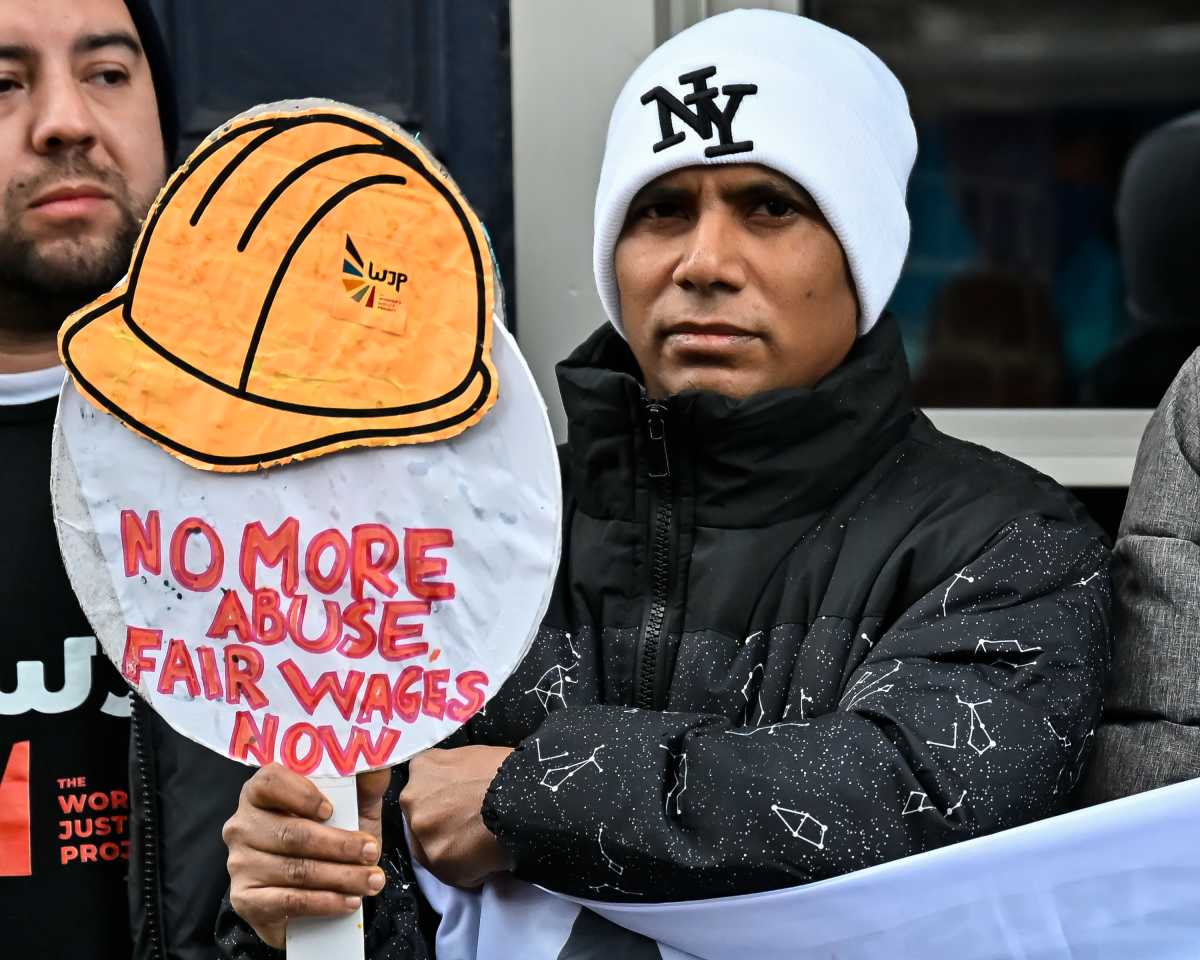
City Council Member Shahana Hanif, New York City Comptroller Brad Lander, Deputy Public Advocate for Education and Opportunity Elizabeth Kennedy, and the Workers’ Justice Project stood alongside affected workers at a press conference on Dec. 2 outside Indian Spice on Seventh Avenue. They demanded that the restaurant’s owner, Mariam Khandakar, finally comply with the order now that her appeal period ended on Nov. 24, making the ruling enforceable.
Speakers also urged the Department of Labor to pursue all available enforcement options to recover the money, including placing a lien on the owner’s property.

Last year, struggling to pay their bills, immigrant workers contacted Hanif’s office for help recovering unpaid wages. Hanif’s team connected them with the Kings County District Attorney’s Office, Brooklyn Legal Services and the Workers’ Justice Project, which supported the workers and guided them through filing a formal complaint with the state Labor Department.
During its investigation, the Department of Labor found that Indian Spice violated multiple New York labor laws. The violations included paying workers below minimum wage for several years, failing to pay overtime despite 75- to 80-hour workweeks, denying employees a required weekly day of rest, and failing to provide mandated meal breaks. The agency also found that the restaurant failed to maintain payroll records, making wage and unemployment claims significantly more difficult to process.
On Sept. 24, 2025, the Department of Labor issued an Order to Comply, directing Indian Spice to pay about $3 million in restitution and penalties. The order includes $915,000 in unpaid wages and overtime, an additional $915,000 in damages to workers, 16% interest on the unpaid amounts, and more than $1 million in civil penalties for longstanding violations.
One of the five plaintiffs, Raju Ahmed, a former waiter and manager at Indian Spice, is owed more than $308,000. He said Khandakar repeatedly offered excuses to avoid paying him and his colleagues, including claims that the business was struggling financially, even though the restaurant remained popular in the neighborhood.
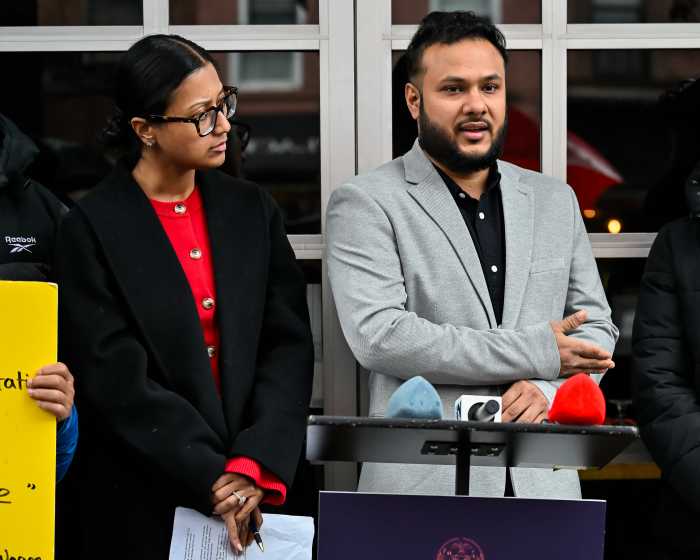
“She was cheating us, and it was months that we did not get our wages,” Ahmed said. He said workers suffered in silence, fearing retaliation or job loss and unsure where to seek help. “We could not pay our rent, we could not buy food.”
Eventually, Ahmed and his colleagues mustered the courage to come forward and contacted Hanif’s office, which referred them to the Workers’ Justice Project.
“We thought we were alone; nobody was behind us,” Ahmed said, thanking Hanif and the Workers’ Justice Project for guiding them through the process.
“Working long hours without pay was humiliating and painful, and coming forward was unimaginably hard,” Ahmed said. “Mariam Khandakar must now do her part and pay every dollar stolen from the workers who kept her business running for years. We will not stop fighting until justice is served and every penny that was stolen from us is returned.”
He urged other workers experiencing abuse to seek help from elected officials and worker advocacy groups.
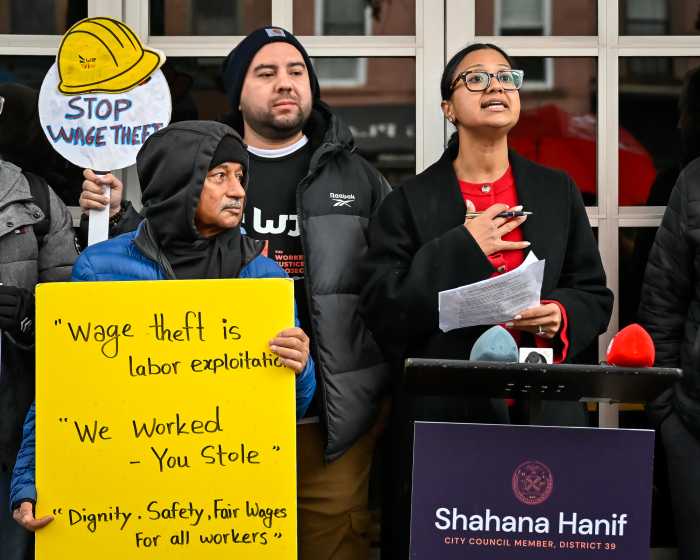
“There are people who can help. You should not stay silent. Stand up and speak up,” Ahmed said.
Hanif said her office helped workers prepare statements, gather documentation and navigate the unemployment insurance system, which can be especially difficult in wage theft cases. While calling the Labor Department’s ruling a “significant” victory, she emphasized that justice remains incomplete until workers receive their money.
“Raju and his coworkers first came to my office seeking help over fifteen months ago, and they still haven’t seen the wages and restitution that they need and deserve,” Hanif said. “Immigrant workers are the backbone of New York, and we will keep demanding the justice they are owed and ensure that perpetrators of wage theft are held accountable.”
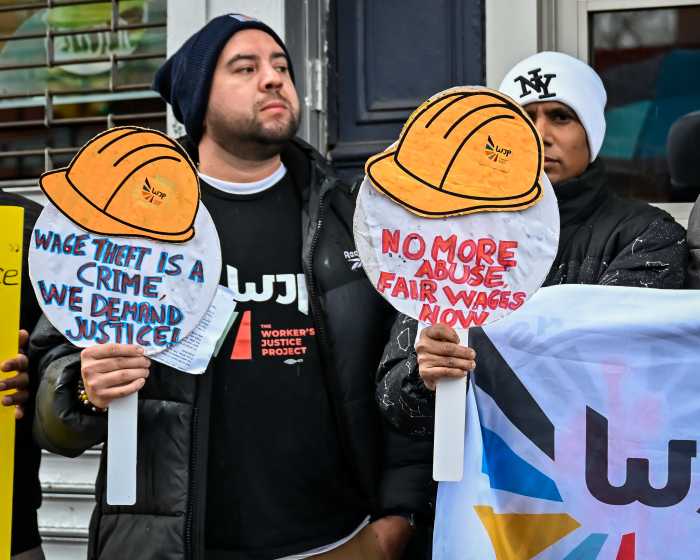
Wage theft is widespread and disproportionately affects immigrant workers, many of whom are reluctant to report abuse out of fear of retaliation or deportation, especially as immigrant communities face renewed pressure under the Trump administration. A 2023 ProPublica report estimated that workers in New York state lose between $203 million and $1 billion to wage theft annually. Restaurant workers are particularly vulnerable, with the industry accounting for about 25% of statewide wage theft cases.
Hanif told workers they are not alone and encouraged them to utilize available protections and resources.
“We want workers to feel empowered that they can come forward, because employers will be held accountable if you are a victim of wage theft, you are absolutely not alone,” Hanif said. “The Indian spice case shows what’s possible when workers unite, come forward, and organize; together we can secure justice even in very difficult circumstances.”
Alejandro Grajales, an organizing leader and case manager at the Workers’ Justice Project, said the Indian Spice ruling represents a broader victory for immigrant workers throughout New York City.
“It shows that even in a time of fear when rights are being rolled back at the federal level, when immigrant communities are under attack, we in New York City do not abandon our workers,” Grajales said. “Wage theft is not an accident. It is a business model. It is pervasive in this city, and it falls hardest on immigrant workers who face language barriers, immigration concerns, and employers who think they can get away with abuse.”
Lander said the collaboration between workers, advocates and elected officials demonstrated that New York remains a city “built by and for workers.” As comptroller, Lander launched the Employer Violations Dashboard, a transparency tool that tracks workplace violations across city, state and federal agencies.
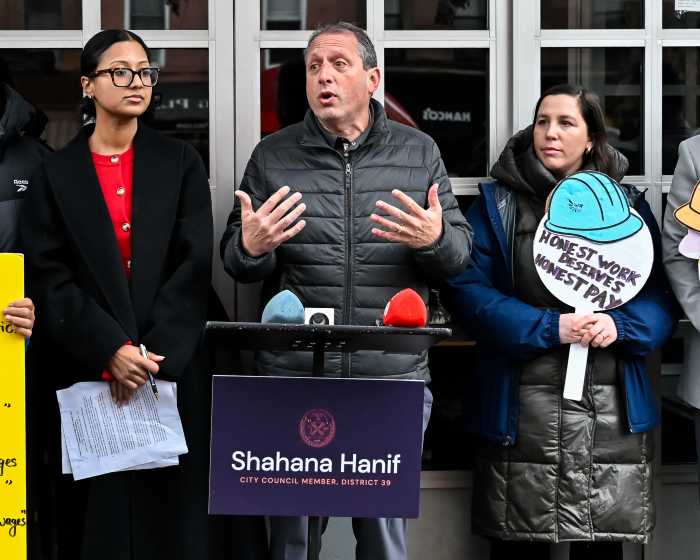
“Immigrant justice is worker justice. The owners of Indian Spice — a restaurant I have patronized — chose to exploit the very immigrant workers who keep our community fed by withholding thousands of dollars in hard-earned wages,” Lander said. “Today’s victory sends a clear message that in New York City, we will hold employers accountable and fight for the dignity and rights of every worker.”
Ahmed said the restaurant employed between 11 and 12 workers, but only five ultimately filed claims with the Labor Department.
“The rest of [the workers] were scared about their status. They didn’t want to come forward because they were unsure of what would be the consequences; if [Khandakar] would take any action against them regarding their status,” he said.
Khandakar, the owner of Indian Spice, did not respond to Brooklyn Paper’s request for comment.