Officials with Forest City Ratner, the company that plans to build a basketball
arena surrounded by office towers and a housing complex in Prospect Heights,
say they will relocate any apartment renters the plan displaces.
But neither a company vice president nor a spokesperson would offer details
of how the company might achieve that goal.
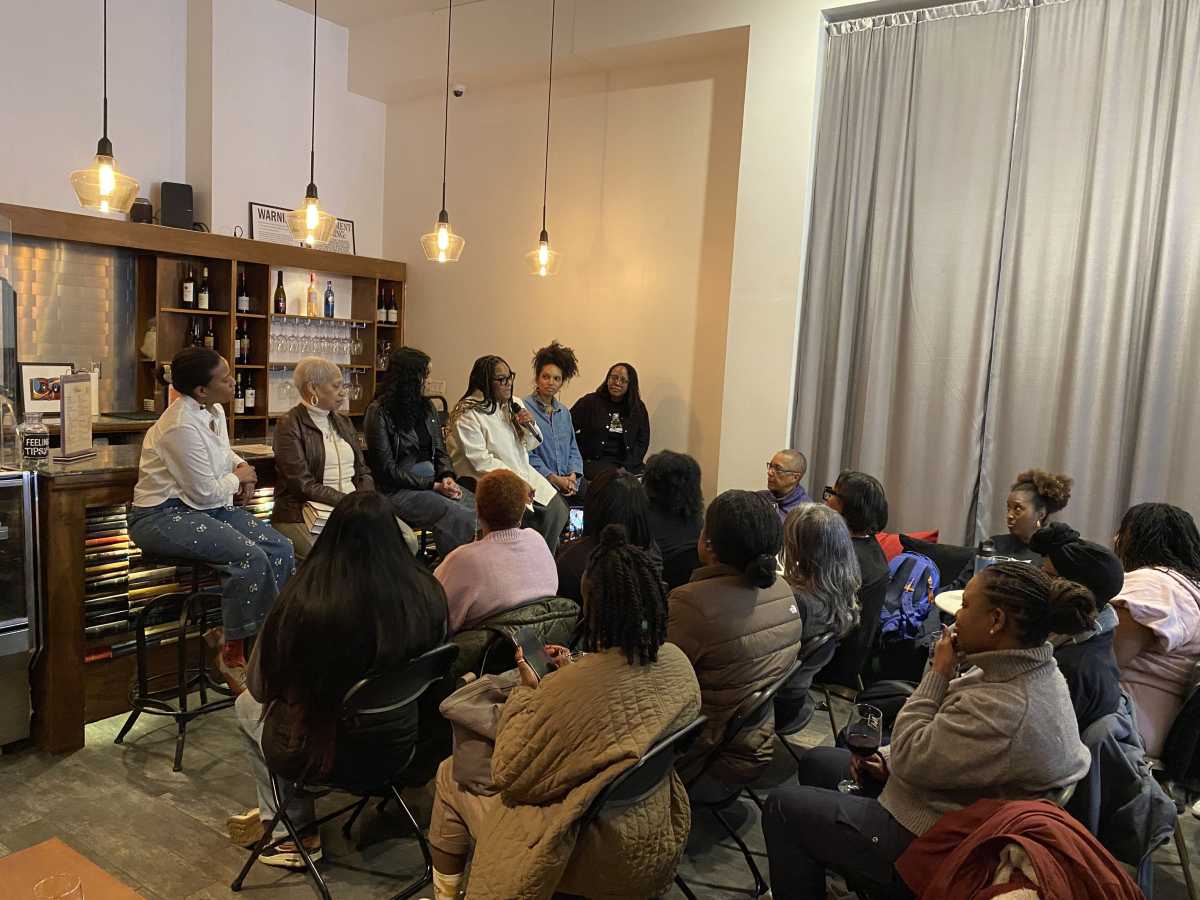
Speaking at a meeting with 200 concerned citizens June 3, James Stuckey,
vice president of real estate developer Bruce Ratner’s company, said
renters displaced by the construction of Atlantic Yards would have first
priority in selecting housing in the new residential towers.
“We feel it is important to get the apartment buildings done first
to bring those people back so they won’t be displaced,” he said
at the meeting hosted by the neighborhood group BUILD, which has been
working to get a community benefits agreement from Ratner.
Stuckey did not say when construction of the residential towers would
begin in relation to the overall project, which first seeks to build a
620-foot, Frank Gehry-designed office tower and a basketball arena at
roughly the intersection of Flatbush and Atlantic avenues. He also did
not say how long apartment dwellers would be left without apartments waiting
for the new ones to be completed.
Many residents in attendance felt that Forest City Ratner’s plans,
and Stuckey’s presentation, were at best vague. “They literally
answer each question, but they couldn’t or wouldn’t be specific,”
said Erica Skitich, who lives on Atlantic Avenue, directly across from
the proposed site. “You can make anything sound better with generalities.”
Beth Davidson, a spokeswoman for Forest City Ratner told The Brooklyn
Papers that the company hopes to begin construction next year. In the
meantime, she said, the company plans to work with renters to find them
comparable housing in the neighborhood.
“Our goal is to make the impact on residents as low as possible,”
said Davidson.
Prospect Heights Councilwoman Letitia James, an ardent opponent of the
arena plan, remained skeptical after the meeting. “The housing is
not a priority for them, the arena is,” said James. “If the
arena goes forward the housing should go forward on the same track.”
At the meeting, Stuckey also implied that property owners, who face the
threat of state condemnation of their property under the plan, would be
taken care of. “We don’t want to displace anyone,” he said.
“We have come up with plans to either carve out the area or purchase
buildings.”
He did not comment on whether or not the company would still seek eminent
domain takings of property.
Already several homeowners have sought out compensation for the their
property, Stuckey said, referring to deals being worked out with condominium
owners at 24 Atlantic Ave. and 475 Dean St.
“Forest City Ratner is doing everything to minimize the need for
condemnation,” said Davidson, later remarking that the architects
have already gone through three dozen new schemes for the site. One of
their aims, she said, is to prevent the displacement of residents.
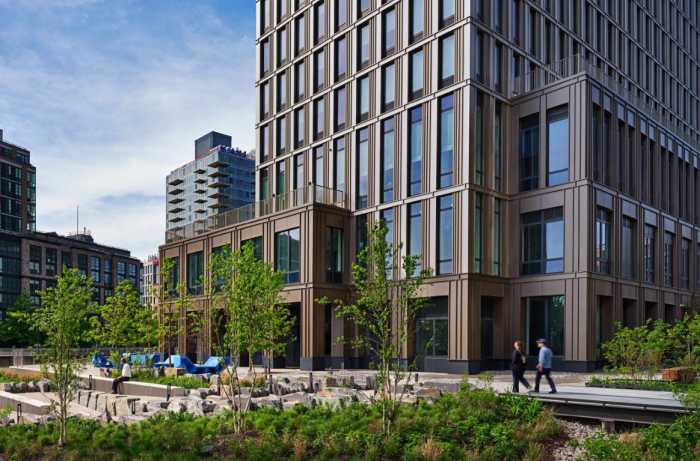
The $2.5 billion Atlantic Yards project would build 2.4 million square
feet of new office and retail space, approximately 4,500 units of housing
and an arena to house Ratner’s New Jersey Nets, whose purchase is
nearing completion.
Stuckey also announced that Forest City Ratner is working with ommunity
groups to establish a community benefits agreement that would guarantee
jobs for the local workforce, retail and office space for community business
owners and construction contracts for minority and women contractors.
“In the past, we have done all the things we accomplished without
a community benefits agreement,” said Stuckey. “We live and
work in the community and they take our word. But we agree it is important.”
Marie Louis, first vice president of BUILD, said the two sides are closest
on an agreement over affordable housing. She called that portion of the
community benefits agreement “historic” because it might provide
for 50 percent of the housing built to be based on the median income level
of the community.
“What is important about the housing piece is that the median income
is based on the income of this area,” she said. “Those are two
key revolutionary pieces of the housing agreement.”
Ratner has pledged to provide 20 percent low-income and 30 percent “moderate
income” housing.
James insisted that if such an agreement were established, it would have
to include what she called a “laundry list of issues” such as
more affordable housing, franchise agreements for minority- and women-run
businesses and an investment into public schools, parks and law enforcement.
“We are not there yet because it’s too early. They still have
some hurdles to overcome,” the councilwoman said. “The devil
is in the details and they are not giving us details.”
Daniel Goldstein, a member of the anti-arena group Develop Don’t
Destroy-Brooklyn, questioned Forest City Ratner’s timing of the meeting,
saying, “If they were really committed to the community, then why
didn’t they have this meeting six months ago?”