
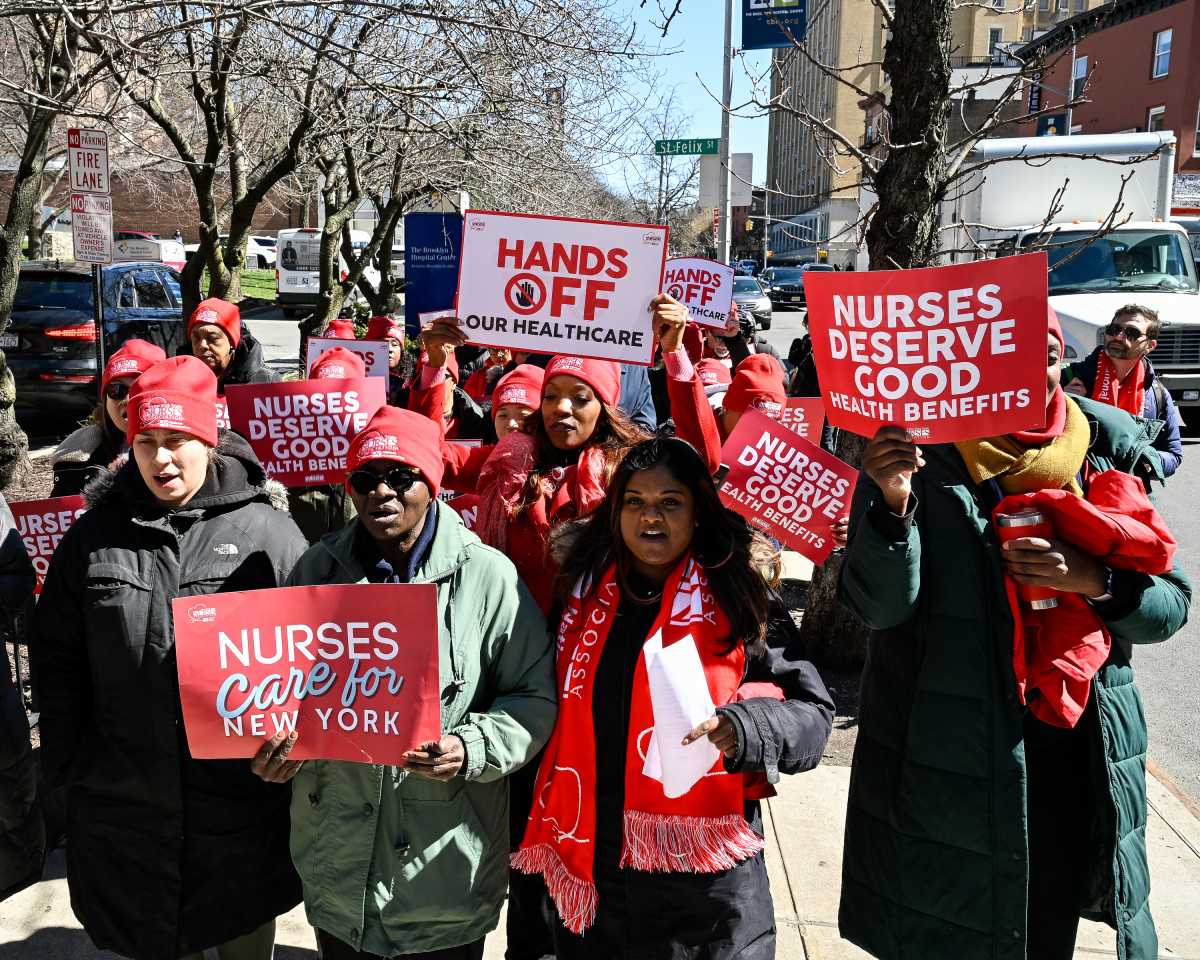
Six weeks after they abruptly lost their healthcare benefits, nurses at The Brooklyn Hospital Center marched on their CEO’s Downtown Brooklyn home to demand he find a permanent solution.
The financially-struggling safety-net hospital narrowly avoided a nurses’ strike earlier this year after offering a contract that would fully fund healthcare and pension benefits. Despite that agreement, the hospital wasn’t paying into the nurses’ benefit fund, according to multiple TBCH nurses and their union, the New York Nurses Association.
“The hospital never came forward and told us they didn’t pay, the benefits fund communicated [in mid-January] that the last three payments were in arrears, that we wouldn’t be getting benefits from February 1,” said Marcelle Willock, a nurse and case manager who has worked at TBHC for 17 years.
For 40 days, nurses were without healthcare and retirement benefits, Willock said. Hospital CEO Gary Terrinoni told nurses their coverage would be restored as soon as the hospital received a cash infusion from Albany, multiple nurses told Brooklyn Paper.
Earlier this month, Gov. Kathy Hochul provided $15 million to the hospital, but executives did not immediately restore nurses’ benefits. On March 16, TBHC made a payment to the benefits fund to reinstate coverage, union representatives said, but it was only enough to provide benefits until April 30. Come May 1, they fear they’ll be left without insurance once again.
‘The nurses refuse to be pawns’
“CEO [Gary] Terronini is playing a dangerous game with the hospital’s finances, and the nurses refuse to be pawns,” said TBCH nurse Debra Ambrose at the March 17 rally. “We are here to demand hospital administrators restore and secure our benefits now. We don’t want to be back here without our benefits. We are sick and tired of this bullshit over and over and over.”
The health insurance nurses receive through TBHC is comprehensive, Willock said, and many nurses rely on it to treat ailments they pick up on the job. The nurses sometimes pick up contagious diseases like flu and RSV from patients, she said. Some need physical therapy for back pain — a common issue among healthcare workers who frequently need to move and reposition patients.
Willock herself has had to forego medical care since the lapse began because she would have had to pay out-of-pocket, she said.
“It’s a strain, not just on the nurses, on their families as well,” Willock said.
Michelle Lopez, a nurse educator who has worked at TBHC for three years, suffers from asthma, she said. So do her children, who are covered on her health insurance. Since February, Lopez has been paying $250 per month for their medications.
“It’s not easy. It’s another bill that you normally don’t have to consider,” she said. “In New York, everything is so expensive, we don’t need anything in addition to pay. It’s rough.”
While NYSNA nurses went without insurance, TBHC continued to pay benefits for members of other unions at the hospital, including 1199SEIU and the Committee of Interns and Residents.
An SEIU representative confirmed that SEIU members at TBHC had not lost their benefits, which include free health insurance and a pension. CIR did not immediately return a request for comment.
The Brooklyn Hospital Center faces significant financial issues
In a statement, 1199SEIU vice president Adekemi Gray said that while benefits for that union are stable for now, “uncertainty persists at TBHC and other community hospitals that are facing severe financial difficulties because of the Trump administration’s massive defunding of healthcare.”
“We will continue working with hospital management to help ensure there is no disruption of benefits for these dedicated caregivers,” he said.
A safety-net hospital where more than 80% of patients are insured by Medicaid and Medicare, TBHC has struggled financially for years.
In 2024, TBHC lost $31 million, according to tax filings published by ProPublica. An independent audit of the hospital’s finances in 2023 and 2024 said there was “substantial doubt” about the hospital’s ability to keep functioning. Last fall, TBHC requested a $160 million cash infusion from Albany as Terrinoni warned the hospital was considering filing for bankruptcy.
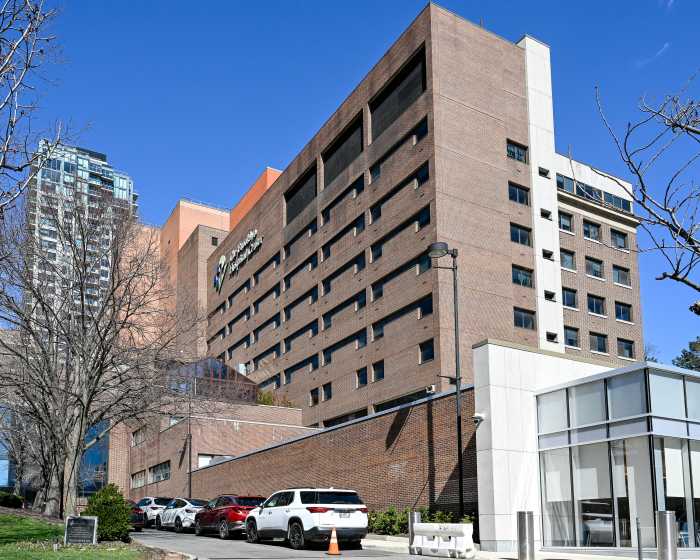
It’s not clear if the state plans to provide more than the $15 million it spent this month, and representatives for Hochul did not return request for comment. TBHC is far from the only local safety-net hospital struggling to make ends meet and seeking help from the state. Last year, Hochul agreed to invest $750 million to save SUNY Downstate, which had been at risk of closing after years of financial struggles. Maimonides Medical Center in Borough Park is in the midst of merging with NYC Health+Hospitals, primarily so it can receive higher Medicaid and Medicare reimbursement rates available to public hospitals.
Seeing TBHC’s financial struggles, nurses said they were increasingly frustrated by high salaries paid to Terrinoni and other executives.
“In a safety-net hospital, how do you explain $8 million to the top executives, and yet he’s walking around telling the nurses, ‘When we get the money from the state, we’ll pay you,’” said NYSNA president Nancy Hagans. “You got the money, $15 million, last week. So pay up!”
‘Where’s the money, Gary?’
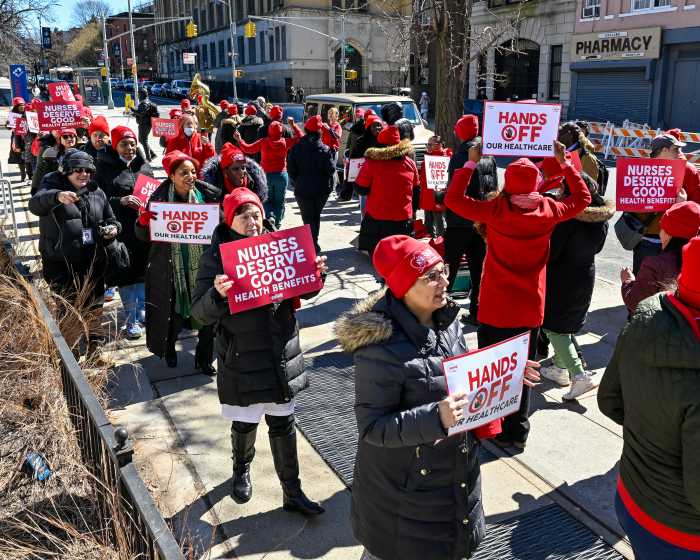
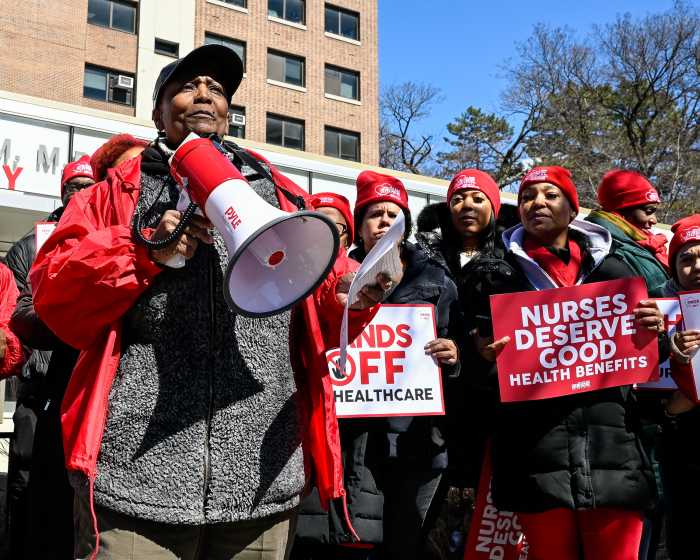
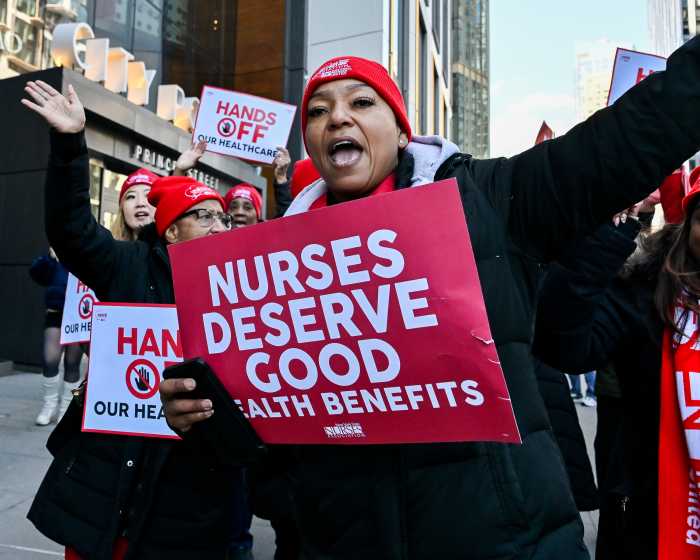
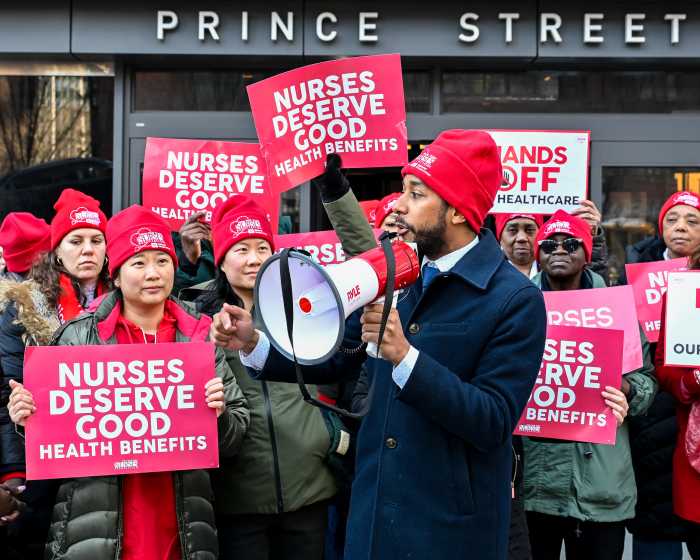
The nurses took their fight directly to Terrinoni’s front door on Tuesday, marching from the hospital to the condo city records show he purchased for $2.3 million in 2021. Waving signs that said “Hands off our healthcare” and “Nurses deserve good health benefits” and accompanied by a small band, the nurse parade drew supportive whoops and honks from passersby and drivers.
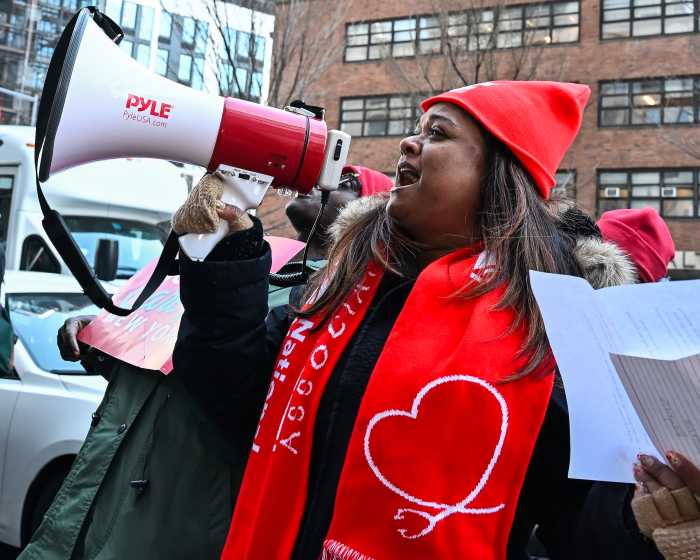
Brandishing a megaphone, TBHC nurse Rehana Lowtan called up, “Where’s the money, Gary?”
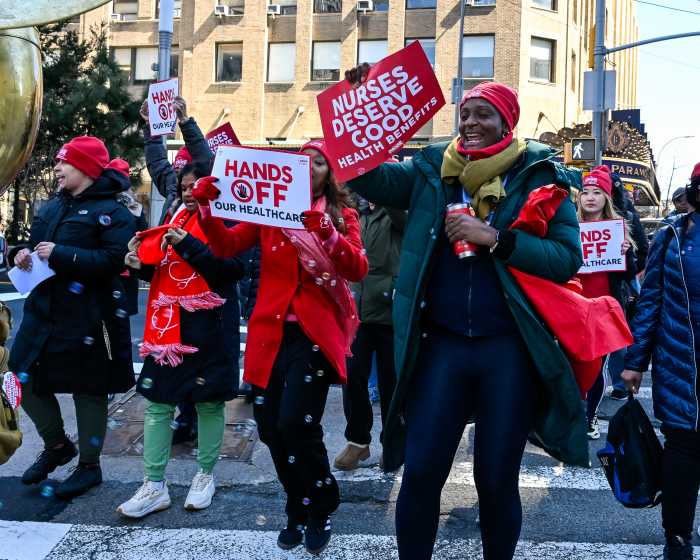
“Now you’ve got the money, it’s time to follow through on your commitment to reinstate and secure our benefits,” she continued. “We work hard, we care about the hospital and the community. But we can’t put the health and lives of the nurses and our families at risk any longer.”
Brooklyn Borough President Antonio Reynoso, in a red NYSNA hat, criticized hospital executives for proselytizing the importance of healthcare while stripping benefits from their nurses.
“This is not just, ‘Hey, we’re a poor little hospital that’s suffering and we can’t make it happen.’ That’s not what we do in this city,” Reynoso said. “The CEO’s job is to figure out creative ways to make it work. If you can’t make it work, maybe you shouldn’t be the CEO.”
The Brooklyn Hospital Center did not respond to multiple requests for comment.
After the rally, nurses trooped back to the hospital to resume their shifts. Though they are dedicated to their jobs, Lowtan told Brooklyn Paper, many nurses feel their trust in the hospital has been eroded. They’re worried that it will fail to keep paying into the benefit fund after May 1.
“A lot of us here, myself included, have been long-term employees of this institution. We’ve been through two bankruptcies and never had a lapse in healthcare coverage,” she said. “To not be in that kind of financial strain and to have a lapse in healthcare coverage, what are you doing with the money?”
NYSNA has filed an unfair labor complaint with the National Labor Relations Board, Lowtan said, since the lapse in coverage violates the union’s newest contract. They are still waiting to hear back.
“Even today while doing my regular rounds, meeting with the nurses, a lot of them have expressed that they have no confidence in this institution and why should they even stay here when they feel so underappreciated and disrespected by the management here,” she said.