It’s no wonder that a controversial developer now says he won’t build atop the popular courtyard at the Carroll Street entrance to the F train — he doesn’t own the land, according to a muckraking former assemblyman.
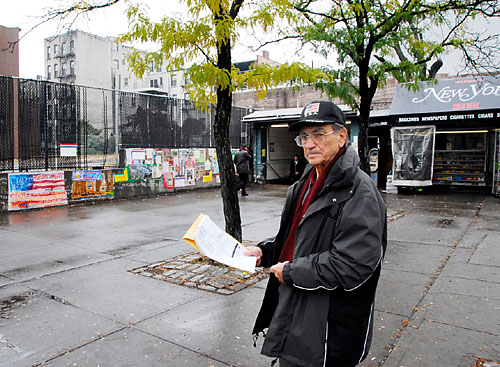
Frank Verderame, the former lawmaker, says the courtyard on Second Place and Smith Street is divided into several parcels, and the city and Metropolitan Transportation Authority have jurisdiction over most of the plaza.
The developer, Bill Stein, does own a piece of it, Verderame conceded.
The plaza is a favorite meeting place for many in the neighborhood, as well as a location to lazily watch the F and G trains climb the elevated tracks. Lately, it has also provided a place for opponents of Stein’s project to hang anti-project posters.
Stein plans to build a seven-story apartment building at 360 Smith St. on a parking lot just west of the subway plaza. Initially, he apparently intended to build right over the open, public space.
But as reported in The Brooklyn Paper in September, Stein bowed to public pressure and promised to maintain the plaza.
Few in the neighborhood trusted Stein or his architect Robert Scarano, who has been disciplined in the past by the city for exceeding height restrictions and other zoning code violations.
Instead of protesting publicly, Verderame, armed with a cache of deeds, historical maps and legal rulings, some of which date back to 1846, framed a legal argument to keep Stein from encroaching upon an inch of the courtyard that is not his.
Stein did not return calls for comment.
One of the keys to Verderame’s argument is a city Law Department ruling from 1999 that the MTA had responsibility for maintenance of the courtyard as the city’s tenant at the site. Verderame was involved in that case too. His complaints about the deteriorating state of the courtyard spurred then-Borough President Howard Golden to get a ruling from the city about who was responsible for the upkeep.
Now he’s found a receptive ear in Councilman Bill DeBlasio (D–Carroll Gardens), who was critical of Scarano’s original, modern, metallic design for the building.
DeBlasio has asked the city’s lawyers to review the 1999 decision, and he expects an answer in a few weeks.
“Frank’s letter and the work done by all of the Carroll Gardens activists has been vital in determining the ownership of the courtyard,” said DeBlasio.