
In their efforts to protect New York City’s most vulnerable neighborhoods from flooding, officials are turning their attention to Homecrest.
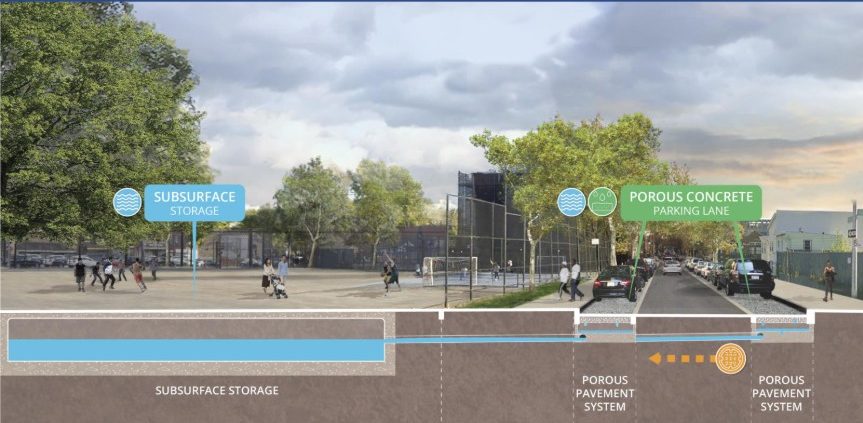
Mayor Zohran Mamdani on Thursday announced a $95 million “cloudburst” project in the neighborhood, with infrastructure like porous pavement and underground water storage tanks to slow rainwater and reduce strain on the sewer system.
Cloudbursts are sudden, intense rainstorms that dump up to two inches of rain an hour, more than the city’s sewers can handle. Those storms — which are becoming more frequent and more intense, thanks to climate change — often cause dangerous and damaging flooding, especially in low-lying and coastal neighborhoods.
The city’s Cloudburst program, launched in 2023, uses a combination of “green” and “gray” infrastructure, like rain gardens and catch basins, to capture floodwater and keep it from overwhelming sewers and streets.
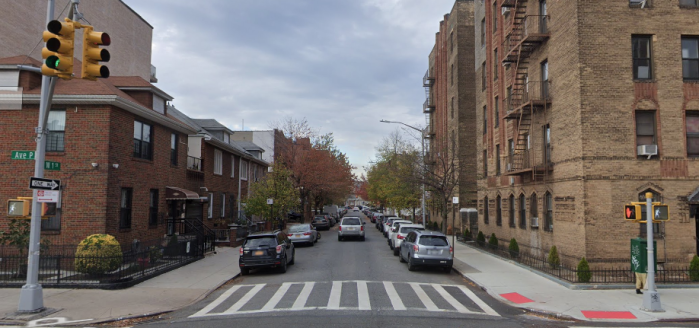
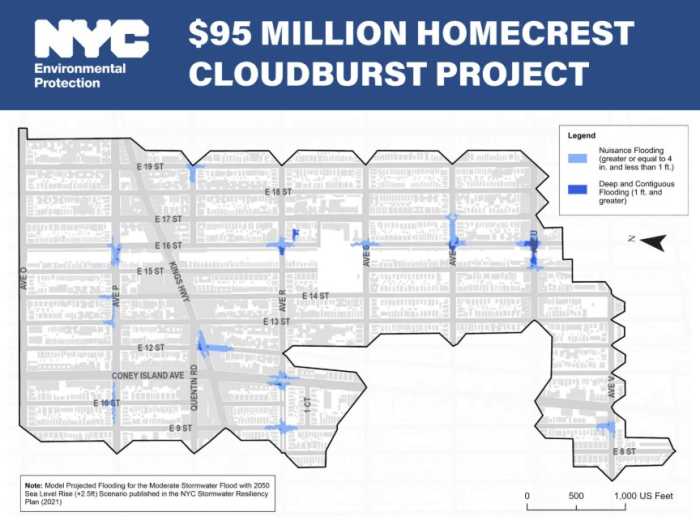
Officials said the Homecrest project will focus on several “hotspots” between Avenues O and U and East 9th and East 19th streets. Some locations, like Avenue P between East 16th and East 17th streets, are prone to “nuisance” flooding, with waters rising between 4 inches and 1 foot. Other spots, like the intersection of Avenue U and East 16th Street, suffer more frequently with “deep and contiguous flooding” of a foot or more.
“For too long, every time a major storm rolls through, families throughout southern Brooklyn have watched their streets turn into rivers — and every year it’s happening more and more due to climate change. We’ve dealt with flooded basements, damaged cars and roads that become impassable,” said state Sen. Sam Sutton, in a statement. “This $95 million investment in infrastructure is exactly the kind of serious, long-term commitment our communities need.”
Though design has not been finalized, the Department of Environmental Protection is expected to install porous pavement on city streets and underground storage tanks beneath publicly-owned land like schoolyards and parking lots. DEP will work with the parks department, Department of Transportation, and NYC Public Schools to identify good locations for those tanks.
A smaller Cloudburst project at South Jamaica Houses in Queens includes large water storage tanks underneath a basketball court. The tanks store massive amounts of water during storms, then allow the water to slowly disperse into the soil afterward.
Officials said the project will also help to protect the already-polluted Coney Island Creek from being inundated with untreated sewage during storms.
“The Homecrest Cloudburst project is a major step forward in protecting this community from the kind of extreme rainfall we know is becoming more common,” said DEP Commissioner Lisa F. Garcia. “By capturing and storing stormwater before it overwhelms local streets and sewers, we’re reducing flood risk, improving water quality in Coney Island Creek and building the resilient infrastructure New Yorkers deserve.”