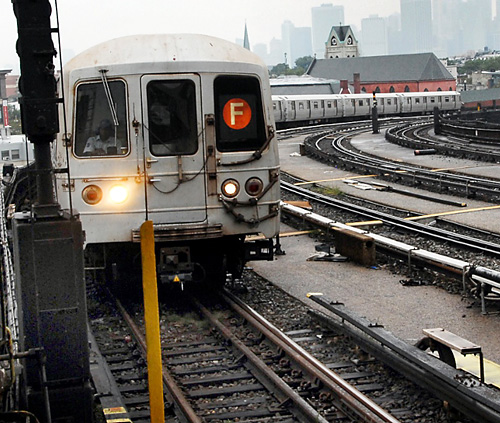
We all know that something is wrong with the F train — but soon we’re going to know exactly what.
The Metropolitan Transportation Authority has begun a full performance review of Brownstone Brooklyn’s underground lifeline after repeated complaints that the train’s name was actually the grade that most riders would give it.
The “performance and infrastructure” review, which goes beyond the agency’s normal oversight of the Coney Island to Queens line, came after state Sen. Daniel Squadron (D–Brooklyn Heights) cornered the MTA’s Albany-based lobbyist and demanded action.
“I have been getting increasing complaints from my constituents and, no less important, my fiancee,” Squadron told The Brooklyn Paper. “So I asked the MTA to do a full review, and they agreed.
“There was definitely a sense in March and April, judging from the e-mails to our office, that something was wrong,” Squadron added. “When I brought it up to the MTA, they … agreed. I’m happy that they’re being responsive.”
Riders, of course, were a bit less forgiving.
“I call it the ‘If’ train, not the ‘F’ train,” added rider Alex Covelesky. “The platform is always crowded.”
MTA spokeswoman Deirdre Parker told The Brooklyn Paper that the transit agency will provide Squadron with the results of the review within two weeks.
“Our top people from different units will get together and respond to the senator’s concerns,” she said.