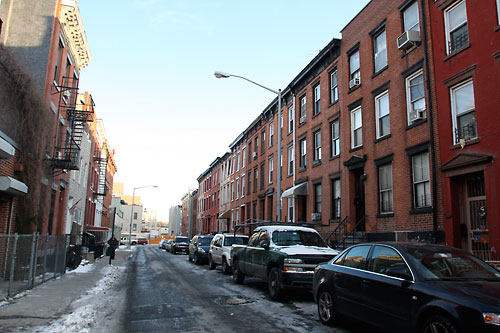
The city is aiming to protect at least one Williamsburg block from the high-speed development that has forever changed the neighborhood’s shape.
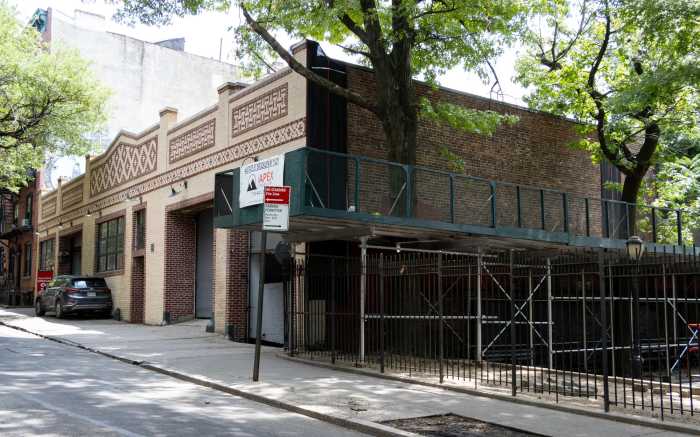
The Landmarks Preservation Commission is considering turning Fillmore Place — a one-block stretch of 29 mid-19th century rowhouses between Driggs Avenue and Roebling Street — into Williamsburg’s first Historic District, forever shielding the tiny street lined with matching three-story brick homes from demolition or major cosmetic alterations.
Neighborhood preservationists are thrilled about the prospect of saving the quaint rowhouses, which served as middle-income housing when they were constructed in 1852 — three years before the village of Williamsburgh became a part of the city of Brooklyn.
“In Williamsburg, there have been so many teardowns over the decades that you rarely have a continuous row that was all developed in one point,” said Ward Dennis, a Community Board 1 member who is also on the Williamsburg Greenpoint Preservation Alliance. “It would be a compelling historic district for the neighborhood and the city itself.”
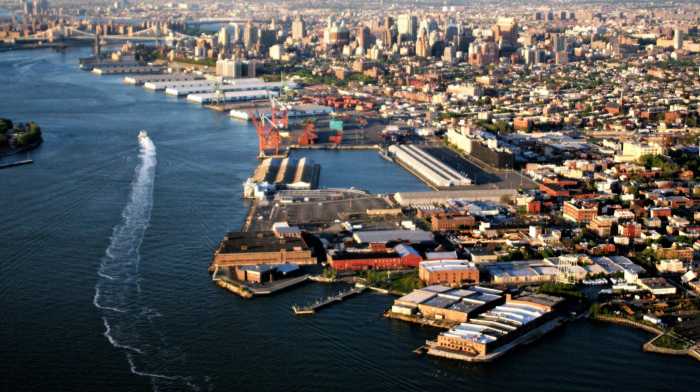
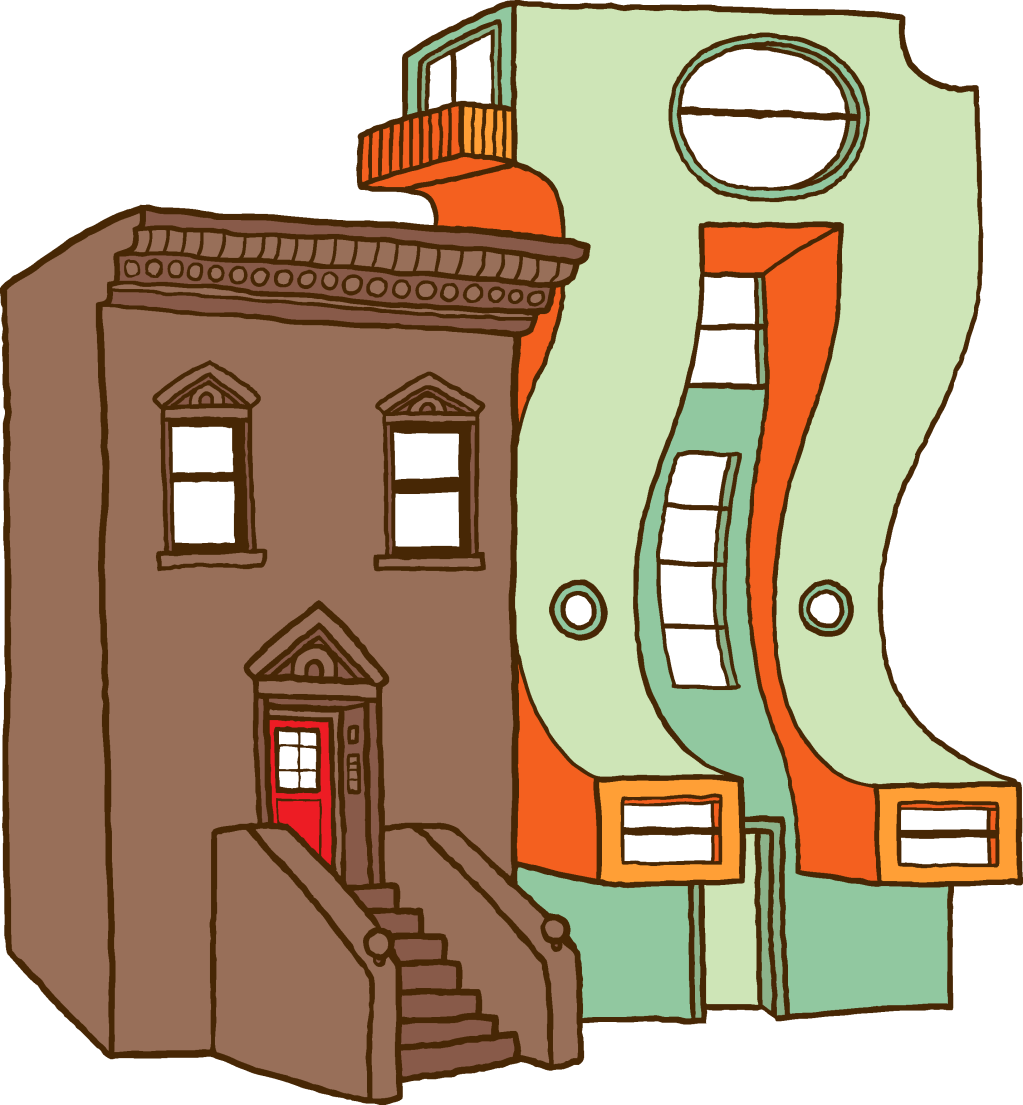
While skyscraping development rocked the neighborhood in recent years, resulting in a condo boom of glassy towers, large-scale developments, and much-maligned “finger buildings,” the miniscule block — described in “Tropic of Capricorn” by author Henry Miller, who grew up at the corner of Fillmore Place and Driggs Avenue, as “the most enchanting street I have ever seen in all my life” and “the ideal street” — has hardly changed at all.
The Landmarks agency agreed, deeming the stretch “a cohesive, relatively intact ensemble … lining a narrow, block-long street with a definite sense of place” that serves “as an important reminder of Williamsburg’s transformation from a rural village to a bustling urban neighborhood.”
Today, Fillmore Place remains unknown to most anyone but longtime locals — and they’re are eager to see the city step in.
“If you’ve watched the transformation around here over the last 10 or 15 years, you start to think that nothing’s safe from developers,” said Frank Haldren, 61. “If they landmarked the street, it would be a reminder that this neighborhood did exist before luxury condos and expensive cafes.”
A vote by the Landmarks Preservation Commission will come after a public hearing on the historical value of Fillmore Place, which could be held as early as this spring, according to agency spokeswoman Lisi de Bourbon. — with Emily Lavin