Does Community Board 2 have an alcohol problem?
It certainly seems that way to Brooklyn’s pre-eminent foodie, Borough President Markowitz.
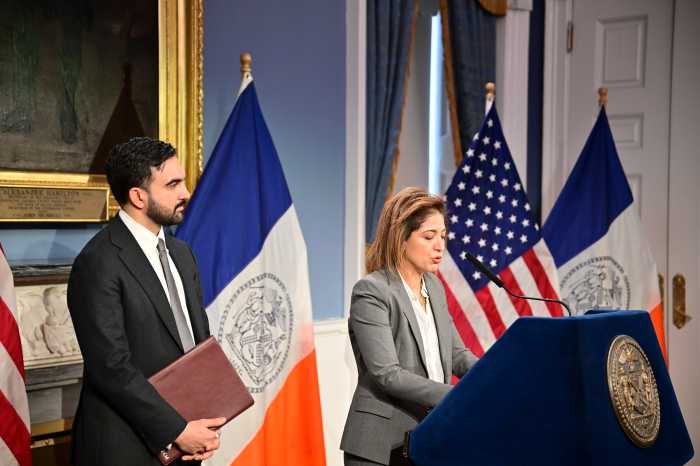
With the Brooklyn Heights, DUMBO, Fort Greene and Boerum Hill board’s health, environment and social services committee’s set to disapprove yet another liquor license on Jan. 7 — a vote that came one month after another high-profile booze license request by politically connected restaurateur Buzzy O’Keefe was denied by the same panel — CB2 Chairman John Dew personally delivered a message from Markowitz that the panel should take a more liberal approach to drinking.
“The borough president asked us to be mindful of that and to take into consideration that it’s very common to also serve alcohol at a restaurant,” Dew said.
A local community board’s approval of a liquor license is not essential, as the board’s vote becomes only a recommendation to the all-powerful State Liquor Authority.
That said, CB2, unlike other area boards, calls in each new license seeker for a grilling, a process that often involves lawyers and lobbyists.
The board has turned down four of its last 20 new applicants, statistics show. Meanwhile, other community boards in booze-loving neighborhoods are more supportive.
Community Board 6, which represents Park Slope, Carroll Gardens, Cobble Hill and Red Hook, and Community Board 10, which covers Bay Ridge, generally just offer advice to would-be restaurateurs. Applicants in Williamsburg’s Community Board 1 often bring representation, but none of those boards has rejected a new applicant who appeared in person in the past two months.
The Liquor Authority has over-ruled CB2 in two recent cases, but that doesn’t make the process any less onerous for entrepreneurs.
“We’re taking a risk and spending money,” said Dema Baledemic, whose proposed trattoria — already months into construction — faces CB2 opposition. “What if a steady customer wants a Sambuca or a limoncello?”
CB2 chairman Dew denied that the board has neo-Prohibitionist or anti-business leanings.
“They are not opposed to bars in general, but there is always a concern that bars will cause more problems for the surrounding residents,” Dew told The Brooklyn Paper.
“We’re doing whatever we can to have more business and more employment without bringing harm to the community.”