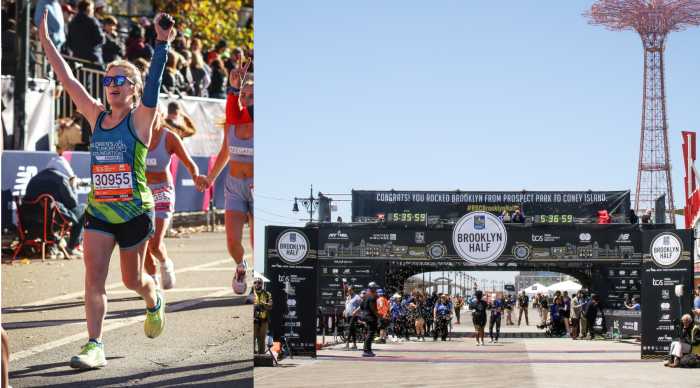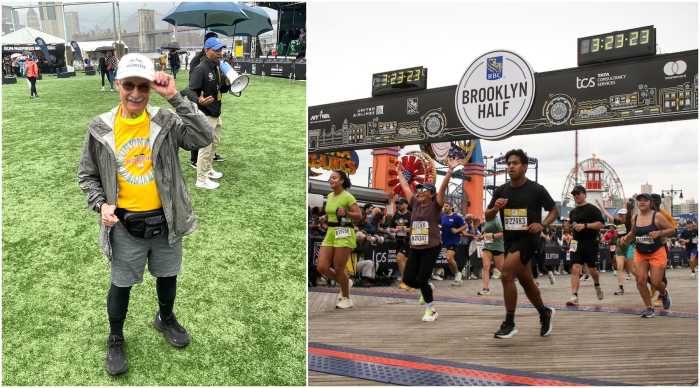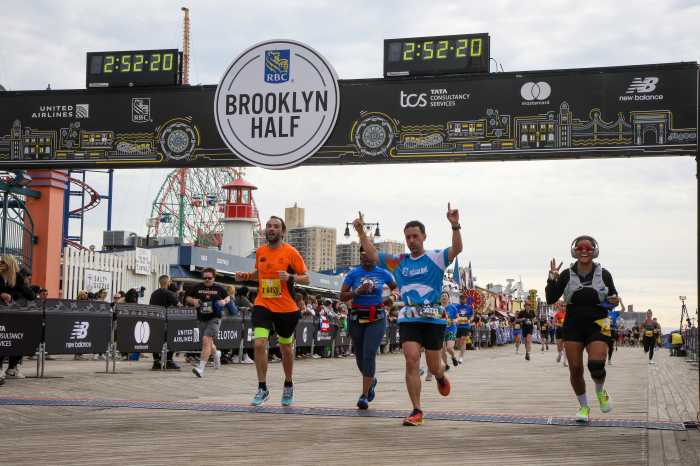

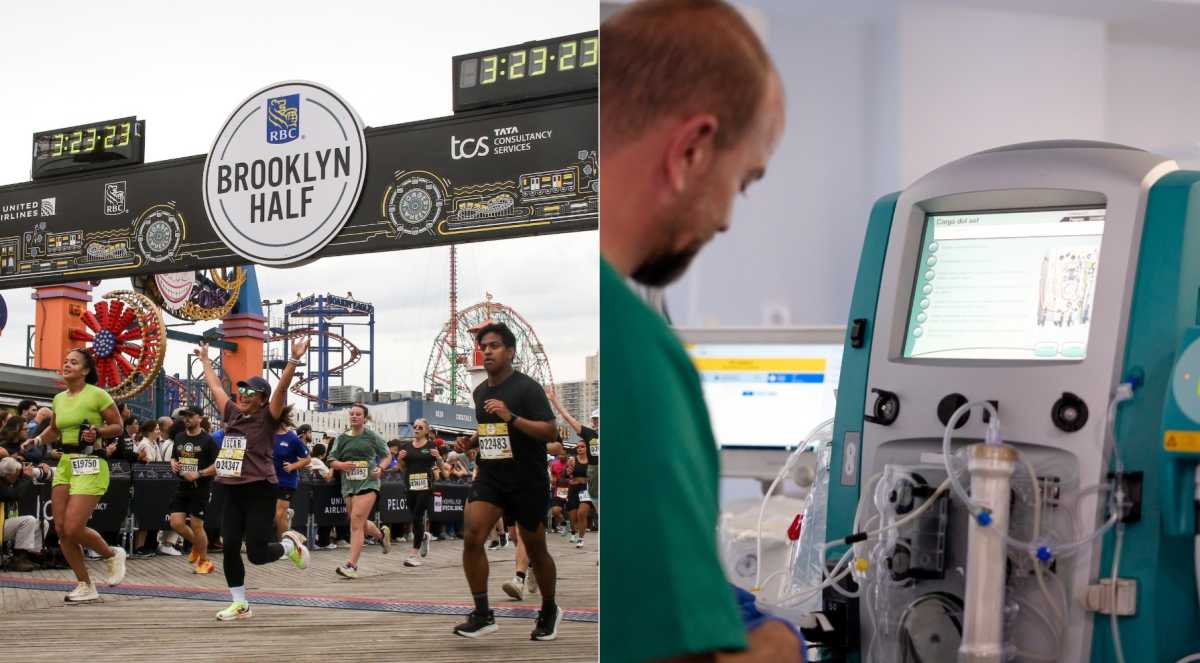
The New York Road Runners will station a new “last-ditch” resuscitation device at the finish line of the RBC Brooklyn Half Marathon this Saturday, in case a runner suffers a serious cardiac event.
An ECMO (extracorporeal membrane oxygenation) machine will be housed in the medical tent on the Coney Island boardwalk, along with a specialized ECMO team. Both the device and the team are on loan from Maimonides Medical Center.
Since 2022, two people have died during or immediately after the RBC Brooklyn Half Marathon, a 13.1 mile race from Prospect Park to Coney Island.
In 2022, 32-year-old David Reichman died from a suspected cardiac arrest after he collapsed just past the finish line. Last year, 31-year-old Charles Rogers suffered a cardiac arrest at about Mile 8 and died at Maimonides Medical Center despite lifesaving efforts.
ECMO is “sort of a last-ditch effort for a person in cardiac arrest who does not respond to normal resuscitative measures,” said Dr. Matt Friedman, NYRR Medical Director and Emergency Medicine attending physician at Maimonides.
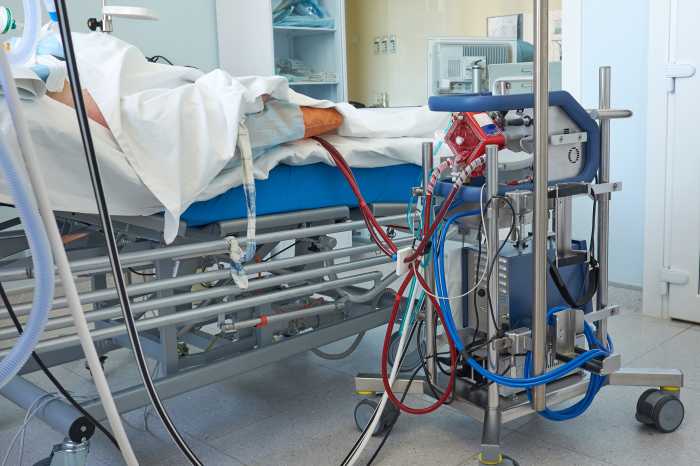
A team of five people — led by Dr. Paul Saunders, head of the ECMO program at Maimonides — insert catheters into the body to pump blood into the machine. The machine removes carbon dioxide, adds oxygen, and sends the re-oxygenated blood back into the body, essentially temporarily replacing the heart and lungs.
The patient would immediately be loaded into a specialized ambulance and rushed to the Intensive Care Unit at Maimonides, Friedman said. The hospital will have another ECMO machine on standby.
Friedman suggested placing ECMO at major races last summer, said NYRR race director Ted Metellus, after learning of a few other races around the world that do the same. Road Runners had an ECMO machine at the finish line of the 2025 TCS New York City Marathon, Friedman said, but it was not used.
Road Runners prepare for medical emergencies, hot weather
It’s not uncommon for runners to suffer from relatively minor health issues during long races, Friedman said, and “99%” of the people who stop in at a medical tent are dealing with muscle cramping or minor injuries like sprains, strains, or abrasions from a fall.
Occasionally, there are more serious issues, like asthma attacks, heat stroke and cardiac events. Warmer temperatures cause more strain on the body and can increase the risk of serious events like heart attacks, especially in people with pre-existing conditions.
One in every 50,000 runners at a half or full marathon will suffer a “serious cardiac event,” Friedman said. The recent fatalities at the RBC Brooklyn Half — which is expected to see 29,000 runners this year — pushed Road Runners to develop heat emergency protocols with City Hall and the FDNY.
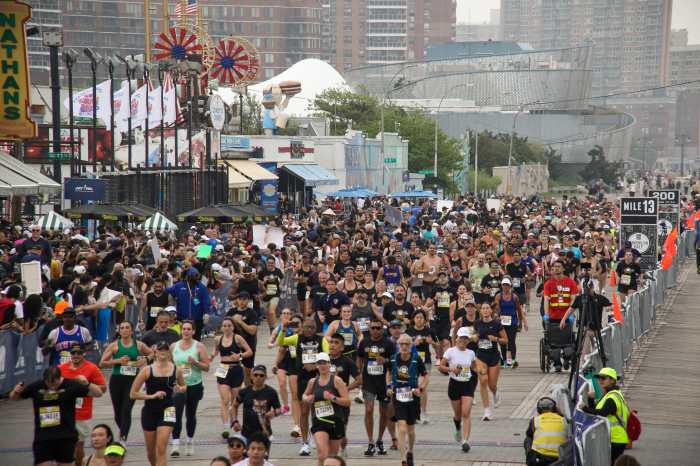
The organization already had a number of emergency measures in place along the length of the course, Metellus said, including ten medical stations and 32 defibrillators. There are also teams of medical professionals on bikes and seven ATV-style vehicles with stretchers, each equipped with AEDs and oxygen.
“Every half mile, we have a unit that is available to respond to a collapsed runner, and they all have AEDs,” Friedman said. “They would start compressions, they would use the AED, and hopefully that alone is enough to resuscitate the heart and restore the pulse. That’s the ideal scenario, and those runners do very well.”
Runners who don’t respond to defibrillation and compressions would be candidates for ECMO, Friedman said. While some runners — like Rogers, who died last year — collapse earlier in the course, data shows that 65% of all serious cardiac events occur in the last one-quarter of the race, Friedman said, which is why the ECMO machine is placed at the finish line.
The back of each runner’s bib has an emergency contact number, Metellus said. If a runner collapses, a bystander or fellow racer can call that number to get help.
“If you’re on an intersection, you can say, ‘I’m on Ocean Parkway and Avenue A,’ and there will be resources that will be deployed to you there,” he said.
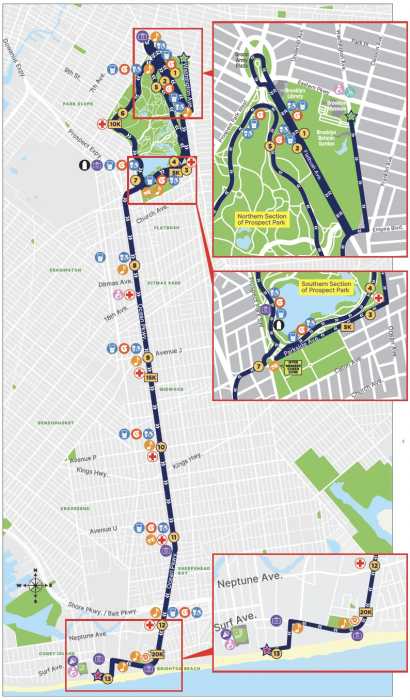
In addition to medical stations, the Brooklyn Half Marathon Course has ten aid stations with water and Gatorade, Metellus said, and one station about halfway through with gel supplements. The course map has exact details on where and when runners will find aid stations.
NYRR is also setting up additional cooling “misting stations,” especially on the sunny second half of the course on Ocean Parkway.
New this year are ice stops, he said. At three aid stations on the southern part of the course, there will be kiddie pools and Ziploc bags filled with ice so runners can grab a handful of cubes to store in their hat or shirt to stay cool as they approach the finish line.
Runners face ‘unique’ challenges as weather warms
Always hosted in mid-May, the RBC Brooklyn Half is “unique” in that it does not give runners time to acclimate to warmer weather, Metellus said. Participants train in cooler spring temperatures, and the race might be their first hot-weather outing of the year.
“They’re running a very different environment than what they trained for, and that could pose some trouble for heat stroke,” Friedman said. “I do want runners to be aware and be alert and be in tune with their bodies, because running in the hotter weather poses some challenges.”
In 2022, the heat index was around 95 degrees Fahrenheit, and 16 other runners were hospitalized, according to Gothamist, eight with serious injuries. Last year, temperatures hovered in the mid-70s with high humidity.
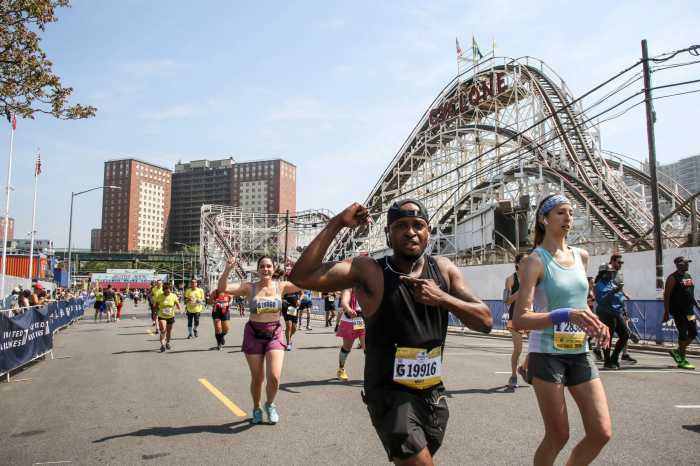
As of May 12, the National Weather Service was predicting a high of about 80 degrees Fahrenheit for race day, May 16, with lower temperatures and more moderate humidity predicted for the early morning hours. Runners will start the race in four waves between 7-8:30 a.m.
Large signboards along the course will inform runners of weather conditions and caution them to slow down if needed, Metellus said.
Climate change has already shifted standard weather patterns in New York City. Since 1970, average spring temperatures have risen 1.7 degrees Fahrenheit, according to Climate Central, and the city sees around a week of abnormally-warm spring days each year.
Facing ever-warming weather, Metellus said Road Runners has considered changing the date of the RBC Brooklyn Half, but that it would be a Herculean task. The org works closely with the city to organize the event, which has been hosted in mid-May every year since 1981.
“You plan for the knowns and you prepare for the unknowns,” Metellus said. “Informing our participants, informing the general public, increasing the resources and supplies that are out on the course … those are variables we have control over, those are the things we really want to push forward toward, because the weather may change or adjust.”
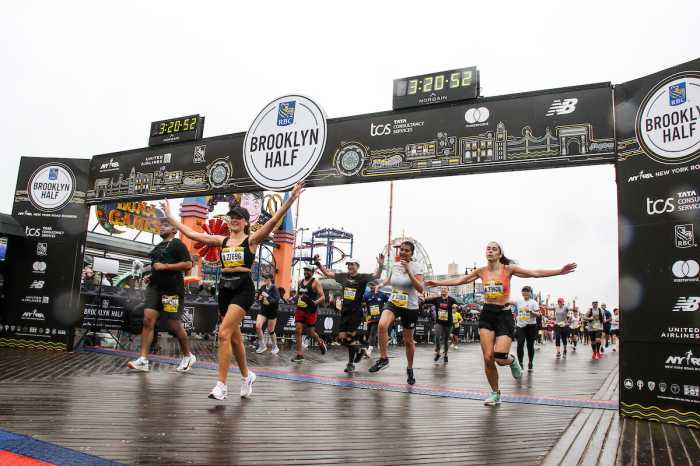
Over the years, the weather on race day has varied significantly, Metellus said, from cool and wet to hotter-than-normal.
“We are paying very close attention to the trends,” he said. “If deemed by the City of New York and all the key stakeholders that a date can be applied for, for a change, it would be one that would be seriously discussed.”
In the meantime, he and Friedman encouraged runners to listen to their bodies, hydrate, and slow down if they need to.
“Check in with one of the medical professionals on at the course tents every miles or slow your pace and check in with yourself and see how you’re doing,” Friedman said. “If there’s any question that you’re not doing your best, the right answer is slow down, take a breather, and reassess yourself.”