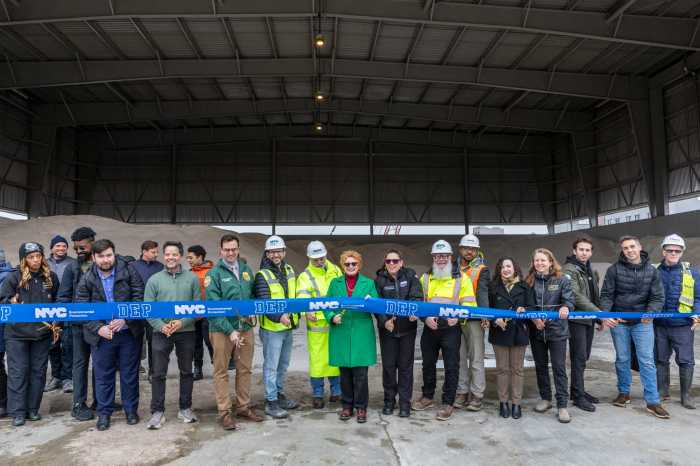

Under gray spring skies on Earth Day, city officials and nonprofit leaders gathered in Gowanus to plant more than seeds — they launched a $4.5 million effort to grow New York City’s green workforce.
Deputy Mayor for Operations Julie Kerson, New York City Department of Environmental Protection (DEP) Commissioner Lisa F. Garcia, The Doe Fund President and CEO Jennifer Mitchell, and Andrea Parker, executive director of the Gowanus Canal Conservancy (GCC), announced the three-year pilot program April 22 at the Conservancy’s Lowlands Nursery.
The Green Readiness Opportunities for the Workforce (GROW) initiative is managed by The Doe Fund, with support from Public Works Partners and the Gowanus Canal Conservancy. The program will train an 18-member crew in horticultural care and green infrastructure to maintain 1,035 city rain gardens — part of a citywide network of 8,000 — in East New York, Brooklyn, and South Ozone Park, Queens.
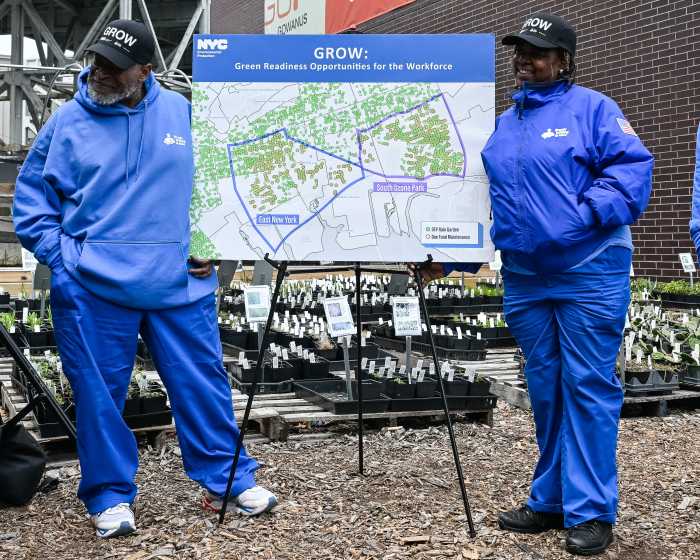
The program combines classroom instruction, hands-on training and career development, preparing New Yorkers — including those with histories of incarceration, homelessness or substance abuse — for green careers managing stormwater infrastructure. The work aims to reduce flooding, protect local waterways, expand the city’s workforce and support green infrastructure.
Rain gardens, designed to enhance neighborhood resilience and promote a greener, more inclusive New York City, can absorb up to 2,500 gallons of rainwater each. They help reduce flooding, filter pollutants through soil and stone, prevent stormwater runoff from entering the city’s sewer system and cool neighborhoods. Native plants such as Bradbury’s Bee Balm, Virginia Mountain Mint, New York Aster and Eastern Blue Star support biodiversity by attracting pollinators and providing year-round resources through staggered flowering times.
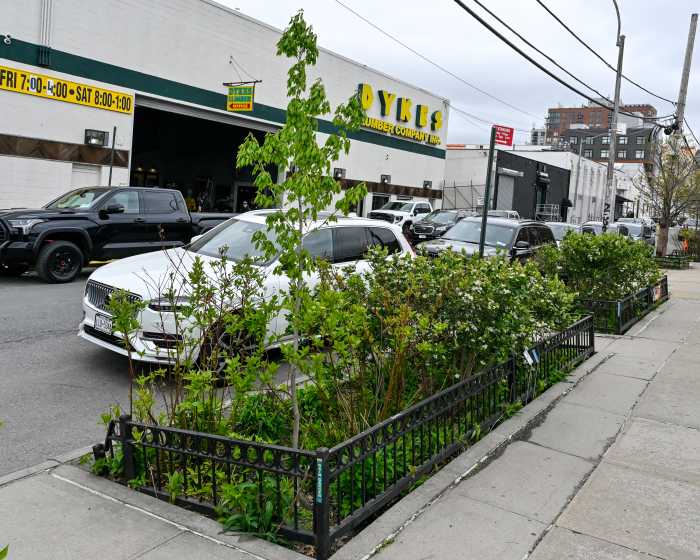
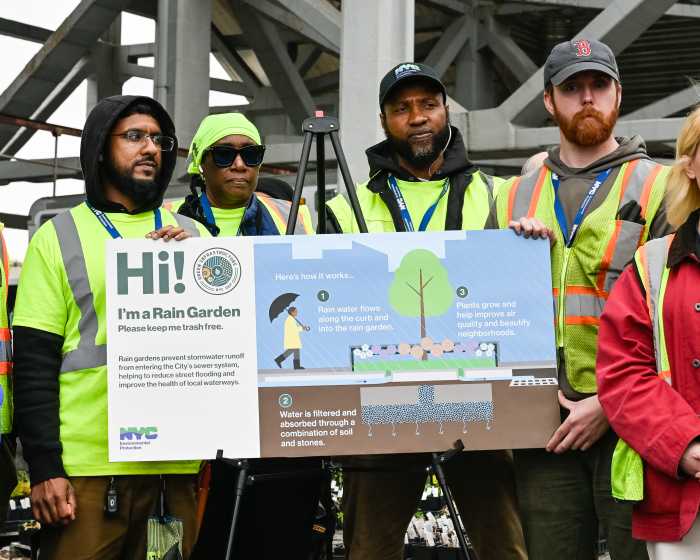
Garcia said the DEP is responsible for safeguarding New York City’s air and water supply and noted that, in addition to strengthening the agency’s nation-leading green infrastructure work, the program expands access to training and jobs in a growing field.
“As DEP continues to expand nature-based stormwater solutions across New York City, this pilot will support Doe Fund workforce participants and invest in the care of the train gardens that help manage rainfall and green our neighborhoods,” Garcia said.
Kerson said that as New York City expands green infrastructure to address climate change, the demand for green jobs is also increasing, adding that the program creates opportunities for New Yorkers often shut out of the sector.
“As we confront climate change and the severe weather it brings, sustainability and resilience must be written into the infrastructure we advance and the jobs we champion,” Kerson said. “This partnership represents the inclusive, climate-ready future our city requires, and I look forward to seeing the green careers of these 18 New Yorkers grow through this program and beyond.”
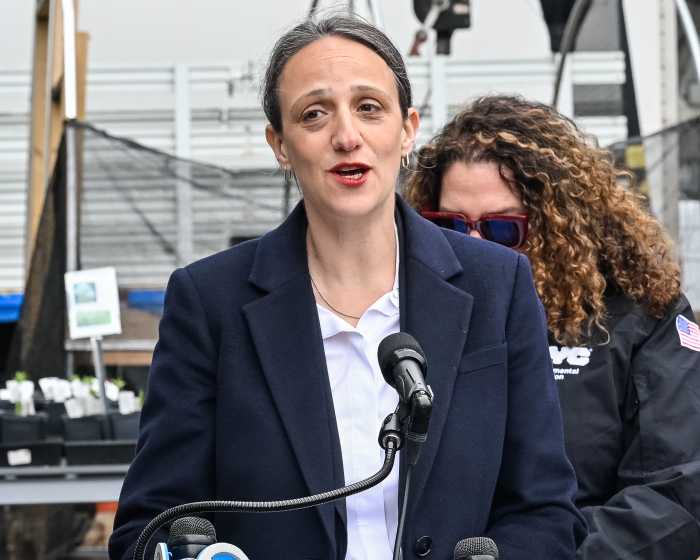
The Doe Fund, a nonprofit that provides paid transitional jobs, supportive housing, career training and counseling for people experiencing homelessness, described the program as a “holistic” approach to addressing major challenges, including homelessness, affordability and climate resilience.
“Programs like GROW demonstrate the incredible potential at the intersection of workforce development and environmental stewardship,” Mitchell said.
Parker said landscapes such as rain gardens and street trees require consistent, skilled care and that investment in specialized workforce development is critical for long-term sustainability.
“Gowanus Canal Conservancy has years of expertise not only in green infrastructure maintenance, but in sharing this knowledge with volunteers, students, community members, and youth apprentices to grow a network of skilled environmental stewards,” Parker said. “In collaboration with The Doe Fund and DEP, we are energized to expand workforce development to more New Yorkers who are interested and ready to step into green jobs that will make our city greener, spongier, and more climate-adapted.”
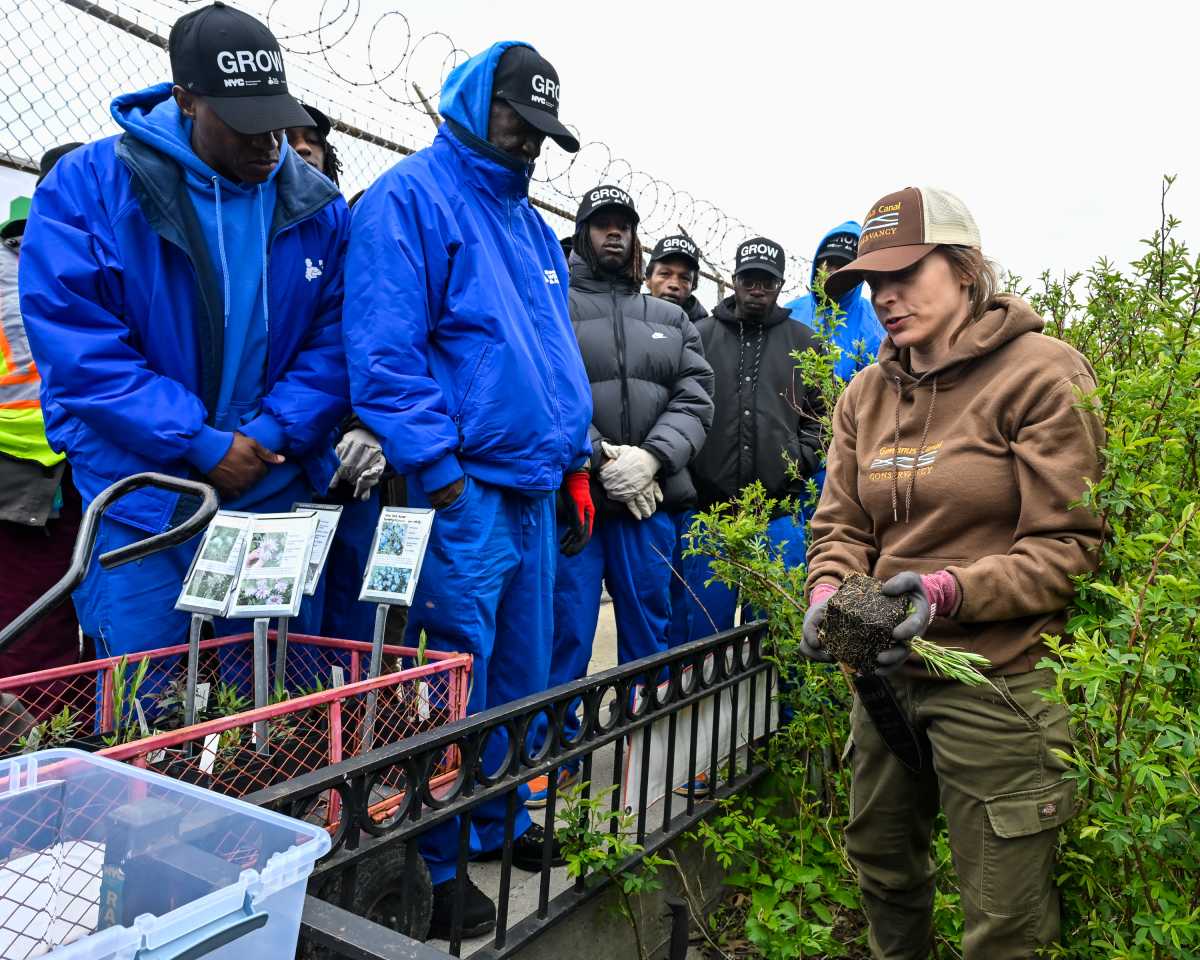
The press conference concluded with a hands-on demonstration and planting session at one of GCC’s rain gardens on 6th Street in Gowanus.
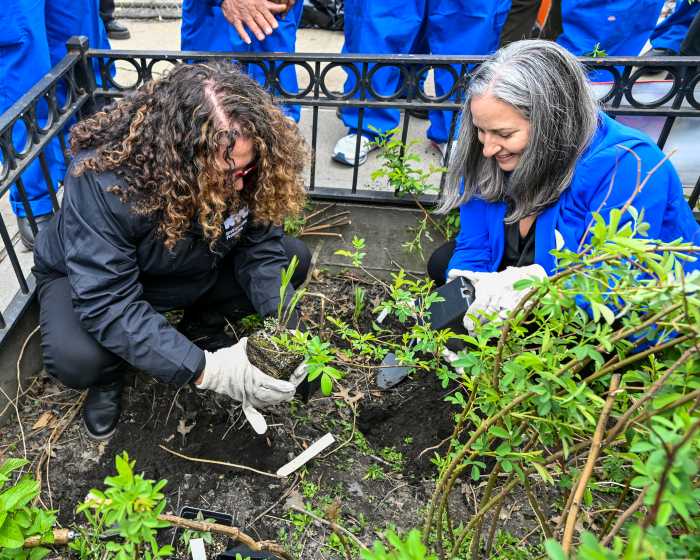
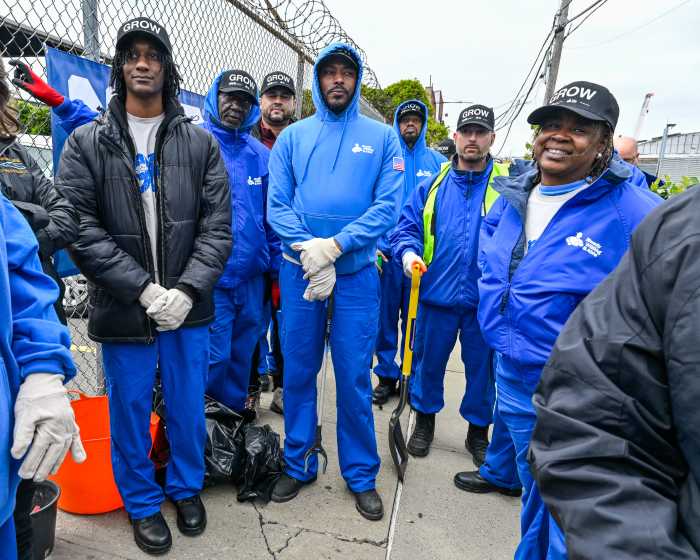
GCC garden senior manager Krysten Watson and program participants reviewed general maintenance tasks, including removing trash, debris and weeds; reporting damage to rain garden infrastructure; pruning; and watering during dry spells.
Watson said plant selection is critical for a thriving rain garden, noting that species must tolerate drought, periodic flooding and contaminated water, including exposure to salts from de-icing agents and other urban pollutants.
“There are a lot of native plants that are local to our city that can tolerate contaminated and salty waters, can tolerate dry soils, and can tolerate wet soils. So we have a large selection of native plants to pick and choose from,” Watson said.