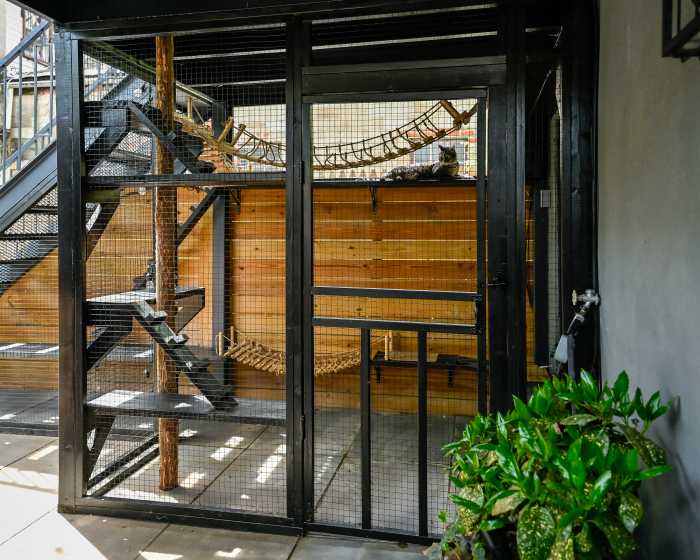
Scott McGehee’s four cats don’t roam the streets of Brooklyn. Instead, they lounge in a custom-built outdoor enclosure attached to his Bed-Stuy brownstone.
The setup, known as a catio, gives his pets Wyatt, Lil’Panda, Mango and Poppy a safe way to enjoy fresh air and watch birds without harming wildlife.
Some cat servants are taking their love for felines up a notch by building a catio — a portmanteau of “cat” and “patio” — an enclosed, secure outdoor space designed to keep cats safe while they enjoy fresh air, sunshine and the stimulating sights and sounds of nature.
Cat Topia, a national catio builder based in Denver, was born out of one owner’s effort to enrich his pets’ lives. In 2017, co-founder Sky Davis noticed his two cats were bored and lacked enrichment. He teamed up with friend Lance Harding to build a catio. After seeing improvements in his cats’ behavior, the pair began building custom catios across Colorado in 2018 and expanded nationwide in 2019.
Matthew Hildebrandt, Cat Topia’s director of marketing and communications, told Brooklyn Paper that business is booming. The company reported 42% annual growth in 2024 and 2025 and is approaching its 500th build, reflecting a broader trend of pet owners treating animals as family members and investing in their well-being.
“It’s growing substantially, and the market for catios and cat health and wellness is just expanding right now,” Hildebrandt said.
Custom-built catios start at $8,000 and can be tailored to fit any space, lifestyle and number of cats — one client has 19 mousers. The structures are made from weather-resistant materials such as pressure-treated lumber and cedar. Owners can choose from black vinyl mesh wire fencing, pet screens, galvanized steel fencing or black steel critter fencing, all designed to keep cats safe while protecting them from outside animals.
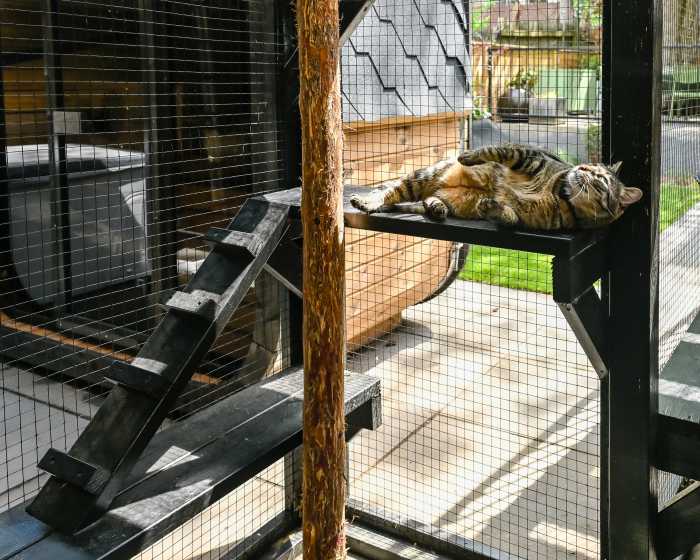
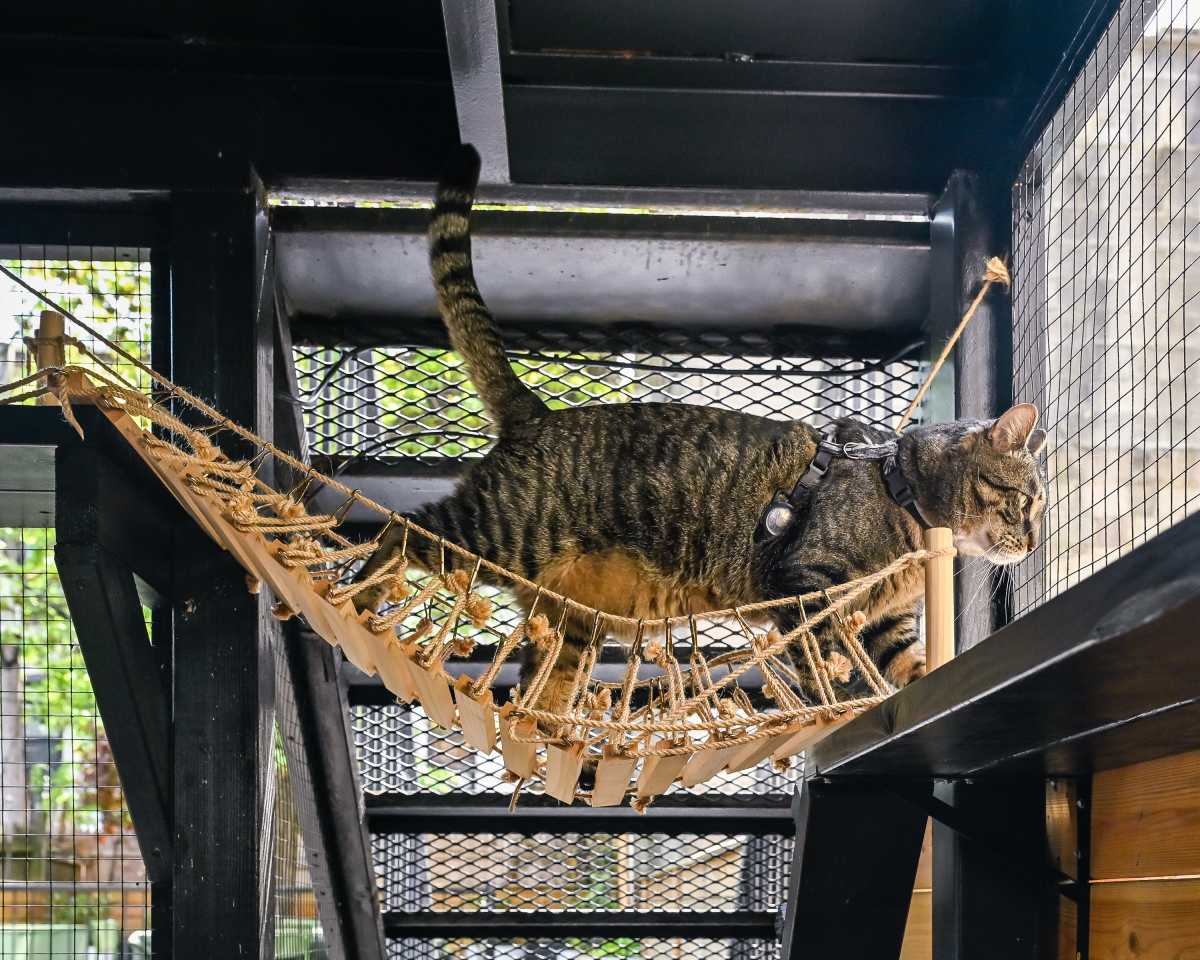
Cat sanctuaries offer fresh air, sunlight and environmental enrichment. They can include perches for observing birds, squirrels and other small animals, as well as scratching posts, hammocks, wall-mounted or natural cat trees, climbing towers and litter boxes. The outdoor access can also reduce territorial tension in multi-cat households.
“Everything is from the ground up. So everything’s unique. There’s not like one that’s the same size as the other,” Hildebrandt said. He noted one client spent $123,000 on a 700-square-foot outdoor setup featuring four separate catio structures connected by more than 100 feet of tunnels. “He wanted to build them a paradise where they can just roam wherever, and he doesn’t have to worry about them anymore.”
McGehee, one of Cat Topia’s clients, has four cats: 7-year-old Wyatt, his “favorite son”; 8-year-old Lil’Panda, the “elder statesman”; 3-year-old Mango, an orange cat; and Poppy, a calico McGehee calls the “matriarch of the house,” who doesn’t put up with anything despite her small size.
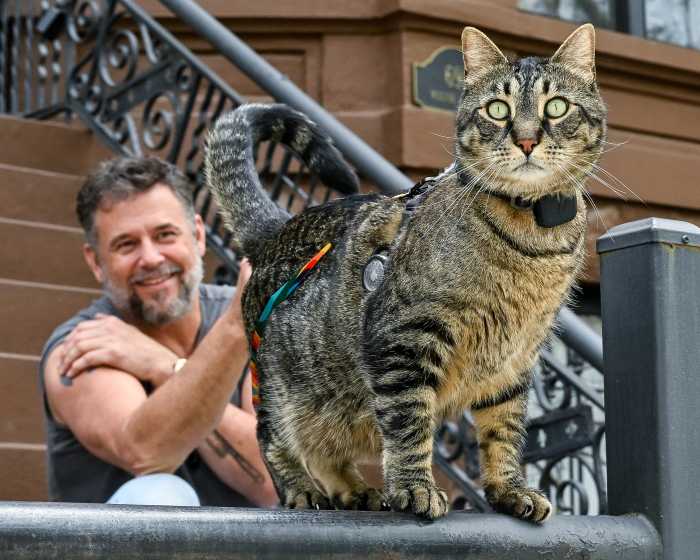
The former Arkansas resident, who also takes Wyatt on neighborhood walks using a leash or stroller, said he built a catio because of cats’ impact on wildlife.
“[Cats] are just little assassins. They kill birds, they kill animals that are good for the environment. So we decided to be responsible pet owners and build them a large catio, and we stopped letting them go outdoors and hunt,” McGehee said. “Responsible pet owners ideally don’t let their cats outside very much.”
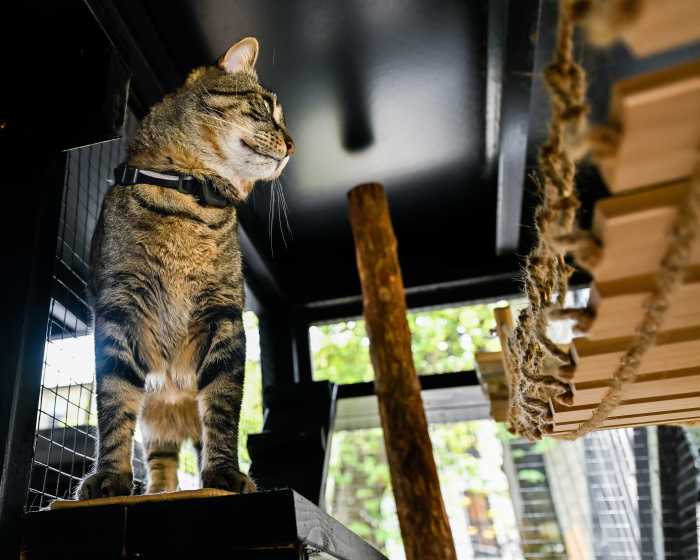
His cats access the enclosure through a pet door installed in a ground-floor window of his brownstone. The space includes bridges, towers, a scratching pole and benches large enough for McGehee to keep his felines company.
“Particularly in New York, space is very limited. And cats need love, just like dogs and humans. They still want to at least look at birds and bugs and see the outdoors. They are so much happier and more fulfilled,” McGehee said. “Even if it’s a really small box in a window, where they can just sit outside and kind of lurk over the neighborhood and watch the people and pets walking by. I really think it brings the cats a lot of joy. And, like with any pet, you can tell a happy pet versus a pet that’s kind of not as happy.”
While some may argue cats could be frustrated by not being able to hunt, Hildebrandt said observation alone provides mental stimulation and helps offset boredom-related anxiety and depression.
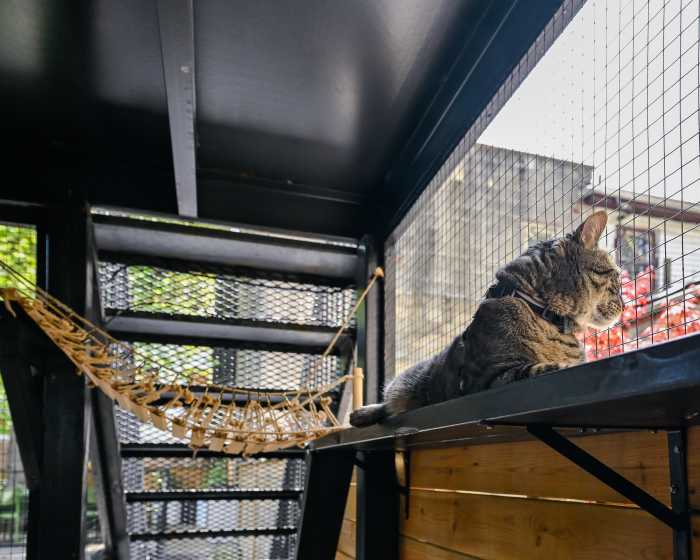
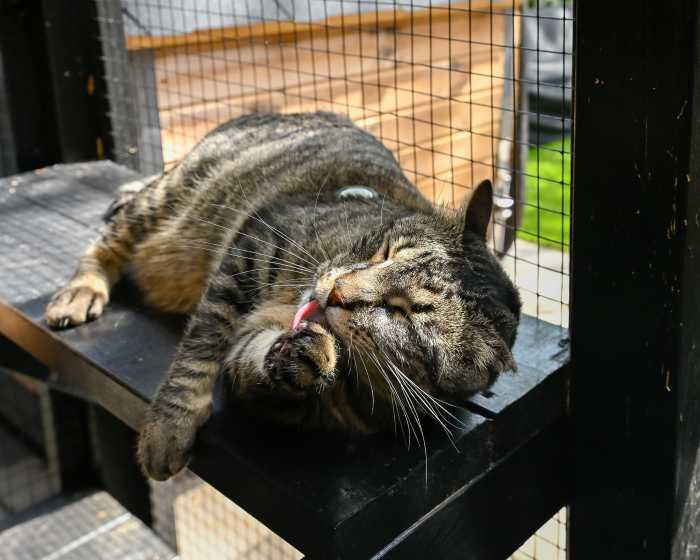
“According to vets from the Humane Society, just the engaging of the mind keeps them sharp mentally,” Hildebrandt said. “A lot of indoor cats struggle with depression, and so just being able to view [wildlife] stimulates their mind. There are a bunch of studies that [cats suffer] from depression and anxiety from just being stuck inside all day, so being able to build something that allows them to go outside. It’s like a win-win. It gives them the cat TV, and it lets them do whatever they want, but also gives the owners peace of mind knowing that their cat’s safe.”
While catios provide a safe environment for the felines — outdoor cats have an average lifespan of 2 to 5 years, while indoor cats can live up to 18 years, according to the Humane Society — they also help protect wildlife. The American Bird Conservancy estimates outdoor cats kill 2.4 billion birds annually in the United States, making them the leading source of direct, human-caused bird mortality.
Cat Topia donated more than $64,000 last year to humane societies and other partners to address cat homelessness. The company has also partnered with Audubon groups to highlight the ecological benefits of catios and shift perceptions of cats, which have contributed to the extinction of at least 63 species of mammals, birds and reptiles worldwide.
“We’re trying to change the narrative, instead of labeling cats as bad animals; that there are options out there for those people who still want to let their cats go outside, but in a safe, enclosed environment,” Hildebrandt said.