A little bit of hipsterdom is on its way to a gritty intersection of Downtown Brooklyn.
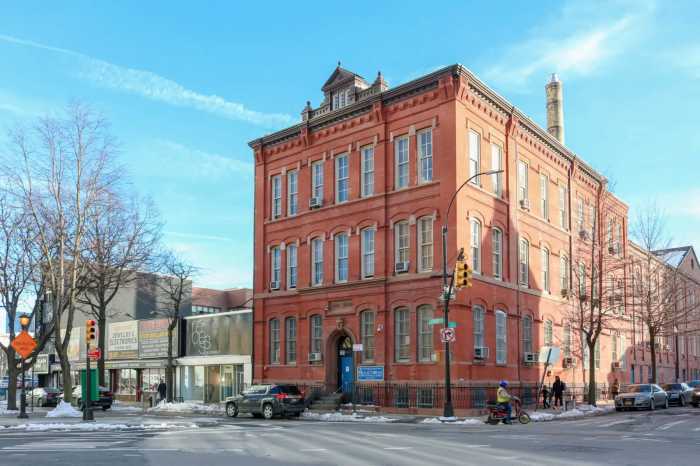
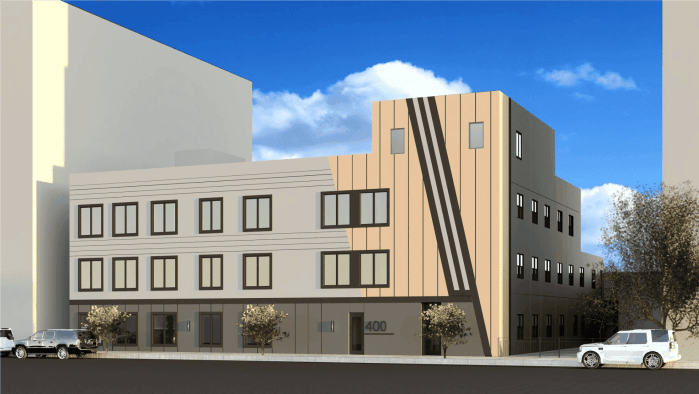
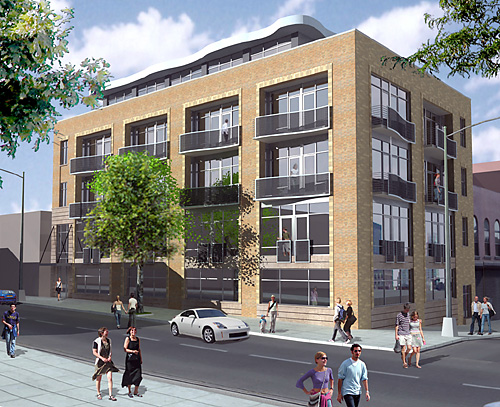
The developer of 177 Concord St. has called in architect Karl Fischer — the Montreal designer who gave Williamsburg the trendy Gretsch building known for attracting such bold-name buyers as rapper Busta Rhymes and actress Annabelle Sciorra — to convert the nondescript brick warehouse into industrial-chic, loft-style condos.
The five-story building on the corner of Duffield Street will include 23 market-rate units, including a private penthouse level. There will be a roof deck and, possibly, private cabanas — a recent luxury innovation that is becoming the norm for developers looking to cash in every square inch of space, even on the roof.
The developer paid $6 million for the low-rise-zoned building in 2006, according to city property records. A spokeswoman said this week that the new design would “keep feel and taste of the neighborhood” while adding something that hadn’t yet been seen there: luxury.
“We are offering spacious, New York City-style lofts with an exercise room, a recreation room and a roof deck with great views of the bridges,” said Lizette Martinez, a spokeswoman for the developer.
The warehouse sits in the rapidly changing area between Vinegar Hill and Downtown Brooklyn — which one real-estate broker calls “RAMBO” (Right After the Manhattan Bridge Overpass) and another hopes to dub “Flattery” (after Flatbush Avenue and Tillary Street).