A proposal for a federally overseen clean-up of the Gowanus Canal sounds like something that everyone can get behind, but it’s actually pitting neighbor against neighbor over facts and hearsay that are as murky as the waterway itself.
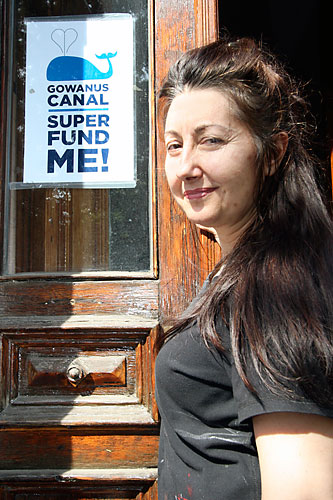
Posters clamoring for the Environmental Protection Agency to list the infamous canal as a federal Superfund site have materialized on storefront windows in Carroll Gardens and outside nearby brownstones almost overnight — even as anonymously written fliers have started showing up in area mailboxes claiming that such a designation would depress home values and not actually speed the clean-up of the fetid corpse of water.
While the activists fight it out, residents are caught wondering who — and what — to believe.
“If we can get help from the government, then why not?” asked Jerry Finazza, the owner of the Smith Street pizzeria Giardini’s.
But Finazza, who put a “Super Fund Me” poster in the window, quickly began doubting that the EPA program is a solution after reading that most clean-ups are delayed by years of litigation and sometimes involve lawsuit against the municipalities themselves.
“If they don’t charge the city, then OK,” he said. “But if New York has to pay, then forget it.”
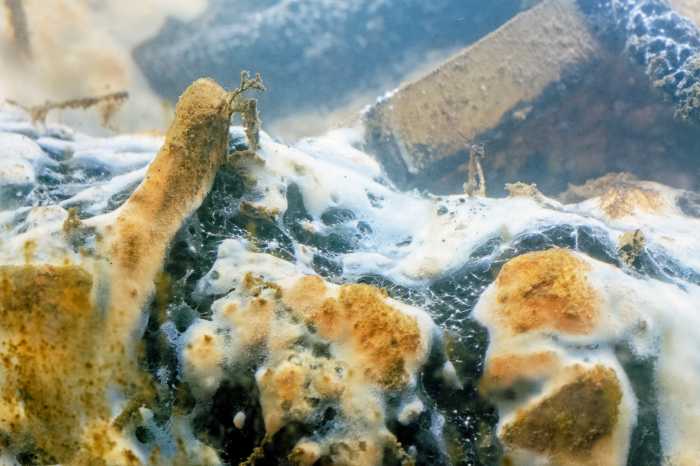
The Lavender Lake is debased with industrial toxins like PCBs, dioxin and coal tar, as well as human waste that overflows from the city sewers during heavy storms. An EPA-led cleanup would attempt to remove all the sediment from the canal and prevent uplands pollutants from leaching into it.
But there are existing plans for the city to dredge about 10 percent of the canal and improve the infrastructure to pump more fresh water through it. The state is also monitoring several former gas plant sites near the canal. The EPA could freeze this progress while it establishes its own cleanup program for the Gowanus.
Councilman Bill DeBlasio (D–Carroll Gardens), whose environmental credentials include legislation to make electronics recycling mandatory and an effort to ban taboo Styrofoam in schools, has actually landed in the anti-Superfund camp, a faction that includes his opponent from so many other fights, Mayor Bloomberg. The mayor says that a Superfund listing could deter $400 million in private investment around and quash his goal of turning it into a residential community.
“For years, I have supported cleaning up the Gowanus Canal, but I am skeptical that declaring the canal a Superfund site is the best way to clean it,” DeBlasio said in a statement. “I believe local economic projects are an essential part of the clean-up effort, and I hope the EPA will work with the state and local government, as well as the community, to find the best way to clean up the canal.”
That statement won him the enmity of some of the most vocal Superfund believers.
Like the councilman, some people who live near the canal have become hesitant to jump on the pro-Superfund bandwagon like their more adamant neighbors.
“Initially, I thought it would be a good, but I want to know about the realities of government funding first,” said Jessica Oakley, a Hoyt Street resident.
She also dismissed arguments that Superfund status will bring shame on the community.
“I don’t think having it labeled as a Superfund site will make it any worse. Everyone knows it’s polluted,” Oakley said.
The complexity of the Superfund debate has confounded even Borough President Markowitz, the usually outspoken leader who put out an ambivalent position on the canal last week.
“I am committed to the restoration of the Gowanus Canal into an absolute asset to Brooklyn, our economy, arts and culture scene, and the well-being of neighboring communities,” said the statement, which dodged the question of whether the EPA should become involved.
In the end, this is New York; some residents were downright pessimistic about ever seeing a cleaned-up waterway.
“It probably won’t be cleaned up while I’m living here, so it doesn’t matter to me,” said Beth Tasso.