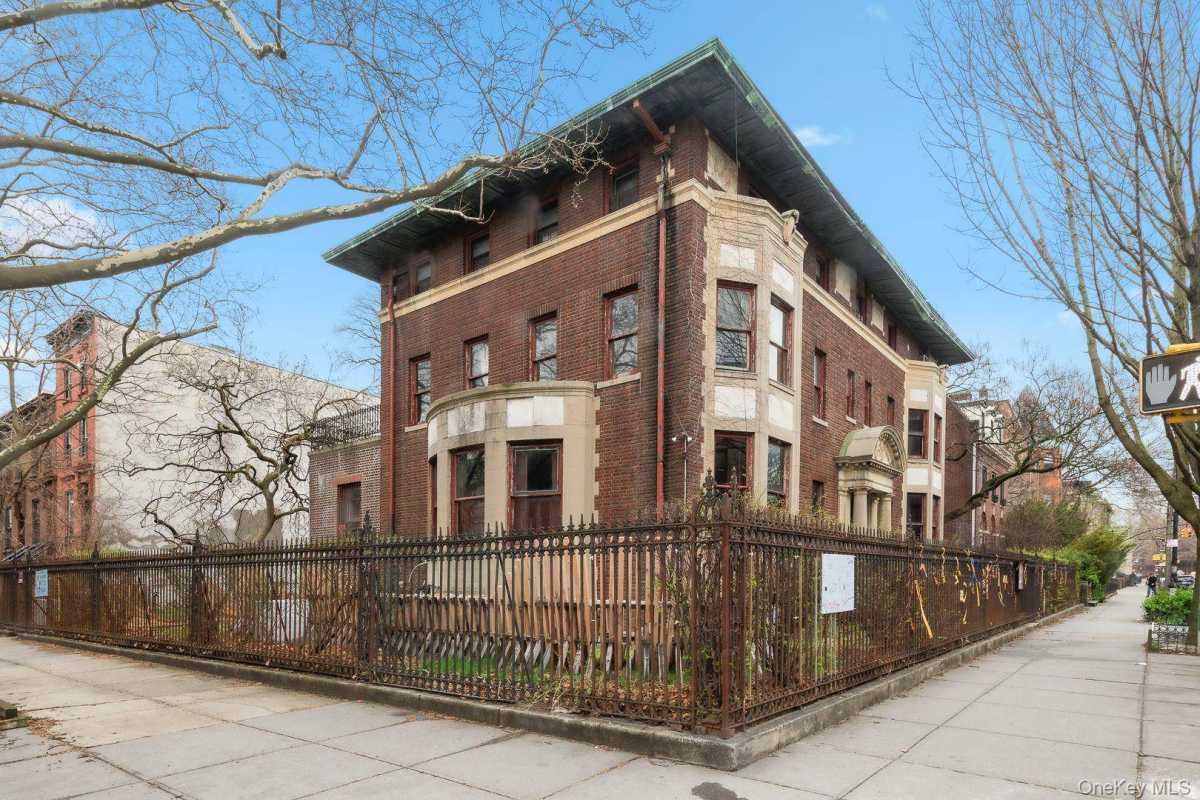
Two historic landmarked properties owned by the family of the state’s first Black gynecologist have been listed for sale for $8.25 million following years of speculation about what would happen at the sites.
The grand mansion at 375 Stuyvesant Avenue in Bed Stuy and Paul Robeson Theater (originally Church of the Redeemer) at 40 Greene Avenue in Fort Greene have been at the center of years-long family dispute following the death of Dr. Josephine English in 2011. Court documents show that a stipulation reached between her sons and grandson was entered in October 2025 stating that the properties will be sold together for at least $9.2 million.
Online listings posted in early April say the mansion and church are being sold as a two-property package for $8.25 million, or 375 Stuyvesant can be purchased alone for $5.25 million and the church for $3 million. The listing agent is Anthony T. Crews Real Estate.
The early 20th century mansion has long served as a hub for local businesses and nonprofits. Over the past year, after getting wind of the impending sale, locals organized to form a community land trust and have been trying to raise millions of dollars to buy it before it is sold to a private buyer.
One of the lead organizers for taking community ownership of the building, Shanna Sabio, behind the artist collective GrowHouse, formed the BLAC Land Trust with the goal of building creative incubator spaces and stabilizing community buildings through a nonprofit led by longtime Black area residents. The property at 375 Stuyvesant Avenue is the first the land trust has been trying to acquire.
Sabio told Brownstoner that despite the listing, the group is “still talking to mission aligned developers and funders to gather a capital stack and also exploring creating a fund for other projects like this. We want to be able to move at the speed of the market when properties become available.”
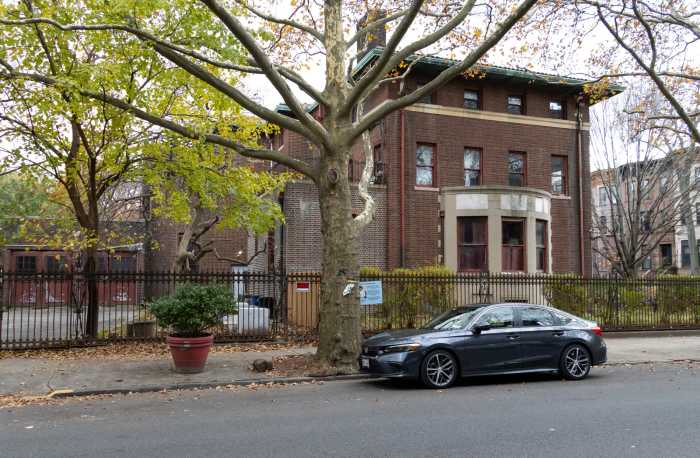
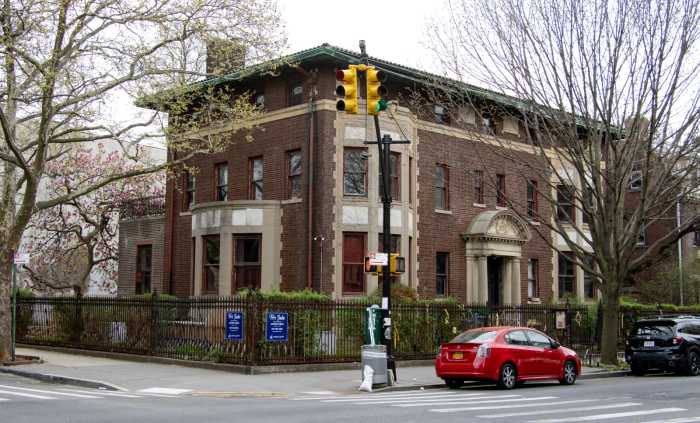
The Renaissance Revival brick mansion, on the corner of Decatur Street, was designed by Kirby & Petit and built in 1915 in what is now the Stuyvesant Heights Historic District. It was purchased by Dr. Josephine English in 1973, who as well as being the state’s first Black woman gynecologist was also the first to open a private practice.
The building contains one residential unit and one commercial unit, which is classed as a “community center,” city documents and PropertyShark show. From the 1970s through the 1990s, the building served as a community center for seniors, a certificate of occupancy from 1976 shows, and more recently it has housed a school, Seasons plant nursery and Bread Love cafe in the garage, cafe, and exercise and art classes. It has also been used as a film set, including for the HBO series Boardwalk Empire.
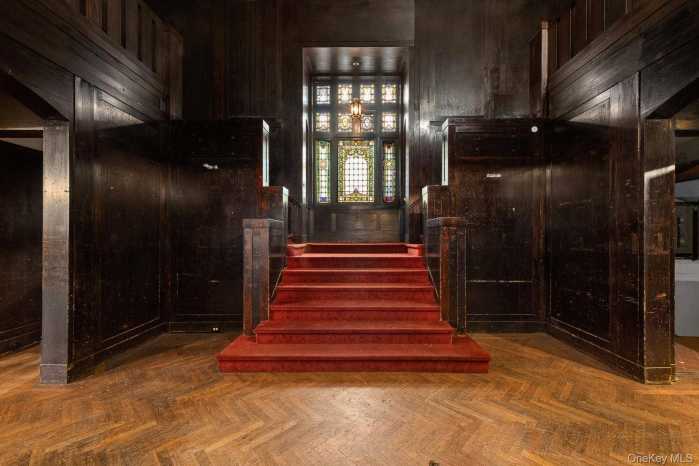
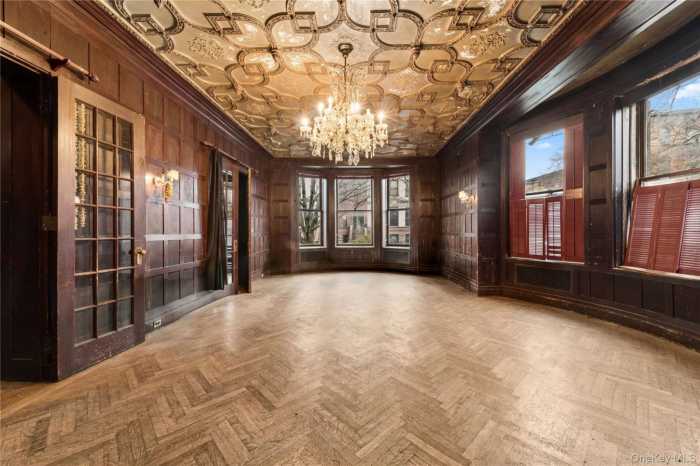
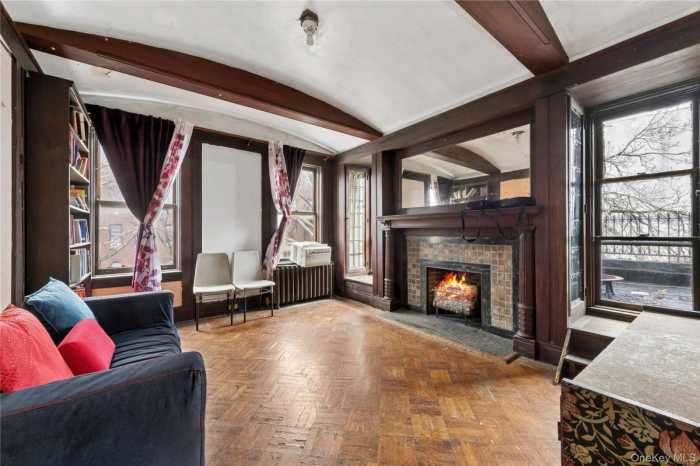
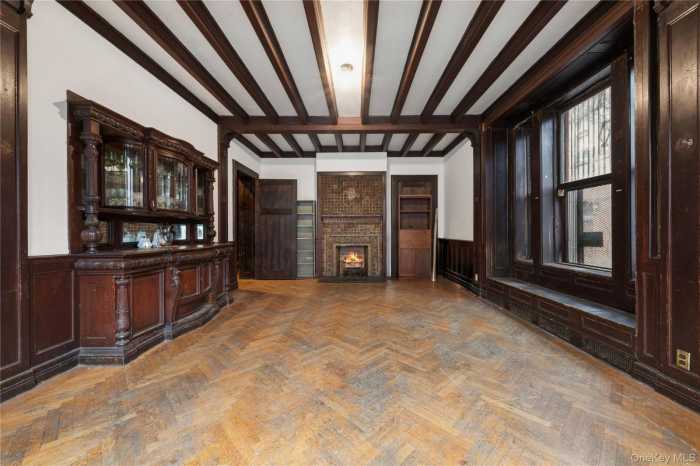
Photos in the listing show a beautifully designed early 20th century building in good condition. The large rooms include elegant features, including stained glass, herringbone floors, and an unusual mantel, some of which look as if they could be inspired by renowned early 20th century Scottish designer Rennie Mackintosh. Judging by the listing photos, the mansion wouldn’t require a ton of work to continue to be used as a residence and community space or as a single-family home.
The listing notes any exterior alternations would have to get approval from the Landmarks Preservation Commission.
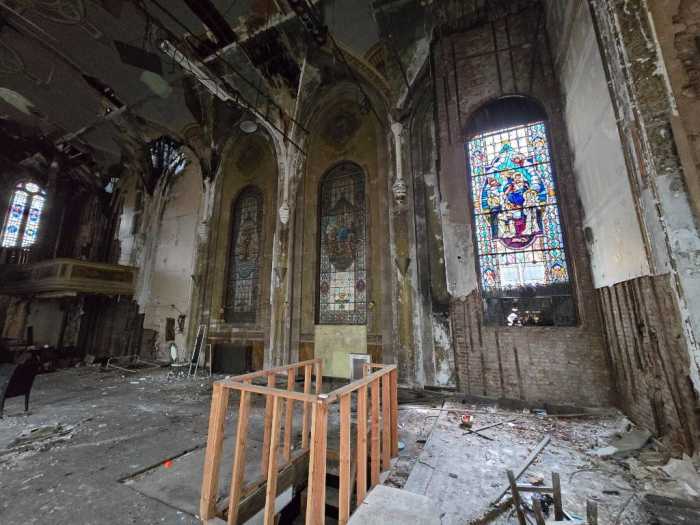
Meanwhile, a listing for 40 Greene Avenue says the individually landmarked church is fully built to its current zoning, meaning no additions could be built without a rezoning, and that it is “in decaying condition and requires full restoration.”
The listing says the building is “well suited for luxury residential conversion, institutional use, or long-term landmark-sensitive redevelopment” and “presents a compelling opportunity for experienced investors to reposition a historically significant asset through adaptive reuse and thoughtful redevelopment.”
“Both properties will be delivered vacant and sold in as-is condition, subject to any existing violations. Buyers are responsible for conducting their own due diligence, including verification of zoning, landmark status, building condition, and any applicable regulatory requirements,” the listing states.
The church was designed by Rembrandt Lockwood in the Rundbogenstil, or round arch, substyle of Romanesque Revival. It was built in 1864 for the Fourth Universalist Society of Brooklyn, which named it the Church of the Redeemer. The organization eventually sold the building to Temple Israel in 1870, which stayed until 1890 when Bishop John Laughlin, the first Catholic bishop of Brooklyn, bought the building for the Polish congregation of St. Casmir. The church underwent an expansion and renovation that added some more elaborate details designed by Frederick Weber.
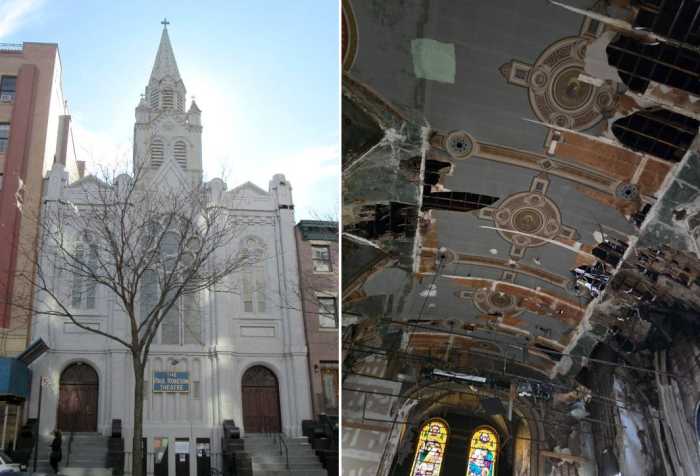
In 1980, the church was purchased by English, who had previously founded the Adelphi Medical Center at the corner of Greene Avenue and Adelphi Street, in the former Adelphi Hospital. Landmarks Preservation Commission documents say: “Dr. English also recognized the role that the arts played in the community and purchased St. Casimir’s Church in 1980, converting it into The Paul Robeson Theatre… ‘to enrich and strengthen the community through art, culture and education.’”
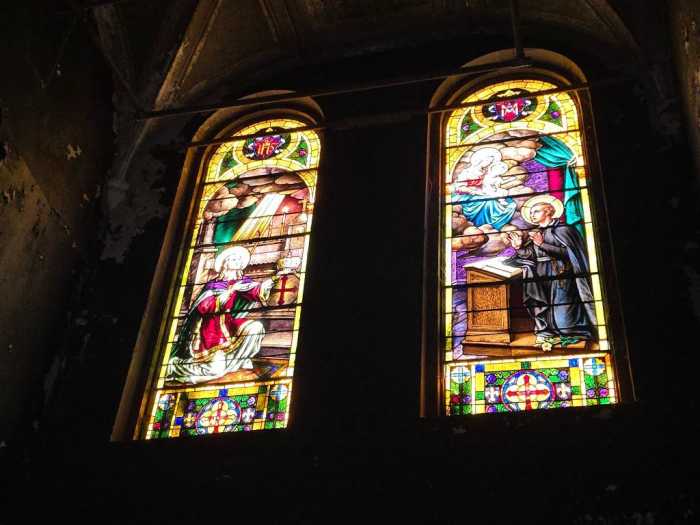
Recently, the church has been vacant and listing photos show a state of serious disrepair, with sky showing through holes in the roof and crumbling plaster. The stained glass, however, remains intact and stunning.
Both properties would require deep pockets, and the listing says they are intended for buyers with “experience in landmark properties and New York City development.”
This story first appeared on Brooklyn Paper’s sister site Brownstoner