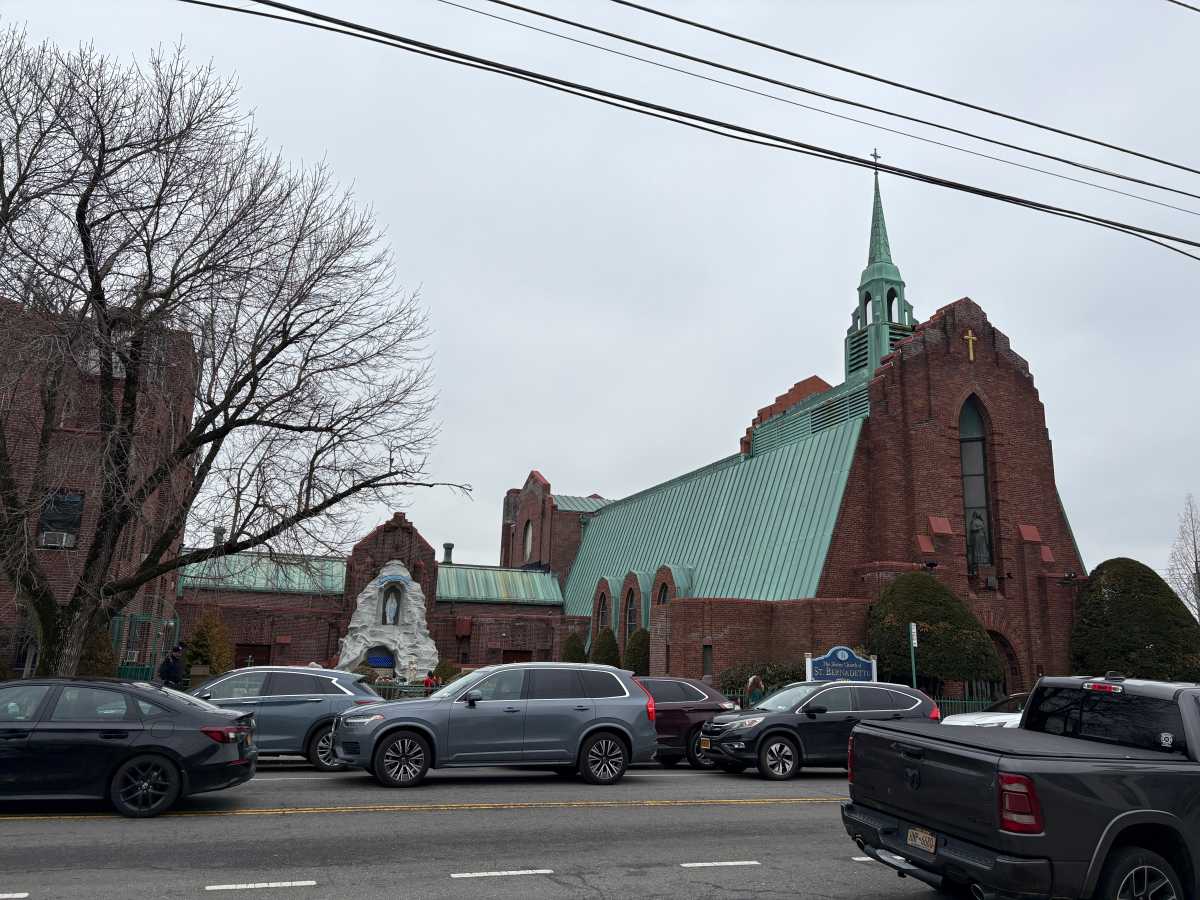
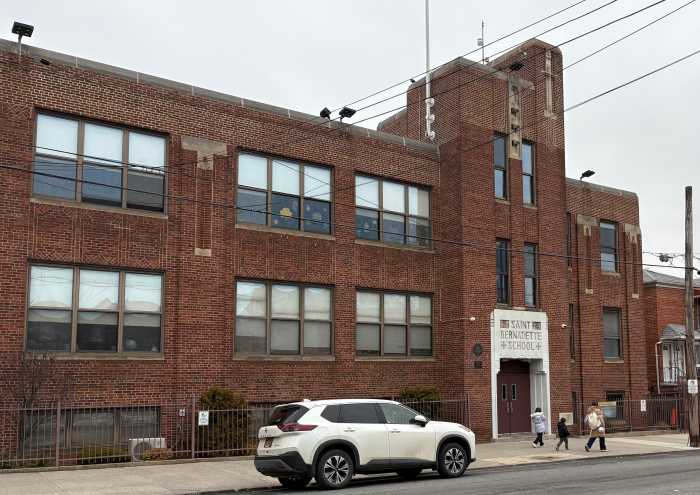
For decades, St. Bernadette’s Catholic Academy in Dyker Heights has marketed itself as a close-knit, high-performing school. Now, a growing number of parents say the reality no longer matches that reputation.
Since 1953, St. Bernadette’s Catholic Academy has educated local students for high school and beyond. Located between 13th Avenue and 83rd Street, the school reports strong academic results in math and English language arts compared with other Catholic academies in the Diocese of Brooklyn, according to its website. With a student body of 323 spanning kindergarten through eighth grade, SBCA has long emphasized its small, community-oriented environment.
But over the past year, several parents say that environment has deteriorated. Some have pulled their children out, citing concerns over management and classroom quality, while others have spent months trying to recover tuition payments.
“What’s really surprising is that we usually hear that Catholic schools are very well structured, good teaching, very good academics,” said A.M., a former parent who requested anonymity. “So to hear this one being the opposite of what the reputation is, it’s really surprising to hear this.”
Allegations of disorganization
SBCA parents Anthony and Michelle Sivolella said they once felt confident in the school’s leadership. Michelle said that changed when longtime principal Sister Joan was replaced by Jeanne Shannon for the 2024–2025 school year.
Michelle described a lack of communication, including unanswered emails, teachers not using Gmail or Google Classroom to share assignments, and outdated social studies textbooks. She also said parents’ concerns were not being addressed by the new administration.
Xavier King said he never expected to remove his daughter from SBCA, especially after transferring her there from Visitation Academy in Bay Ridge before that school closed in late summer 2024. But after what he described as an “inability to provide real academic instruction” in second and third grade, the choice was made.
“As parents, we could not allow her to stay in a classroom where she was not being taught, not being supported, and not being seen,” King said. “She deserves a teacher who is qualified, engaged, and capable of helping her grow academically. She deserves a school that is transparent and accountable.”
King cited frequent disruptions and limited curriculum coverage in second grade. In third grade, he said the teacher relied heavily on computers instead of direct instruction, leaving his daughter wanting “real teaching.” When he asked about the teacher’s credentials, he said the school declined to provide information.
“We always wondered how come St. Bernadette chose her to be a third grade teacher,” he said. “Instead, they refused to provide any information. Their lack of transparency only deepened my concern. This was during the first weeks of the new school year. As a parent, I have every right to know whether the person teaching my child is properly trained and capable. The fact that they would not answer such a basic question was alarming.”
Within weeks of the 2025–2026 school year’s start, two third-grade classes were merged without notifying parents, King said. After meetings with Shannon brought no changes, his family transferred their daughter to another Catholic school in late October.
“Removing her from that environment was one of the hardest decisions we’ve made, but it was necessary to protect her education, her confidence, and her love of learning,” he said.
Another parent, Michael, said the school has experienced high teacher turnover since the leadership change. While the school said teachers left for higher-paying public school jobs, he said some were dismissed shortly before the academic year began. He also said textbooks for lower grades had not been ordered at the start of the 2025–2026 school year, forcing students to rely on worksheets for weeks. Some materials arrived later; others took longer.
Michael said he understood that leadership transitions can be difficult but found the situation unacceptable for a tuition-based school.
“Be advised, it wasn’t that widespread,” he said. “I mean, it is a transition. You have a new principal. So things are changing. So things don’t always go so smooth in the beginning, and things get rough. It’s understood, and everybody kind of went along with it. But, bear in mind, this is not a free education. This is an education you’re paying lots of money for.”
He said his two sons became unhappy at the school, with one frequently upset at drop-off. He also objected to disciplinary measures for minor lateness, which he said should fall on parents, not children. One son was in a third-grade class that grew to 38 students after a merger, far larger than typical Catholic school class sizes.
By mid-October, he transferred both children to public school, where he said they quickly began to thrive.
A.M. said she enrolled her daughter in kindergarten partly because the school was led by nuns during initial interviews. Days before the school year began, parents were informed of the leadership change.
She also described Shannon as “unorganized” and said early concerns were initially tempered with patience.
“I tried to give her some grace and be like, OK, it’s her first year,” A.M. told Brooklyn Paper. “It’s new, but the school was so structured like and had such good support that I was like, it shouldn’t have been, like that much mess.”
Like any job, A.M. said, “there’s a learning curve … So we were like, we’ll stay for the first grade … Hopefully [they’ll work] out the kinks and everything’s going to be good for next year.”
But she said conditions worsened.
But she said conditions worsened.
Two first-grade teachers had left the school before the start of the new academic year, including one who resigned in May 2025 with notice, and the school faced staffing shortages that required the principal to teach some classes. A.M. also alleged delays in textbook deliveries and the lack of digital classroom tools. She ultimately withdrew her daughter in mid-October after observing what she described as harsh classroom behavior.
As a class parent, she said her daughter’s teacher was “not nice, very cold, very nasty” and frequently yelled at students. At her daughter’s new school, she said communication improved and her child is now happy.
Fights over refunds
According to SBCA’s website, families must sign an enrollment contract agreeing to pay full tuition for the academic year. A $500 re-registration fee per child is non-refundable, and no refunds are issued for payments made after July 15.
The school’s handbook states refunds are issued only under specific guidelines or at the administration’s discretion.
Despite those policies, several parents said they sought refunds due to dissatisfaction with their children’s education.
King said his request was denied because his payment was made after the July 15 deadline, even though he said staffing issues were evident at the start of the school year.
Michael said he has also not received a refund and is considering small claims court.
The Sivolellas paid a $1,000 re-registration fee for their two children but decided within weeks not to return. After months of unanswered emails, they met with Shannon, who said she would bring the request to the board. The request was denied.
They also contacted Diocese officials, including Superintendent Deacon Kevin McCormack and Deputy Superintendent Joan McMaster. In emails shared with the Brooklyn Paper, both said the matter was a “local issue” outside their jurisdiction.
A.M. said she is exploring legal options as well. While acknowledging the school’s refund policy, she argued that discretionary provisions in the handbook should apply.
“Half a year of tuition is paid prior to starting school,” she said. “Which we pay in good faith that the school will meet its obligations. The school failed to do that.”
After repeated attempts to contact the school, she said her request was denied by the board, which cited concerns about setting “a bad precedent.”
“But does the board even know what the situation is?” she said. “Because the board’s never talked to me.”
One example, A.M. said, is that she and her family used financial aid to pay for her daughter’s education due to financial hardship. A.M. argues that this is the equivalent of charity, a key part of the Catholic Church. To her, the actions of SBCA’s board of directors are not aligned with Church doctrine.
A third-party perspective
“It’s not uncommon for principals to become controversial or people to disagree with what they’re doing,” said Ray Domanico, a senior fellow at the Manhattan Institute, a conservative think tank. Last year, he wrote in City Journal about what New York’s Catholic schools need to do stay open while many have been closing over the years.
“The principal really is the key person in the school,” he added. “In any type of school, you can’t have a good school without a competent and good principal. I mean, they have to be a leader. They have to motivate the teachers, the parents have to have trust in them, and so forth.”
Domanico said he was surprised by the reported issues and questioned whether they predated the current administration.
He noted that SBCA’s enrollment of 323 students is relatively strong within the Diocese, suggesting stable finances. However, he said reliance on tuition could create pressure. He said withholding refunds might reflect a “cash crunch,” with schools needing to meet payroll and other expenses.
In a statement, Diocese of Brooklyn spokesperson John Quaglione said, “Individual academic and financial affairs are confidential and only discussed with the parents and relevant staff. They are not disclosed to the media.”
Looking ahead
Attempts to reach Shannon were unsuccessful. During a recent dismissal, some parents of older students said they were unaware of the reported issues, noting their children were not in affected grades.
The Sivolellas estimate that about 20 families have left since last June. Other parents said they know of multiple departures, though court records reviewed by the Brooklyn Paper did not confirm claims of small claims filings.
“This must be devastating for the kids to see all these other classmates leave one by one,” A.M. said.
“SBCA has deteriorated far beyond repair,” King said. “People in the community need to know this. This school is to be reformed, or it should be closed to the community since they do not represent the ideals they say they do.”
Quaglione declined to comment on allegations that many families have left the school, but said the Diocese is committed to providing high quality education based in Catholic values.
“St. Bernadette’s is proud to be one of the largest Catholic academies in the Diocese, with an administration and faculty committed to preparing students for high school and beyond. This year’s graduating class has earned nearly $1 million in high school scholarships, and two students were accepted into Regis High School,” he said. “From kindergarten through eighth grade, St. Bernadette’s provides a rigorous curriculum. Students consistently excel on the New York State exams, and the academy was recently nominated as a ‘School of Distinction.’ … For more than 70 years, St. Bernadette’s has provided every student with a quality education, firmly rooted in the Catholic faith. That mission has not changed.”
Update (April 21, 5:15 p.m.): This story has been updated with additional comment from the Diocese of Brooklyn.
Correction (April 22, 9:30 a.m.): An earlier version of this article stated that two first-grade teachers left St. Bernadette’s Catholic Academy just before the school year without notice. One of those teachers resigned in May 2025 and provided appropriate notice. The article has been updated to reflect the accurate timeline.