





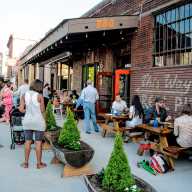
Prospect Heights, long seen as the ne’er-do-well sister of Park Slope, is about to become the city’s 97th historic district.
The City Council’s land-use committee unanimously approved the designation last week, and the full legislature was poised to rubber-stamp the vote on Thursday, formally creating the fifth-largest landmark district in the city.
“[The designation] of Prospect Heights, an architecturally diverse and human-scaled neighborhood is much deserved, and needed now more than ever due to development pressures,” said Councilwoman Letitia James (D–Fort Greene).
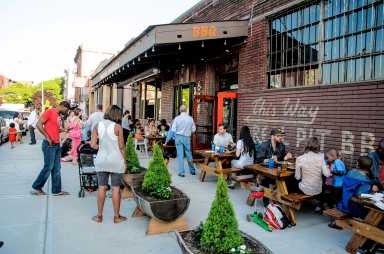
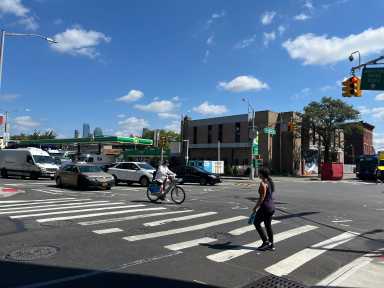
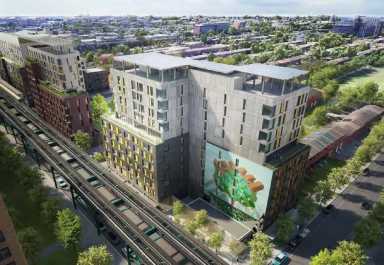
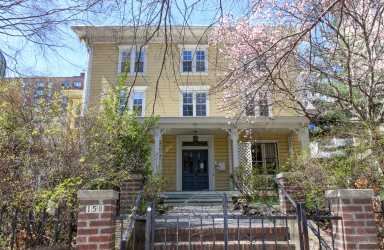
The historic zone to the north of tonier Park Slope is roughly bounded by Atlantic Avenue, Eastern Parkway, Flatbush Avenue and Washington Avenue, and comprises 850 buildings, many constructed between the mid-19th century and early 20th.
Landmarks Preservation Commission Chairman Robert Tierney spoke glowingly about the neighborhood’s “architectural integrity and diversity, scale, tree-lined streets and residential character.”
“These features lend the neighborhood its unique sense of place, making it a natural for historic district status,” he added.
Prospect Heights started its transformation from farmland and forest into a residential neighborhood in the mid-19th century. Its growth was primarily fueled by transportation improvements and the development of Prospect Park, which was completed in 1873.
©2009 Community Newspaper Group
By submitting this comment, you agree to the following terms:
You agree that you, and not BrooklynPaper.com or its affiliates, are fully responsible for the content that you post. You agree not to post any abusive, obscene, vulgar, slanderous, hateful, threatening or sexually-oriented material or any material that may violate applicable law; doing so may lead to the removal of your post and to your being permanently banned from posting to the site. You grant to BrooklynPaper.com the royalty-free, irrevocable, perpetual and fully sublicensable license to use, reproduce, modify, adapt, publish, translate, create derivative works from, distribute, perform and display such content in whole or in part world-wide and to incorporate it in other works in any form, media or technology now known or later developed.