

Brooklyn Borough President Antonio Reynoso announced a $9.25 million investment Tuesday to build new sensory rooms for students with disabilities across the borough, calling it one of the largest single allocations his office has made to Brooklyn schools.
Speaking at a press conference on April 14 at P396K-The Sid Miller Academy in Brownsville alongside Deputy Chancellor for the Division of Inclusive and Accessible Learning Christina Foti, Reynoso presented the funding to expand sensory rooms at District 75 (D75) schools.
D75, a specialized, citywide district within the New York City Department of Education (NYCDOE), provides highly tailored instructional support for students with significant challenges, including autism, cognitive delays, emotional disabilities, sensory impairments and multiple disabilities. The district operates more than 69 schools and programs across all five boroughs.
Sensory rooms are specially designed spaces, often equipped with trampolines, sensory swings, calm-down corners, soft textures and soft lighting. They help students regulate emotions, reduce stress and sensory overload, and improve focus in a quiet, secure environment, with support from therapists, clinicians, teachers and paraprofessionals.
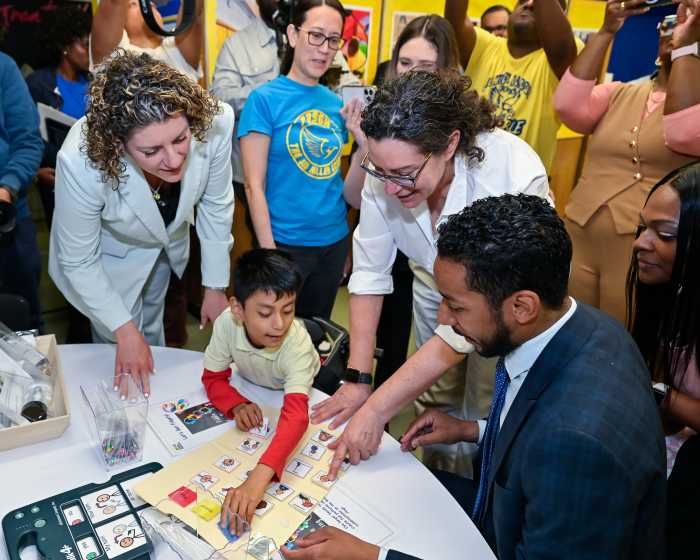
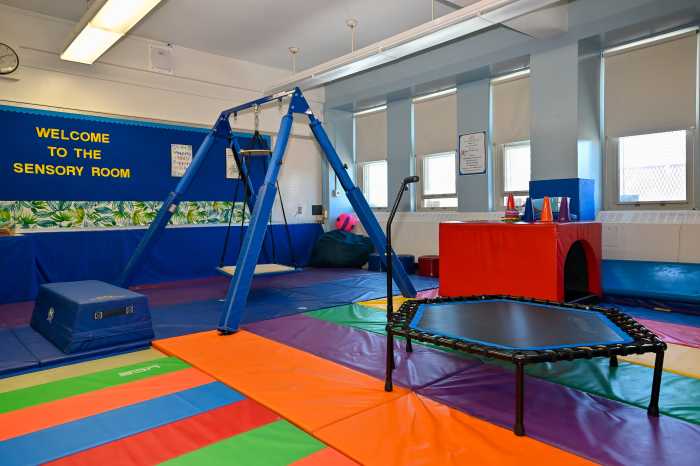
The investment, which will fund 18 sensory rooms in D75 schools across Brooklyn, reflects Reynoso’s commitment to expanding access to inclusive learning environments and ensuring every student has the resources needed to succeed.
Reynoso, greeted with cheers by staff and students lining the school hallway upon his arrival, noted that for students with autism, spaces like sensory rooms help regulate emotions, reduce stress and improve attention. Reynoso’s son has autism, and the Beep has firsthand experience with the benefits of immersive sensory environments.
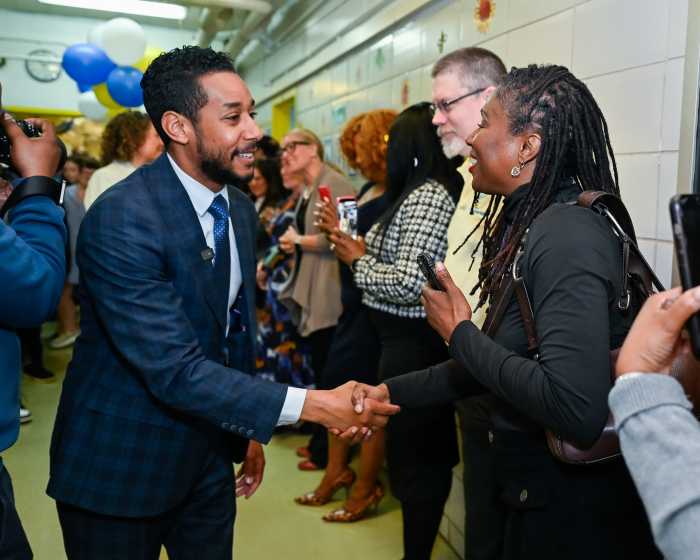
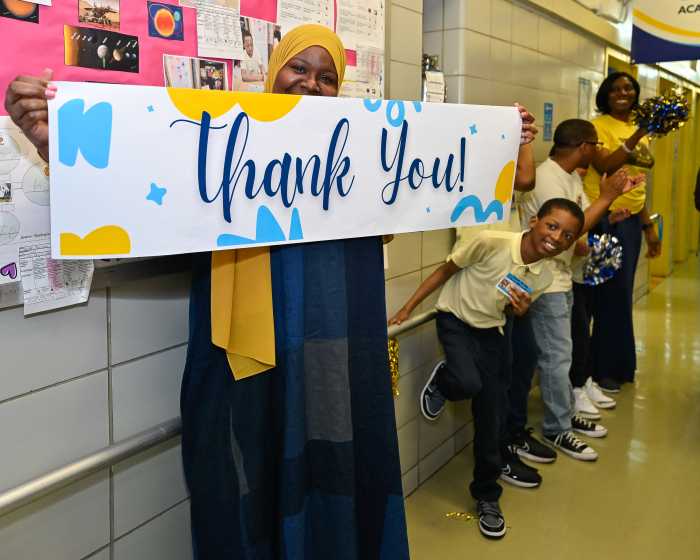
“This investment is about equity. We’re making sure that students who need the extra level of support are not left behind, because all of our students deserve the opportunity to achieve their full potential,” Reynoso told a crowd of staff, students and union representatives. “Because it doesn’t matter what neighborhood you live in or how much your family earns, all of our students should have the resources they need to be successful, and we know that for many students, learning doesn’t always have to take place at a desk. It can happen wherever you feel safe, supported, and at ease, and sensory rooms do just that.”
Foti said New York City has been building sensory spaces since the COVID-19 pandemic. Currently, 78 sensory sites are available for students on weekends and after school.
The funding was “a dream come true,” she said, noting the department had been seeking to expand sensory spaces for use during regular school hours because of their positive impact on students’ ability to regulate emotionally and physically and to build connections.
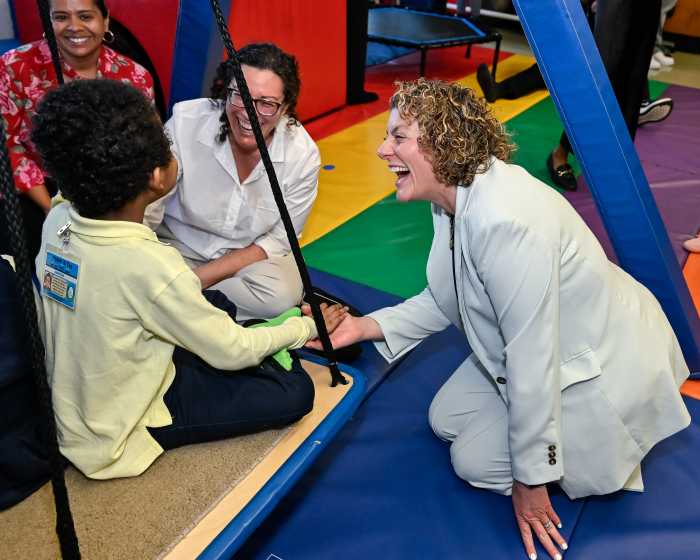
“You saw from the kids today in a room full of crowded adults, the way that they were just immersed in their activities as if nothing else were going on in the room. And that’s such a clear indication that the approaches, the techniques, the equipment are truly working, right, and so this is going to be a daily experience for them,” she said. “[The students] have the best therapists, occupational therapists, physical therapists; our New York City public school therapists are second to none.”
D75 Superintendent Dr. Keisha McCoy said the investment was especially meaningful to her as a former D75 principal.
“Sensory supports aren’t extras; they are essential. They help students manage stress, build independence, and participate more fully in the classroom,” she said. “I have seen firsthand the difference that access to the right resources can make for our students, families, and entire school communities.”
Joseph Mendez, a paraprofessional with D75 for eight years, said he was still in “awe” of the amount allocated.
“This kind of grant is going to create just an unlimited amount of possibilities for our kids, for growth, for them to be able to learn how to better manage themselves, their behaviors, and how to navigate this world that is already overlooking us and underestimating us at the same time,” Menendez said. “So it creates a world of possibilities for our kids, and only challenges us as educators to push ourselves on how we teach and how we’re gonna meet all the needs of our babies.”