
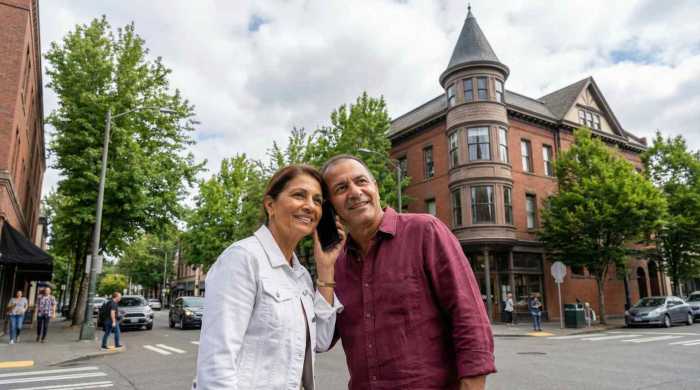


This week’s news of a price slash at one of Downtown Brooklyn’s new luxury towers has been greeted by some as evidence that the city’s dream of creating an exciting, 24-7 residential neighborhood along Flatbush Avenue between Fulton Street and the Manhattan Bridge is a failure.
Sorry, cynics, but it is just a temporary setback. Price adjustments are common when reality finally catches up with an initial Boomtown mentality — and some developers certainly were guilty of over-hyping the area after the 2005 upzoning encouraged high-rise construction along the Flatbush Avenue corridor. Some cookie-cutter units were priced too high, but the market has taken care of that, forcing price cuts.
The developers will still make their profits, and the units will soon be occupied by eager young Brooklyn families who have been priced out of Manhattan.
As a result, the naysayers are wrong: Downtown will rise again.
But there’s one big “if.”
The main problem with the urban planners’ dream of a thriving residential community is that there’s nothing to do Downtown — nothing for the buyers of these thousand or so new luxury units to do with their cash.
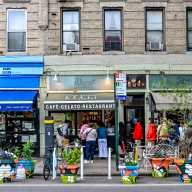
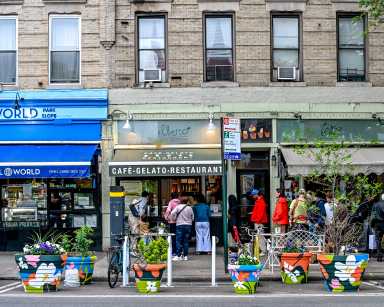
All of the new buildings on the strip include retail storefronts, but to date, none of the developers have done enough to create a lively community where it’s needed most: on the street level.
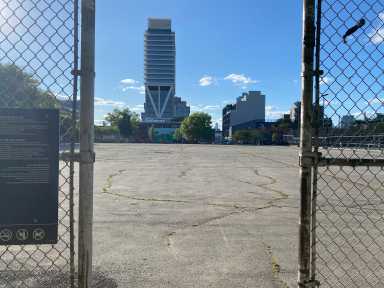
Every retail space along Flatbush Avenue is critical, largely because of dead zones created by the empty lot where the Albee Square Mall used to stand; the campus-like Flatbush Avenue side of Long Island University; and, most glaringly, the Metrotech office complex, whose Flatbush Avenue side is fronted by unused storefronts that could house a variety of attractions that draw pedestrians to the area.
Worse, the city’s heavily fortified 911 call center, at the corner of Tillary Street and Flatbush Avenue, destroys any possibility of having a true gateway to Brooklyn. That center must be moved to a more secure, less socially deadening area. Why an emergency call center needs to be on the ground floor of a building in a burgeoning residential community is beyond us.
For now, though, developers have taken a “build it and they will come” approach, believing that merely constructing their deluxe apartments in the sky will be enough to foster a community in Downtown. But a true community isn’t only a function of how many people bed down at night on the 33rd floor — it’s a reflection of the shopkeepers, the bar owners, the restaurant managers and the service providers who bring their entrepreneurial spirit and vitality to the neighborhood.
Developers neglect them at their own peril.
©2009 Community Newspaper Group
By submitting this comment, you agree to the following terms:
You agree that you, and not BrooklynPaper.com or its affiliates, are fully responsible for the content that you post. You agree not to post any abusive, obscene, vulgar, slanderous, hateful, threatening or sexually-oriented material or any material that may violate applicable law; doing so may lead to the removal of your post and to your being permanently banned from posting to the site. You grant to BrooklynPaper.com the royalty-free, irrevocable, perpetual and fully sublicensable license to use, reproduce, modify, adapt, publish, translate, create derivative works from, distribute, perform and display such content in whole or in part world-wide and to incorporate it in other works in any form, media or technology now known or later developed.