
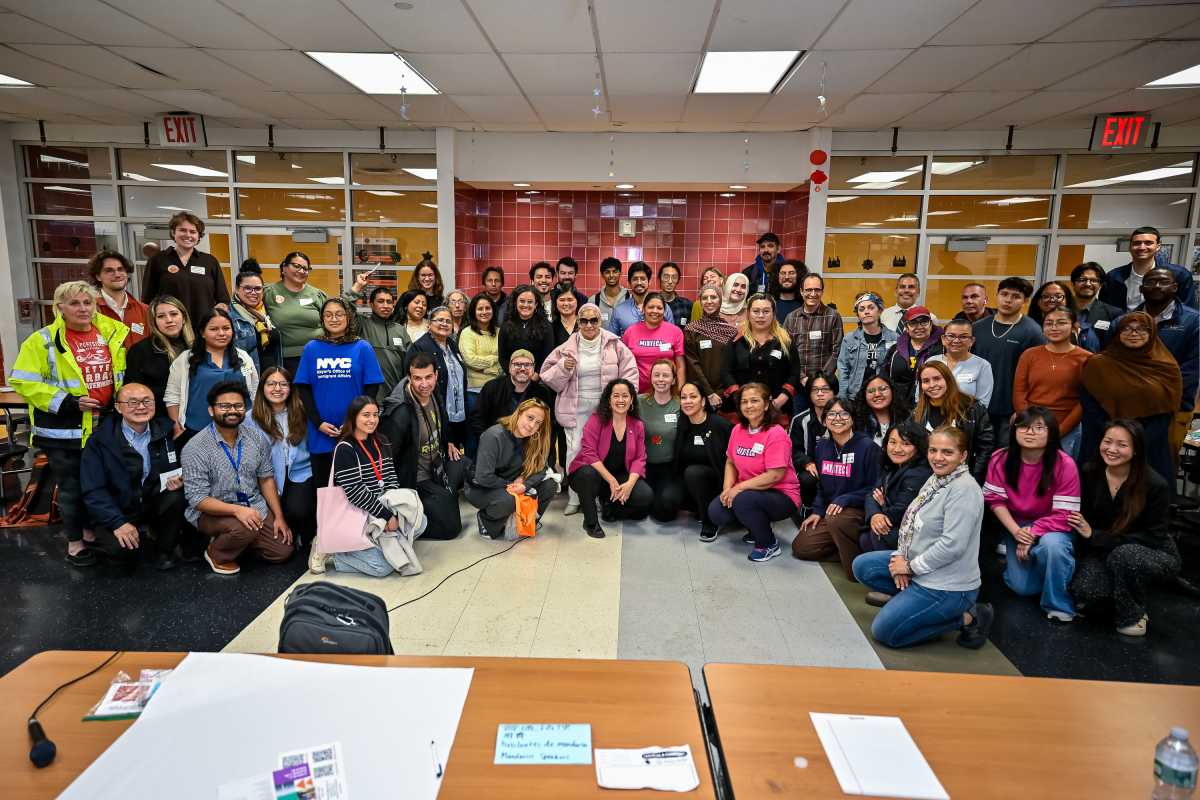
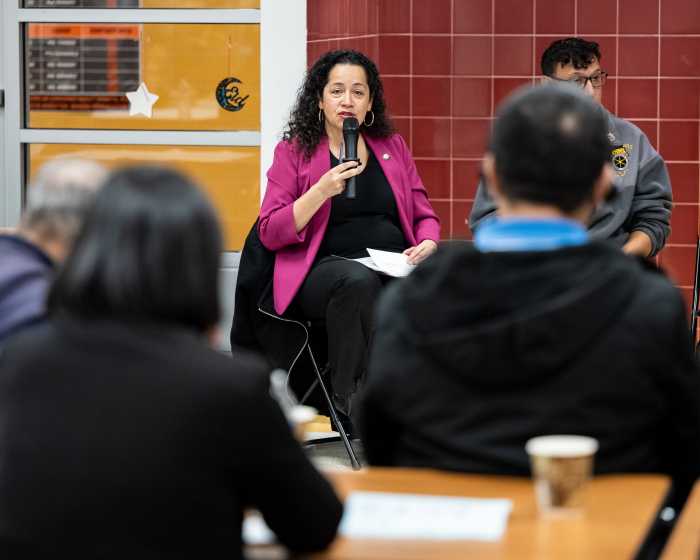
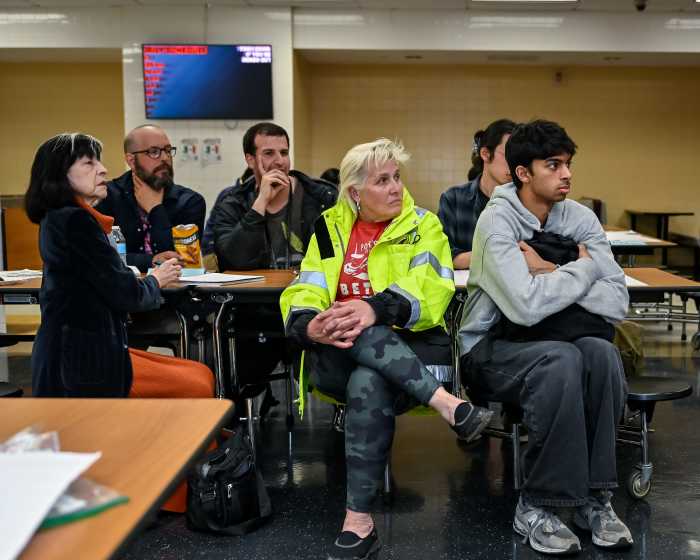
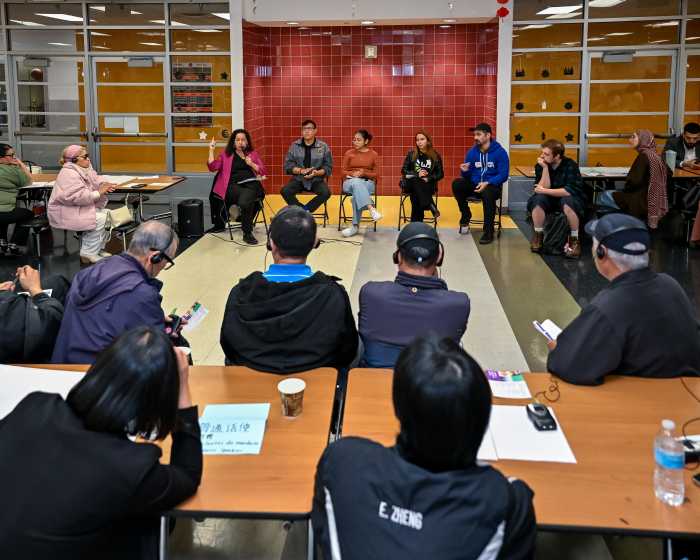
Two days before May 1, recognized as International Workers’ Day, Council Member Alexa Avilés hosted a Labor Town Hall in the cafeteria at Sunset Park High School. The April 29 event focused on the current state of workers’ struggles in New York City, the importance of labor organizing, and workers’ rights.
City and state agencies, including the NYC Department of Consumer and Worker Protection, the Mayor’s Office of Immigrant Affairs, the New York Legal Assistance Group, the New York State Department of Labor, and the Freelancers Union, hosted resource tables providing information about worker protections and legal resources.
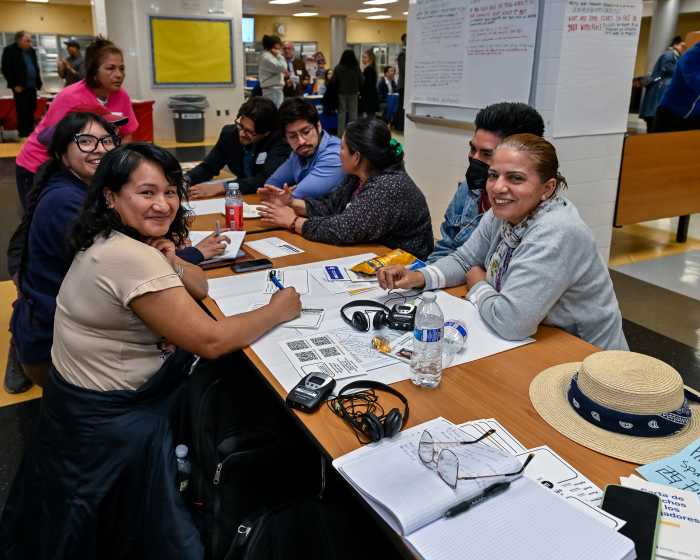
Attendees were encouraged to fill out comment cards with follow-up questions and ideas, and to scan a QR code on the back of the card to connect with neighborhood WhatsApp chats for updates on community information and events.
Avilés acknowledged that union organizing can “definitely feel like a big task,” but noted that committees like the Emergency Workplace Organizing Committee (EWOC) provide labor-organizing support and training to non-union workers.
“While this is a very scary and frustrating time across the country, we have also been winning a lot,” Avilés told the crowd. “There is such a power in collective solidarity and working together and fighting for workers’ rights. And so we hope that you leave here today, meeting some new neighbors, learning some new things, and feeling hopeful that we can continue to win for better conditions, for our workers, our neighbors, for our community.”
Panelists included Antonio Rosario, lead organizer of Teamsters Local 804; Sunset Park High School student Natalie Galan; Armary Perez of the Workers’ Justice Project (WJP); and Paul DeMuro, a teacher and United Federation of Teachers member. They discussed the importance of collective action and union organizing to protect workers from corporate abuses, the role of unions in advocating for better working conditions, fair pay, job opportunities, and legislation ensuring that major corporations receiving government subsidies pay taxes.
Rosario, the lead organizer for the Amazon project in the Northeast, has been a union member for almost 32 years. Before his current role, he was a UPS Teamster in Local 804.
He stressed the importance of building solidarity among workers across industries.
“It’s time for people to stop segregating themselves and going into their own groups and start talking to one another, finding out what those commonalities are, and how we can push back on these corporations that are taking advantage of the people,” Rosario said, noting that even with a union contract, companies try to violate agreements. “The minute the ink is dry, the company’s trying to violate our contracts. It takes a very strong, dedicated, engaged workforce to fight back against these corporations that a lot of times do want to create unsafe conditions, because they care about just really two things, and that’s productivity and profit.”
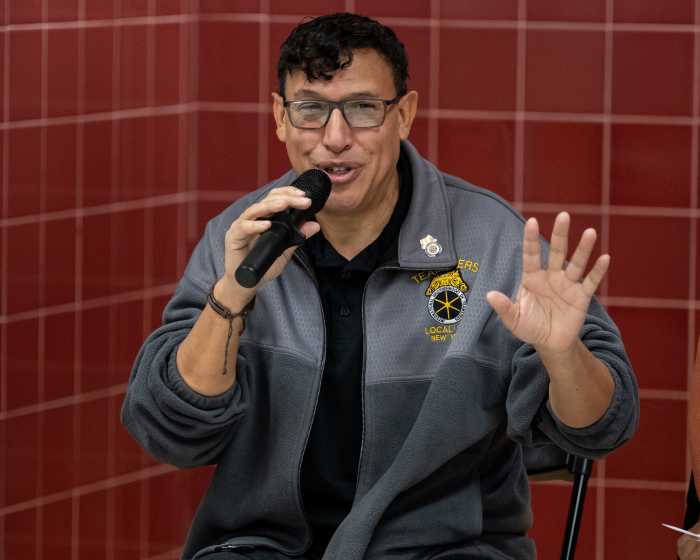
In 1997, when Rosario was 23, he was among 185,000 UPS Teamsters who went on strike for 15 days, making it one of the largest strikes in history and resulting in one of labor’s biggest victories.
“This is what collective action can do. That’s why UPS workers now make 45 to 50 dollars an hour with pension and benefits,” he said, adding that Amazon workers deserve the same benefits. He also pushed for the passage of the Delivery Protection Act, Intro No. 0518-2026, which would ban Amazon’s Delivery Service Partners model — under which third-party entities deliver packages without recognizing drivers as Amazon employees — and prohibit the use of third-party subcontractors for employment.
“They drive their trucks, they wear their vests, they deliver their packages, but they don’t work for Amazon? We’re fighting that through the Delivery Protection Act,” he said.
Galan discussed her peers’ concerns about finding fair-paying jobs after high school or college and called for more internship opportunities, such as Windscape Brooklyn in Sunset Park, New York’s first learning center focused on offshore wind education.
“It is actually a really great opportunity because a lot of students, even including myself, didn’t know that offshore wind was an industry that’s booming,” Galan said.
The Workers’ Justice Project educates, organizes, and fights for better working conditions and social justice in the workplace. The organization represents more than 12,000 members, mostly low-wage immigrant workers in construction, house cleaning, and app-based delivery jobs.
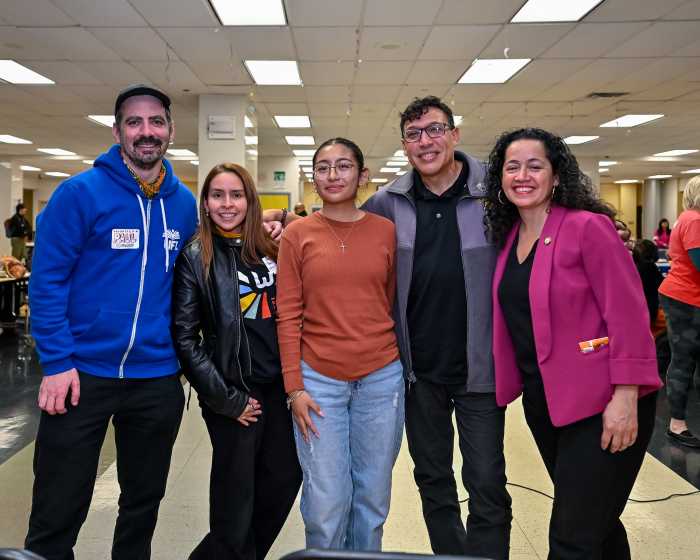
Perez reminded community members that workers have rights regardless of immigration status.
“The first thing that everyone should know is that they have rights,” she said. “Regardless of immigration status, we have rights. And that’s the main message that we always provide to the community, that we are there to help them, regardless of their status, so we can organize, [and] we can look for solutions together.”
DeMuro noted that union organizing and contracts go beyond securing livable wages and workplace safety; they can also benefit communities and immigrants. He cited the Chicago Teachers Union, which used collective bargaining to secure housing support for students living in unstable housing. Unstable housing, he said, impacts academic performance, limits access to resources and leads to higher dropout rates.
“It connects to labor, because if you have students who are in insecure environments, that makes it a harder job for the teachers to support those students,” DeMuro explained.
After the panel, attendees discussed issues affecting their communities and potential solutions, including more local job fairs, corporate education funds for workers’ families, increased collaboration between unions, employer-provided workers’ rights resources, and English classes focused on labor rights.
Throughout the evening, panelists highlighted recent labor victories, including the February nurses’ strike, when 15,000 New York State Nurses Association members were on strike for 41 days and won a new three-year contract with improved safe staffing levels, more than 12% salary increases, health benefit protections, and safety measures against violence. They noted that other unions joined the picket line in solidarity.
“There are so many amazing wins that are really important when things feel bleak, to remind ourselves of the advances that we’ve made, to give us a little juice for the next part of the fight,” Avilés said.